



Whale Migration Shifts as Climate Impacts Key Food
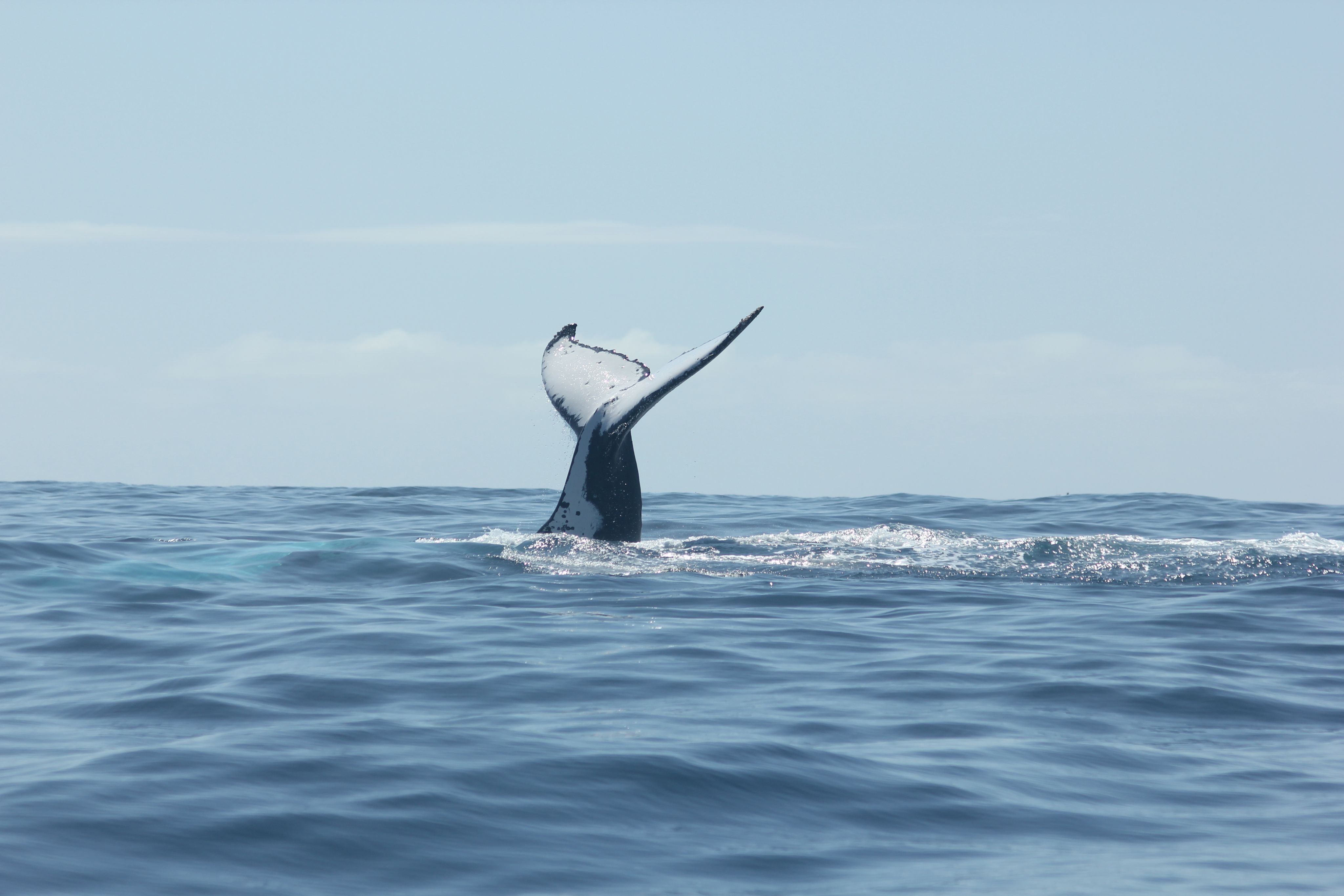

The southern migration of humpback whales down the east Australian coast is peaking weeks earlier than it was more than 21 years ago – and University of Queensland researchers have warned a warming Southern Ocean may be to blame.
Experts consider whales to be sentients of the ocean, and a shift in their behaviour and demographics can be an early indicator of ecosystem changes.
Humpback whales make one of the longest migrations of all mammals.
Each year the western-most South Pacific population makes a journey of approximately 10,000 kilometres to and from breeding grounds in the Great Barrier Reef and an Antarctic feeding zone where they spend the summer months building up their energy reserves eating krill.
University of Queensland researchers studied the 2024 migration and found the return from the north had shifted earlier by approximately 3 weeks compared to data collected 2 decades ago.
Earlier southern journey
UQ environmental biologist Associate Professor Rebecca Dunlop said the 2024 southern migration peak was observed in the middle of September, compared to early October in 2003.
The project included land-based visual observations from locations on Queensland’s southern coast of whale groups and individuals including females with newborn calves along with acoustic surveys of the singing of adult males as they passed buoys and underwater recorders off Peregian Beach.
Similar to sightings of adults and calves, there was a significantly earlier peak in the amount of singing activity measured by the acoustic surveys over the 21-year study – by 22 days.
“While migratory timing naturally fluctuates from year to year by about 2 weeks, since 2021 there has been a clear and sustained change,” Dr Dunlop said.
“The cues for migration are not well understood but are likely to be influenced by ecological and environmental factors impacting summer feeding while in the Southern Ocean.
“A big factor is the connection between sea ice and krill populations.”

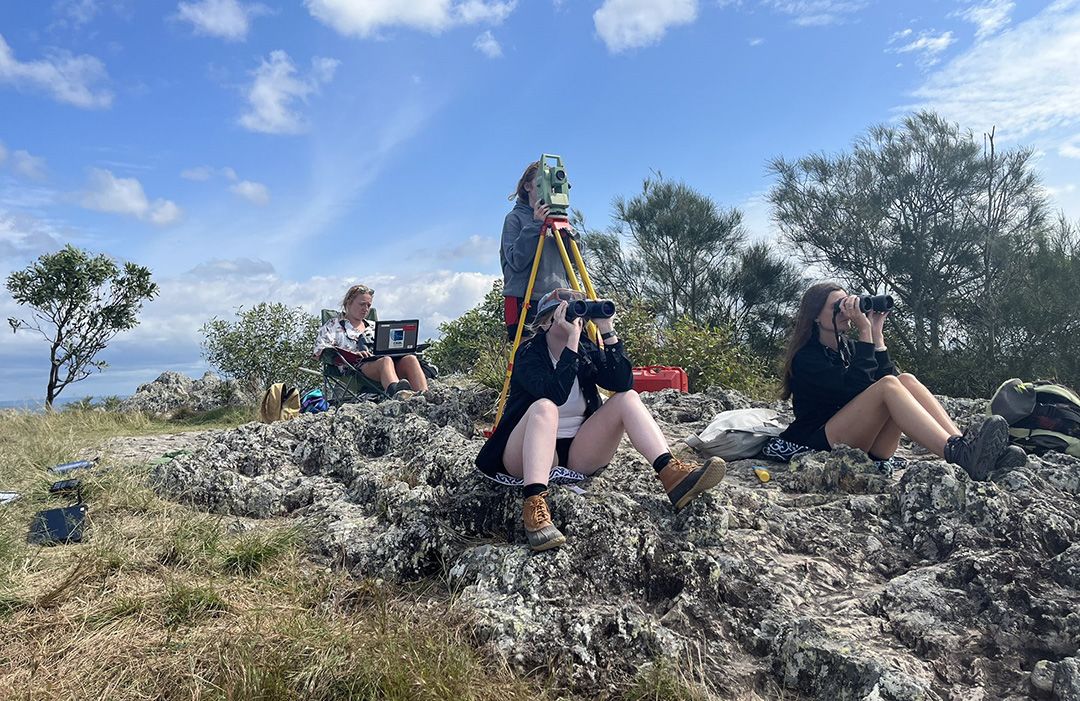
Volunteers record whale numbers during visual surveys from Emu Mountain in the Noosa National Park. Image: The University of Queensland
Volunteers record whale numbers during visual surveys from Emu Mountain in the Noosa National Park. Image: The University of Queensland
Climate impact on food
Apart from the occasional temporary stopover, humpback whales do not feed during the winter months while they are in their tropical and subtropical breeding grounds.
“Whales likely time their migration to ensure their stay in Antarctic waters is long enough and with adequate feed to build the fat and protein reserves needed to fuel their journey to and from the breeding grounds, as well as for reproductive activities,” Dr Dunlop said.
“The later years of this study coincide with a pronounced decline in sea ice coverage beyond usual annual fluctuations.
“Less sea ice, or a shorter ice season, means less algae which is crucial food for krill.
“Less available krill prior to the migration could be forcing the whales back to the feeding grounds earlier.”
Other factors contributing to potential changes in feed availability for whales are an increase in fishing activity to satisfy demand for products such as fishmeal and omega-3 supplements and the significant rise in the humpback population.
Steady population growth
The eastern Australian population of humpback whales has grown from only 300 in the 1960s after sustained hunting, to around 40,000.
In 2003, the maximum average number of adults sighted per hour was 5. Last year, it increased to 16.
Female and calf sightings increased from 1-2 per hour, to 3-4 over the same period.
Changes have also occurred within the Great Barrier Reef breeding grounds during the study period including an increase in fishing activity, whale watching tourism and environmental impacts from pollution and sediment from runoff.
“We did consider if an earlier departure from the northern breeding grounds could be driven by whale crowding or even human activity in the Great Barrier Reef,” Dr Dunlop said.
“But while the whale population increased steadily over the 21 years of this study, a clear shift in migration timing did not occur until after 2021 when rising water temperatures driven by climate change affected sea ice coverage in the Antarctic oceans.
“This earlier return south is also being seen in other humpback populations – along Australia’s west coast and South America.
“I am concerned at some point we may see a decline in birth rates because females won’t have the energy to support migrating north, giving birth and getting their calf back to the feeding grounds.”

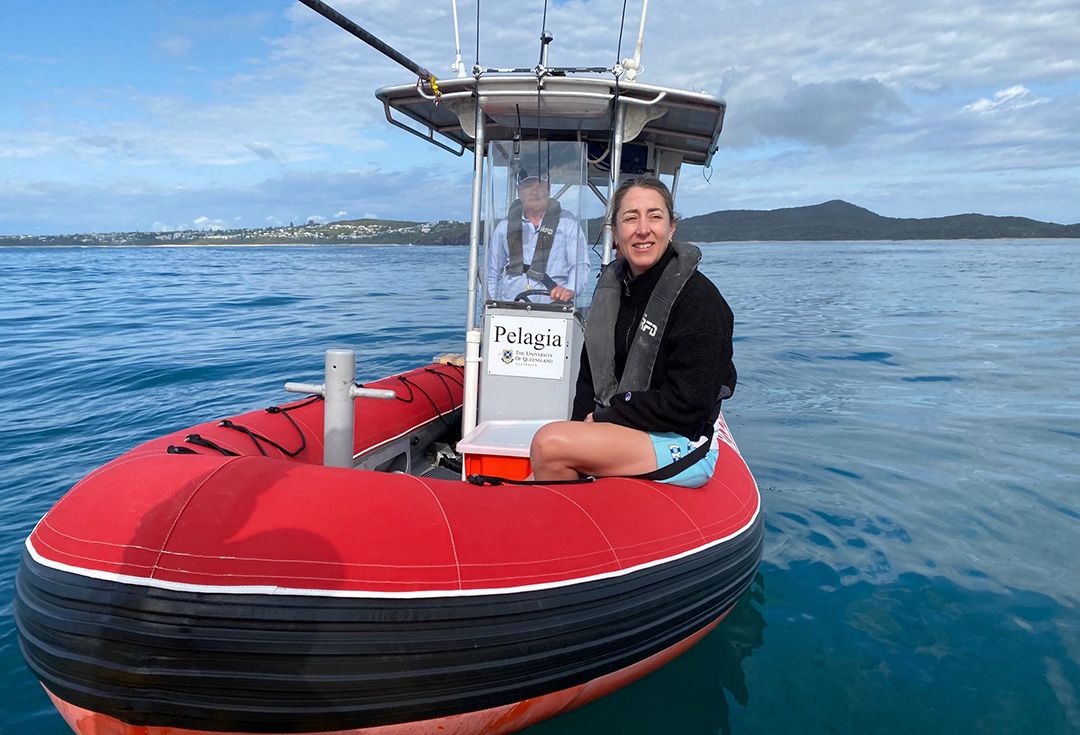
Associate Professor Rebecca Dunlop during field work off the Queensland coast. Image: The University of Queensland
Associate Professor Rebecca Dunlop during field work off the Queensland coast. Image: The University of Queensland
Further research
Dr Dunlop and her co-authors of the research published in Scientific Reports said projections of rising sea surface temperatures along with decreasing sea ice and declining krill populations are concerning for the future of humpback whales.
To fully understand how resilient whale populations are to shifts in their feeding environment, they suggest integrating population monitoring with studies of the Southern Ocean ecosystem and direct assessments of whale health such as body condition.
A research project is underway to determine whether the timing of the migration north away from the feeding grounds has also shifted.


This content was paid for and created by The University of Queensland. The editorial staff of The Chronicle had no role in its preparation. Find out more about paid content.
 Built with Shorthand