



UGA’s Buell Grows Discovery and the Next Generation of Scientists
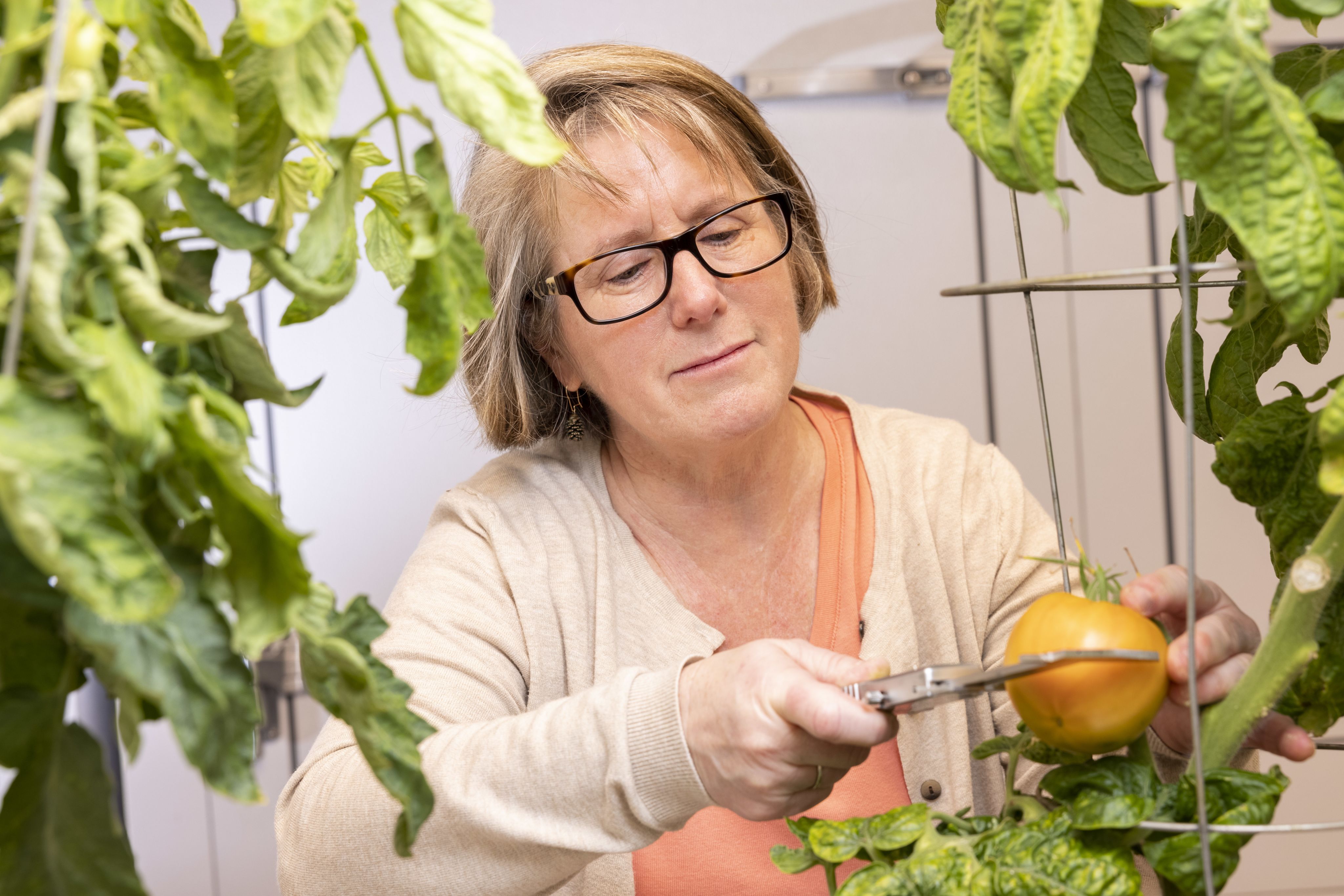

When Dr. C. Robin Buell was named the 2026 Southeastern Conference Professor of the Year, it marked the latest milestone in a career shaped less by a straight line and more by curiosity, persistence and a willingness to follow unexpected opportunities.
Long before she was sequencing plant genomes or leading global research efforts, Buell took a job washing dishes in a plant physiology lab after being motivated, she jokes, by the promise of a small paycheck.
“What I got instead was exposure to research,” Buell said. “I was just constantly being mentored and in this culture of science research, and I didn’t even really understand what it was at the time. I just knew it was interesting.”
That unplanned, ordinary moment became the starting point for everything that followed.
Not the Plan but the Right Path
Buell didn’t set out to study plants.
Growing up in rural Maryland, she imagined becoming a veterinarian. That changed in a single semester at the University of Maryland.
“One class can make all the difference,” she said. “I had this large zoology class that just didn’t connect. It was a bad experience. But then I took a botany class, and it was fantastic. The instructor was engaging, the class was smaller, and suddenly it just clicked. And then I started working in a plant research lab, and that really changed everything.”
It wasn’t a carefully mapped-out pivot. It was a series of small moments with one class and one job, that pulled her in a new direction.
“I worked as a technician for a year, and had this ‘gap year,’ although calling it that made it sound on purpose,” Buell said. “Looking back, it was probably the most important year. I learned molecular biology when it was really just emerging and opened up this whole frontier of genetics.
“It also made me very marketable because that gave me a skill set that not many people had. It made me more confident, and it made me more competitive. I got into almost every grad program I applied to.”
What could have been a stopping point became momentum and launched a career that would take her across the country before ultimately landing at the University of Georgia, where she now serves as the Georgia Research Alliance Eminent Scholar Chair in Crop Genomics.

Designing the Future of Food
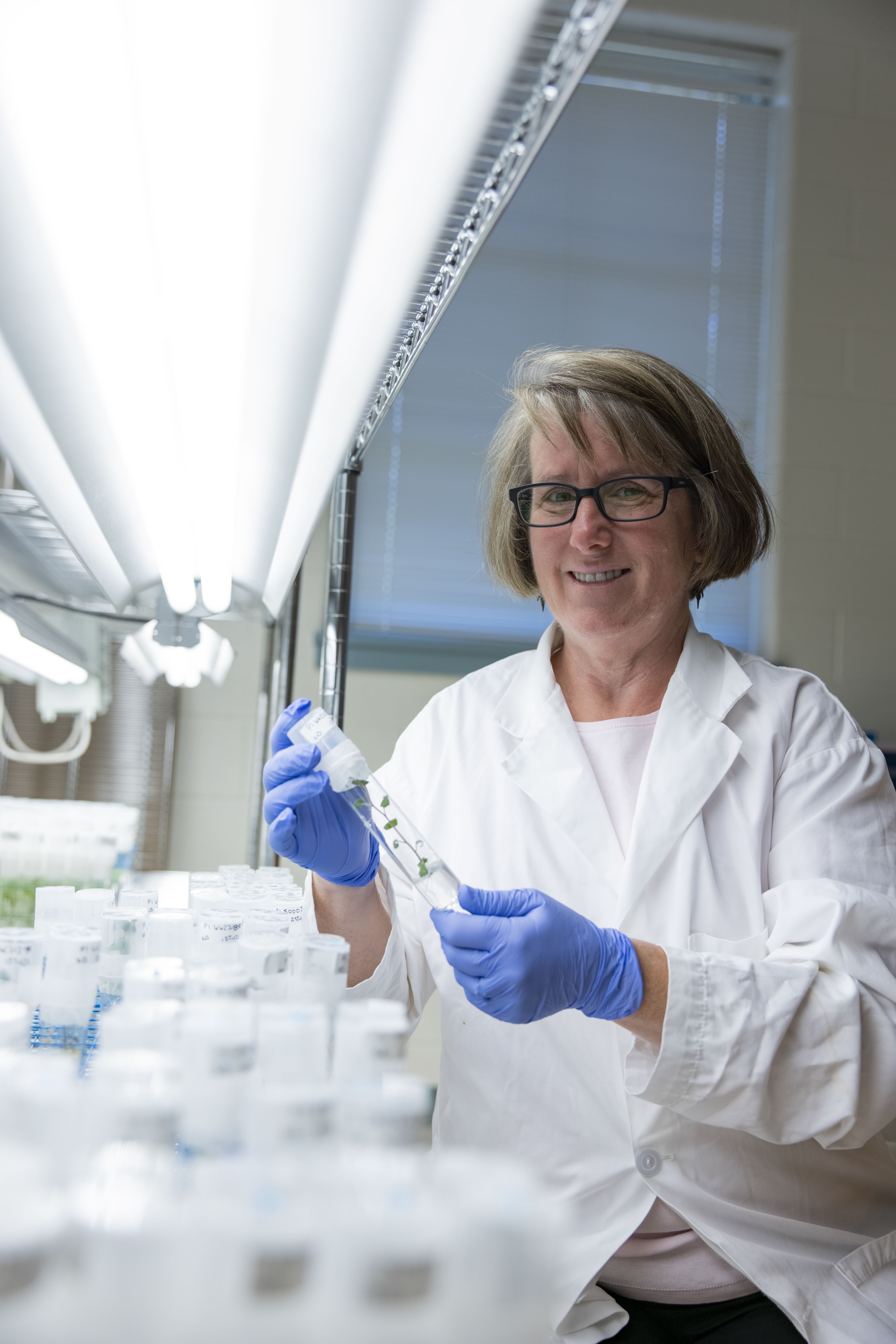
Today, Buell is an internationally recognized leader in plant genomics, helping scientists understand the DNA that drives how plants grow, adapt and survive.
Her work has helped shape the field – from contributing to the first plant genome sequence to leading efforts decoding the genomes of rice and potato, two of the most important food crops in the world. The datasets she has helped build are now used by researchers globally to improve crop resilience and productivity.
But when she talks about her work, she doesn’t start with data. She starts with impact.

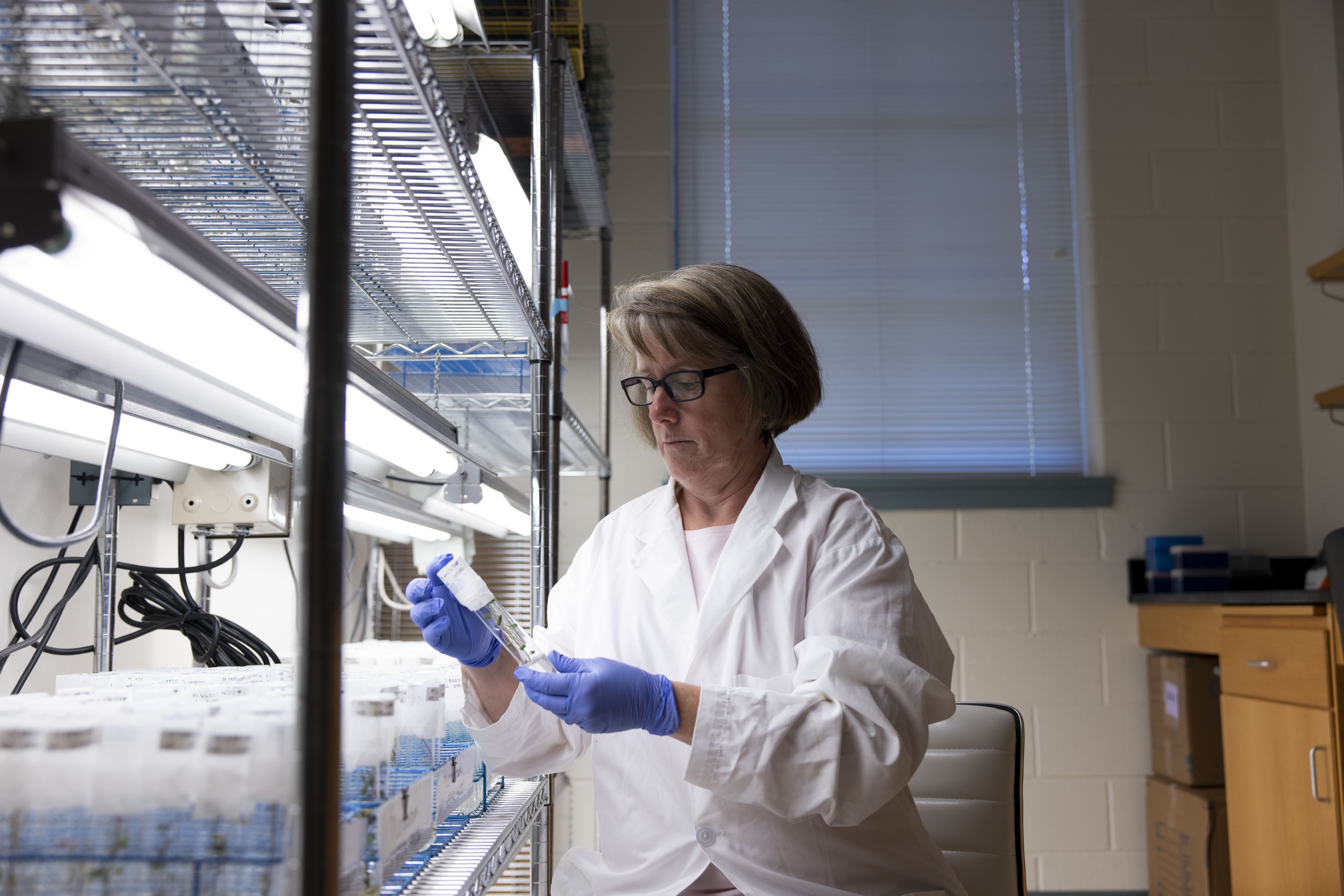
“Most people don’t realize this, but food security is national security,” Buell said. “We’ve made lots of improvements in crop production over the last 50 years, but we’re going to hit a plateau, right? Genomics lets us understand plants at a much higher resolution, so we can make improvements faster, more efficiently and in a much more targeted way.”
Her research spans everything from improving staple crops to studying medicinal plants like the Madagascar Periwinkle, which produces compounds used for cancer treatments.
Over her career, Buell has published more than 270 scientific papers and secured more than $82 million in competitive funding and contributed to projects totaling $147 million.
Buell was elected to the National Academy of Sciences in 2025. She is also a fellow of the American Association for the Advancement of Science and the American Society of Plant Biologists. In 2021, she was awarded the McClintock Prize for Plant Genetics and Genome Studies for her contributions to the field.

Designing the Future of Food
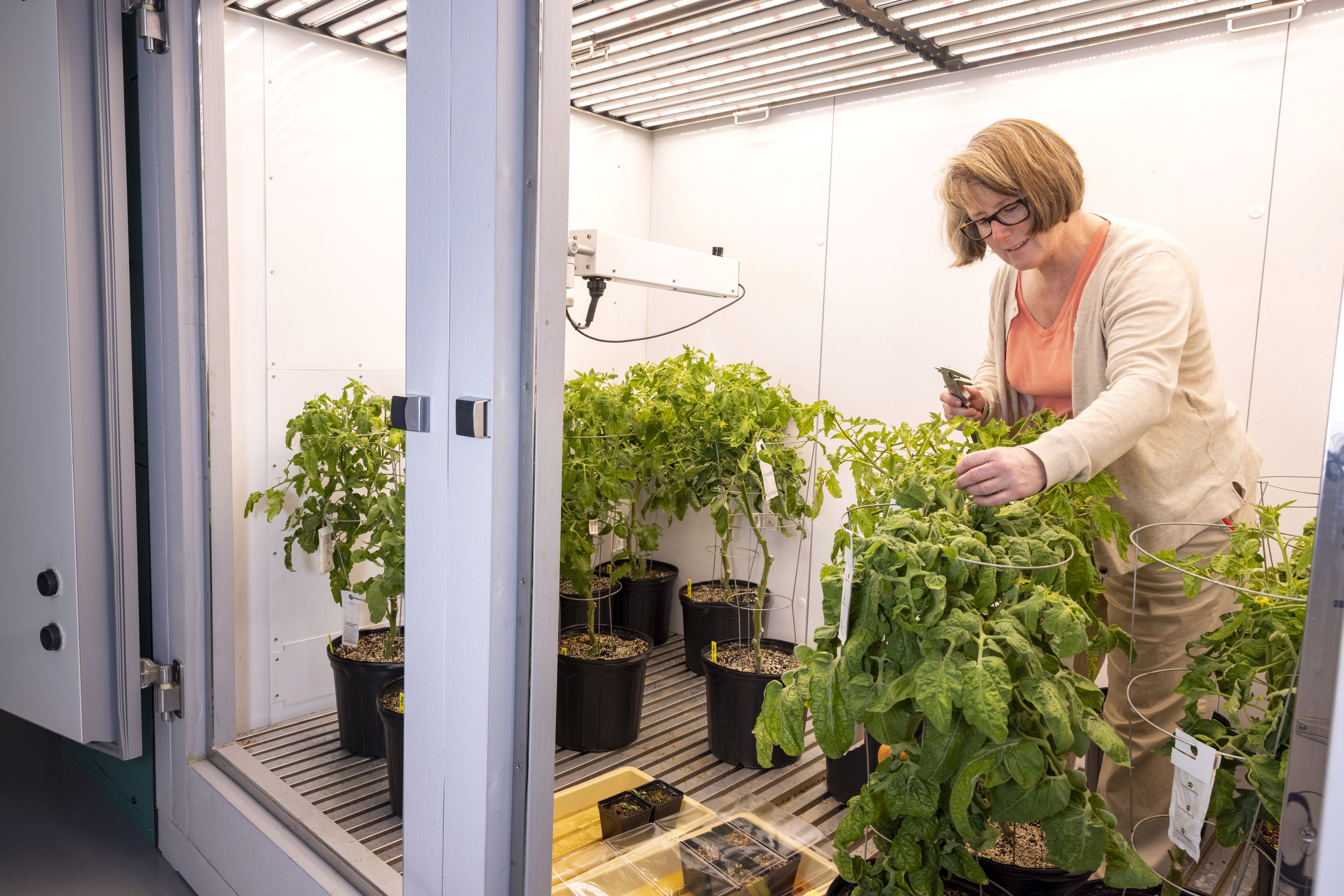
Today, Buell is an internationally recognized leader in plant genomics, helping scientists understand the DNA that drives how plants grow, adapt and survive.
Her work has helped shape the field – from contributing to the first plant genome sequence to leading efforts decoding the genomes of rice and potato, two of the most important food crops in the world. The datasets she has helped build are now used by researchers globally to improve crop resilience and productivity.
But when she talks about her work, she doesn’t start with data. She starts with impact.
“Most people don’t realize this, but food security is national security,” Buell said. “We’ve made lots of improvements in crop production over the last 50 years, but we’re going to hit a plateau, right? Genomics lets us understand plants at a much higher resolution, so we can make improvements faster, more efficiently and in a much more targeted way.”
Her research spans everything from improving staple crops to studying medicinal plants like the Madagascar Periwinkle, which produces compounds used for cancer treatments.
Over her career, Buell has published more than 270 scientific papers and secured more than $82 million in competitive funding and contributed to projects totaling $147 million.
Buell was elected to the National Academy of Sciences in 2025. She is also a fellow of the American Association for the Advancement of Science and the American Society of Plant Biologists. In 2021, she was awarded the McClintock Prize for Plant Genetics and Genome Studies for her contributions to the field.

A Legacy Measured in People
For all the scale of her research, Buell measures success in much smaller moments.
A student running their first experiment. A breakthrough after weeks of frustration. A question that leads somewhere unexpected.
“They get so excited about discovery,” Buell said. “They did something, and they get to own it. It’s like watching someone finish a puzzle. They figured it out, and you can see that moment when it clicks. And then they start asking more questions, and it just keeps going.”
Over the course of her career, Buell has mentored more than 150 undergraduate, graduate and postdoctoral researchers, many of whom have gone on to earn national fellowships and build careers in science.
“My success is a result of their efforts,” she said. “If you train people well and they go on to contribute, you’ve amplified whatever you’ve done. That, to me, is what success looks like.”

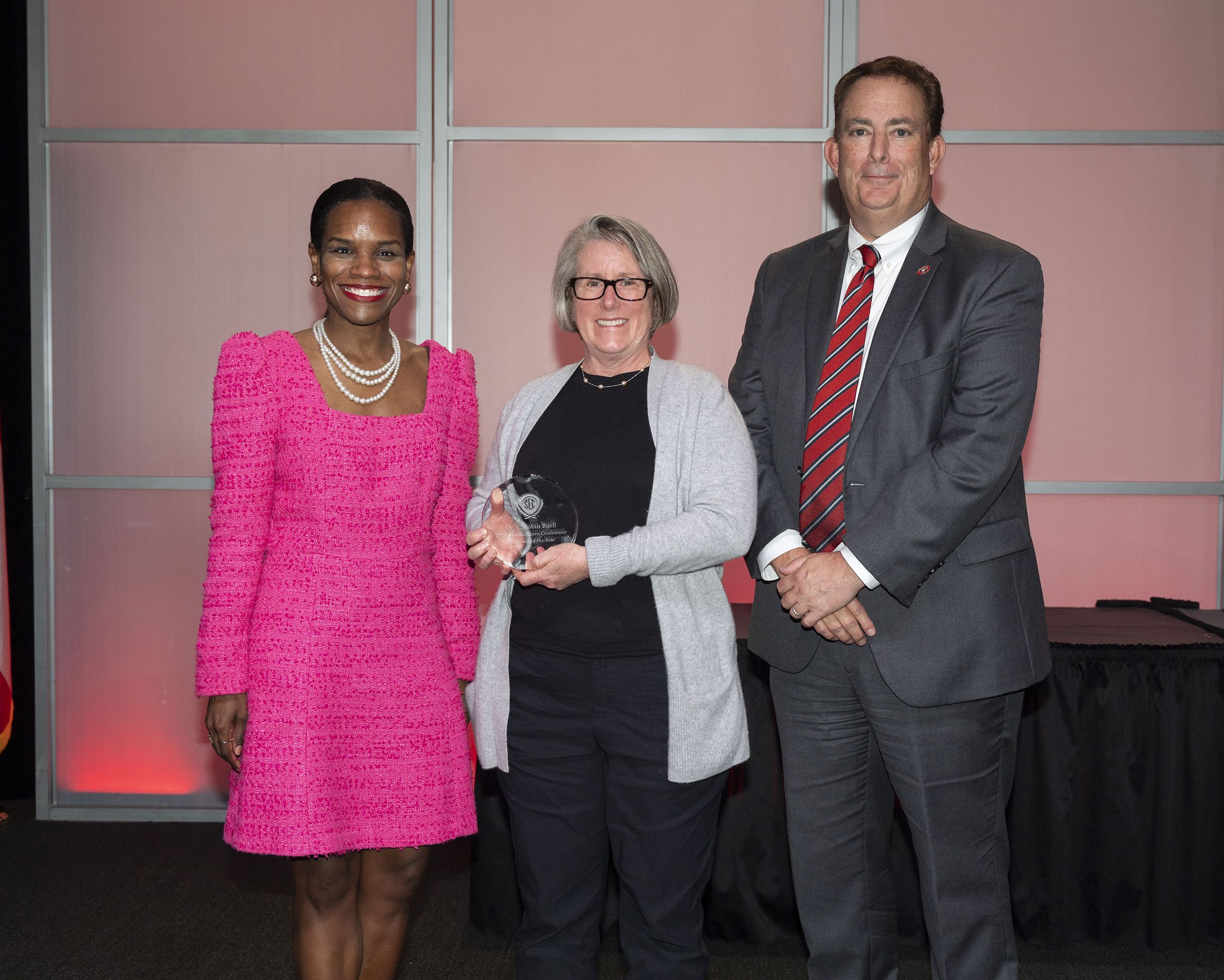
Dr. C. Robin Buell stands with SEC Associate Commissioner LeNá McDonald and UGA Provost Benjamin C. Ayers. Photo Credit: Wingate Downs
In her lab, mentorship goes beyond technical training. She emphasizes confidence, communication and the “life skills” that help students navigate both science and the workplace. Buell knows firsthand.
Early in her career, stepping into the then male-dominated field of genomics was a stark shift.
“I was always around women in biology, so I never really thought about it,” she said. “But when I moved into genomics, it was very different, and I was honestly stunned by some of those experiences.”
What made the difference were mentors, especially a group who helped her navigate those moments with perspective.
“They would just tell me, ‘Take the high ground. It will pay off,’” Buell said. “And it did. Having people who had been through it before, who could give perspective made that invaluable.”
Now, she makes sure her students have that same support.
“I spend a lot of time helping them build confidence and learn how to navigate situations,” she said. “Because no one should feel like they have to do this alone.”
A Legacy Measured in People
For all the scale of her research, Buell measures success in much smaller moments.
A student running their first experiment. A breakthrough after weeks of frustration. A question that leads somewhere unexpected.
“They get so excited about discovery,” Buell said. “They did something, and they get to own it. It’s like watching someone finish a puzzle. They figured it out, and you can see that moment when it clicks. And then they start asking more questions, and it just keeps going.”
Over the course of her career, Buell has mentored more than 150 undergraduate, graduate and postdoctoral researchers, many of whom have gone on to earn national fellowships and build careers in science.
“My success is a result of their efforts,” she said. “If you train people well and they go on to contribute, you’ve amplified whatever you’ve done. That, to me, is what success looks like.”
Dr. C. Robin Buell stands with SEC Associate Commissioner LeNá McDonald and UGA Provost Benjamin C. Ayers. Photo Credit: Wingate Downs
In her lab, mentorship goes beyond technical training. She emphasizes confidence, communication and the “life skills” that help students navigate both science and the workplace. Buell knows firsthand.
Early in her career, stepping into the then male-dominated field of genomics was a stark shift.
“I was always around women in biology, so I never really thought about it,” she said. “But when I moved into genomics, it was very different, and I was honestly stunned by some of those experiences.”
What made the difference were mentors, especially a group who helped her navigate those moments with perspective.
“They would just tell me, ‘Take the high ground. It will pay off,’” Buell said. “And it did. Having people who had been through it before, who could give perspective made that invaluable.”
Now, she makes sure her students have that same support.
“I spend a lot of time helping them build confidence and learn how to navigate situations,” she said. “Because no one should feel like they have to do this alone.”
Growing at Georgia
Since arriving in Athens in 2021, Buell has found a home at the University of Georgia, a place she describes as forward-looking and full of momentum.
“They let you do your thing,” she said. “There’s a really positive, forward-looking energy here. It feels like a place that’s growing in a lot of different ways and really gives you a sense of purpose.”
At Georgia, her work continues to expand from large-scale genomic research to innovative projects like BioPoplar, which explores how altering poplar trees’ architecture could support renewable energy and biomaterial production.
Outside the lab, her connection to plants looks a little different.
She gardens vegetables, fruit trees and ornamentals, though Georgia’s heat and insects don’t always make it easy.
But Buell’s journey has never backed down from the challenges.
“I always tell people to just keep trying,” Buell said. “You never know which opportunity is going to make the difference.”
And sometimes the one that does starts with washing dishes.



This content was paid for and created by the Southeastern Conference. The editorial staff of The Chronicle had no role in its preparation. Find out more about paid content.
This content was paid for and created by the Southeastern Conference. The editorial staff of The Chronicle had no role in its preparation. Find out more about paid content.
 Built with Shorthand