



The Technostress Paradox
Can we balance the anxiety caused by technology & social media with the good we seek from them?


“We are so caught up in everything—our email, the pings we get from work, our social media feeds—that we don’t realize that the content coming at us is not under our control. Perhaps not even how we react to it is completely under our control,” says Monideepa Tarafdar, Isenberg’s Charles J. Dockendorff Endowed Professor.
Monideepa, whose work explores how technology affects human behavior and psyche, has published extensively on “technostress” and its paradox: technology causes strain and anxiety, yet we compulsively turn to it to try to alleviate stress. She and her co-authors developed an instrument to measure technostress using metrics such as overload, invasion, complexity, and uncertainty; the tool has been translated and sought by scholars worldwide. Since the COVID-19 pandemic forced an even larger number of people into an extended period of technology use, she has noticed that interest in the topic has skyrocketed among academics and students—and she has made a point of sharing some best practices for tech use with colleagues and the students she teaches.
Monideepa notes that although every generation might prefer a different platform (Boomers on Facebook, Millennials on Instagram, Gen Z on TikTok), most technologies are designed to hook users as long as possible. In a 2019 paper in Information Systems Journal, “Explaining the link between technostress and technology addiction for social networking sites: A study of distraction as a coping behavior,” Monideepa and her co-authors found that a substantial number of participants who found technology stressful actually sought “refuge” within it.
In fact, the study showed people had a higher propensity to cope with technostress by spending more time on social media versus setting their devices aside and, say, going for a walk. This finding has implications for mental health and addiction.
“Normally, people’s reactions to stressful situations are to get away from them,” she notes. “If you’re seeking distraction within the medium, that can lead to addiction. You watch two hours of YouTube to try to relax, but you end up brainfogged.”

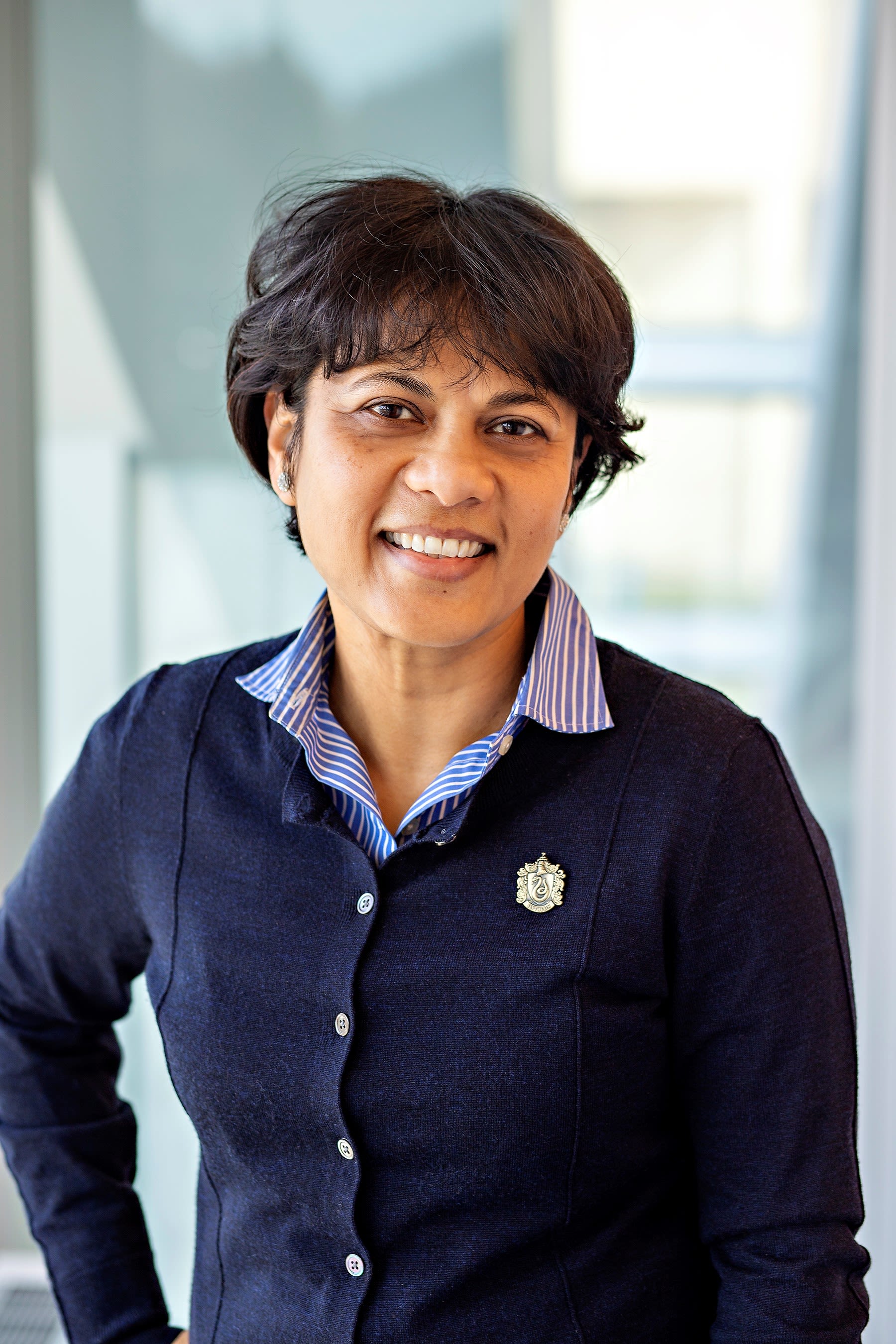
Professor Monideepa Tarafdar
Professor Monideepa Tarafdar


How Tech Can Drive Change
But Monideepa is also quick to note that it’s not realistic (or even desirable) for people to try to purge technology from their lives. There are many benefits too.
In research published in May 2021 in Information Systems Research, Monideepa explores one positive case. The work dissects how, after a fatal gang rape in Delhi, a social media-led protest engulfed India and led to dramatic change. The incident occurred December 16, 2012, a government enquiry commission headed by a former chief justice convened within a few days, and by February 3, 2013, reforms of rape laws had passed the legislature. In the paper, “Role of Social Media in Social Protest Cycles: A Sociomaterial Examination,” Monideepa and co-author Deepa Ray, a data scientist based in Hong Kong, tracked social media posts about the incident across Twitter, Facebook, YouTube, online blogs, and newspaper websites. They identified consolidation (people coming together to protest the government response to the rape), expansion (people mobilizing resources for the protest), and intensification (efforts that escalated the protest and drove global awareness) as the endogenous activities through which the protest cycle evolved. Rather than seeing discrete “stages” of these activities, Monideepa and Ray found they occurred simultaneously and on an ongoing basis, in peaks and troughs, to drive change.
Although this is thought to be one of India’s earliest examples of a social media protest creating change, Monideepa says it is a prototype for how protest cycles occur today. “This is how social protest is driven—by citizens using social media from the ground-up, self-organizing and self-creating,” she says.
Technostress at the University Level
For a PhD seminar called “The Dark Side of Information Technologies,” Monideepa delves with her information systems students into research on the effects of technology on individuals, organizations, and society—ranging from personal stress to surveillance to fake news to the intersectional effects on various demographics of the digital divide.
“The philosophy behind it is that there are lots of effects of technology,” she says. “Some intended, some not.” She covers some of the same material in an MBA class she also teaches, and she has noticed that all her students have shown an increased interest in the topic over the past few years—possibly because of the experiences they have had during the pandemic. She’s surprised by how much the citations of even her early papers on the effects of technology have been cited recently. “When I wrote my first papers on technostress we weren’t even into proper smartphones—my citations on these papers have hit the roof after the pandemic.”
Monideepa puts her knowledge to use directly in her teaching as well, letting students know, for example, that she doesn’t mind at all if they email her a question late at night. “If you want to send me an email at one in the morning, don’t hesitate to do it because that works for you,” she says. “You might have kids at home and other obligations. Don’t add pressure by worrying about when and how you want to communicate. Most people can’t just say, ‘I’m not going to do this after six o’clock.’ I’m not going to stress when I see your time-stamp.”
That said, Monideepa’s students know not to count on receiving answers to their questions right away—she lets them know early in the course that she will answer within a certain amount of time. “I set broad expectations that work for our mutual well-being.”
She thinks that these types of guidelines or suggestions for managing tech use to maximize productivity and flexibility and minimize stress are a clear next step for universities concerned about the effects of overload on not only students but also instructors and librarians.
“The expectation sometimes defaults to people feeling they should be available all the time,” she says. There should be a strategic planned approach instead.”




This content was paid for and created by the Isenberg School of Management at the University of Massachusetts Amherst. The editorial staff of The Chronicle had no role in its preparation. Find out more about paid content.
 Built with Shorthand