


The future of higher education
is under siege —
reinvention may be its salvation

Trust in universities, once a bedrock institution of modern society, is fraying. Affordability, political scrutiny, and cultural divides weigh heavily. Readers are all too aware of the wrenching developments: funding cuts, visa restrictions, pauses in student enrolment processes. These concerns are not confined to US universities only. From Australia to the United Kingdom to South Korea to the Global South, university leaders face parallel strains — affordability, governance, and relevance — and feel the weight of a future under siege.

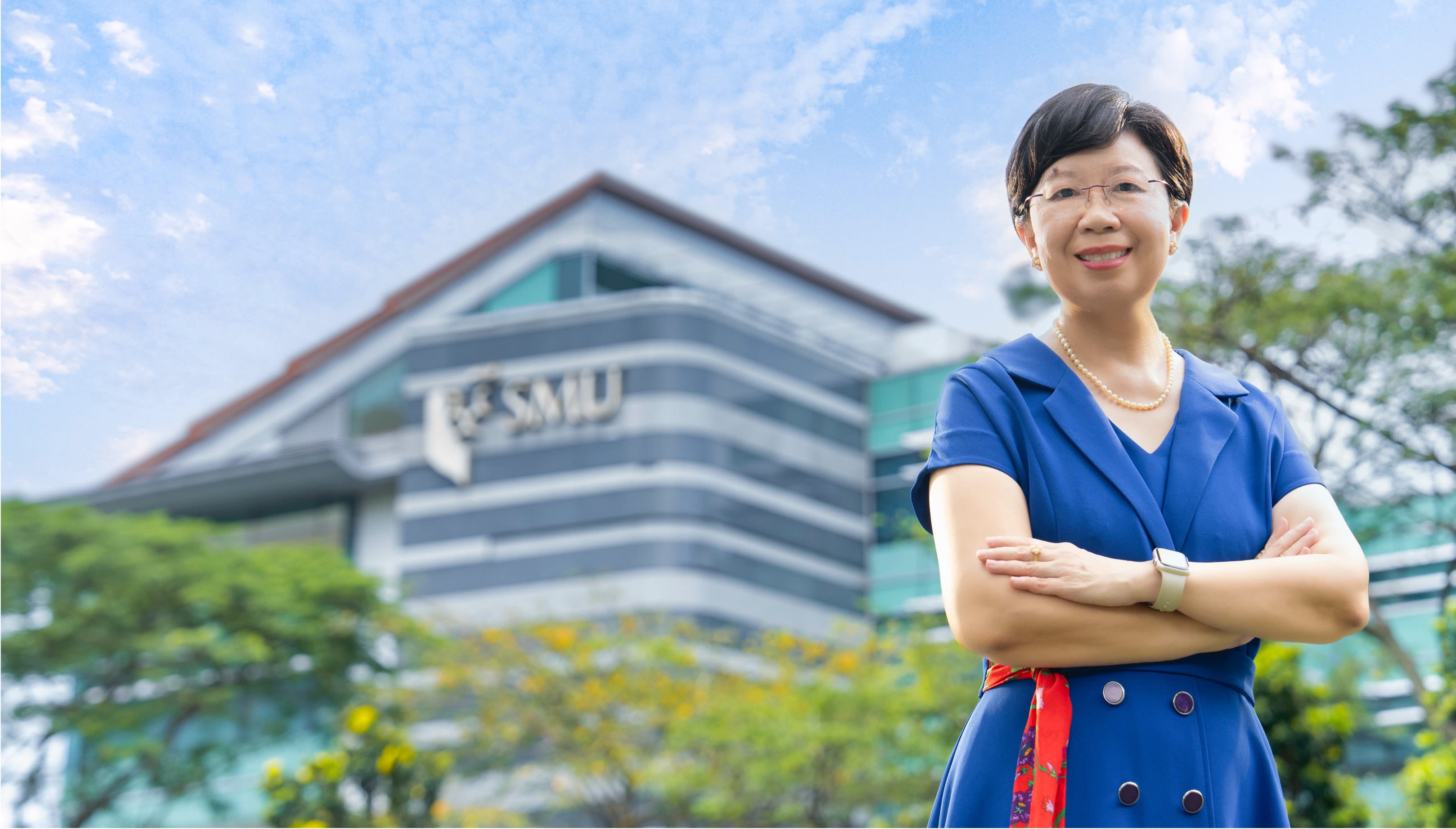
Op-ed by Professor Lily Kong, President of Singapore Management University.
Op-ed by Professor Lily Kong, President of Singapore Management University.
The existential tech disruption
Overlaying these troubles is the seismic shift caused by generative AI and automation. Traditional white-collar jobs that graduates once aspired to are evolving or being radically reshaped. The challenge is no longer simply to prepare students for existing industries, but to ready them for a labour market in flux — where adaptability, resilience, digital literacy, ethical reasoning, and creativity matter as much as technical skills.
Yet many universities remain tied to older models: overcrowded lectures, rigid curricula, didactic pedagogy. These feel ill-suited to a world where information is ubiquitous and rapidly synthesised by machines. The value of a university degree — long predicated on employment outcomes — must be rethought in this new context.
While higher education everywhere is under pressure, such strain can also be generative. In Asia, youthful populations and growing demand for higher education could provide opportunities to experiment and pivot.
A path to reinvention
In a series of lectures I had the honour of delivering last year as an S R Nathan Fellow , — a fellowship in Singapore named after the country’s late President, inviting senior leaders to reflect on public policy and societal change — I called for four reforms: to go beyond cognitive intelligence and nurture multiple intelligences; to develop human qualities in the face of technological change; to embrace interdisciplinarity not as dilettantism but as depth; and to transform universities into lifelong partners for learners at every stage.
Whole-person development. Universities have long emphasised knowledge acquisition, but we must do more to nurture interpersonal intelligence — the ability to relate to and understand others — and intrapersonal intelligence — the capacity for self-awareness and reinvention. These qualities are seldom embedded systematically into curricula or assessment. Still less has been done to help build resilience, essential for navigating the uncertainties of the future. Reskilling is important, but resilience is a prerequisite.
Developing resilience goes beyond providing mental-health services, counselling, or peer support, important though they are. It means intentionally promoting opportunities for social connection, mentoring, community engagement, and wellness practices that create durable support systems. These help students withstand pressure in their younger years, and provide a resource to draw on across a lifetime.

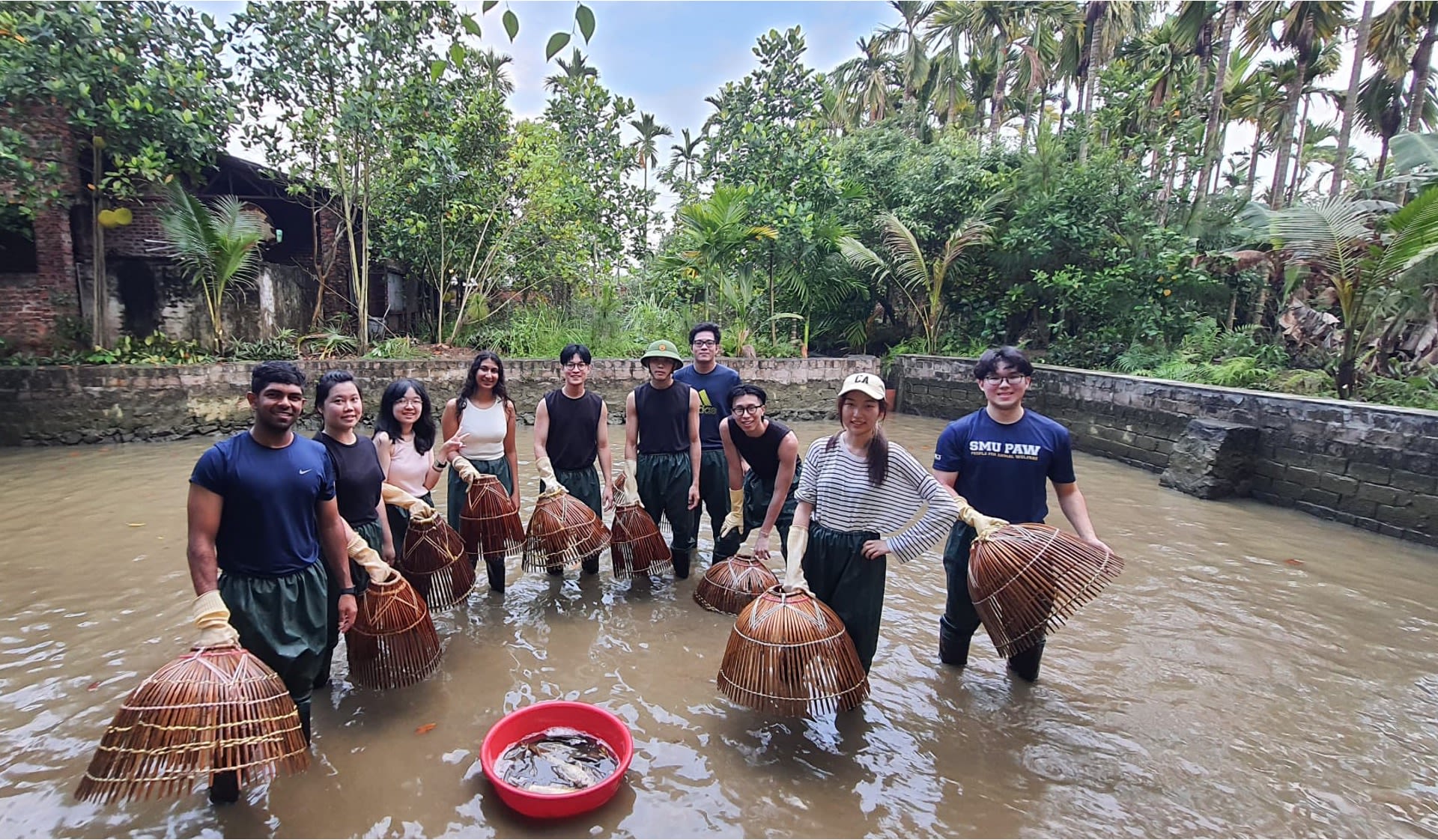
Wellbeing practices and community engagement undertaken by SMU students strengthen resilience in a changing world.
Wellbeing practices and community engagement undertaken by SMU students strengthen resilience in a changing world.
Crucible experiences. Transformative experiences — living in a new city, working in unfamiliar contexts — help students question assumptions and discover themselves. Universities must frame such experiences as learning opportunities. At Singapore Management University for instance, we require every undergraduate to have some form of global exposure – exchange, internships, community work, start-ups and more. In each case, students learn not just through activity but through structured reflection that turns activity into insight.
Independent production. Especially in systems where hierarchy is pronounced, universities should provide safe spaces for self-direction and risk-taking — whether through designing one’s own major, prototyping new ideas, or pursuing independent projects. This is how we cultivate the spirit of experimentation needed for reinvention in a dynamic world.
Lifelong learning. Education cannot be confined to ages 18–25. Universities must become lifelong partners, offering modular courses, professional certifications, and personalized content enabled through AI and data analytics. Beyond undergraduate co-op models, we should link continuing education with the workplace: pairing courses with projects so that learning is immediately applied. This integration of “earning and learning” can reshape adult education into a system that is flexible, sustainable, and impactful.

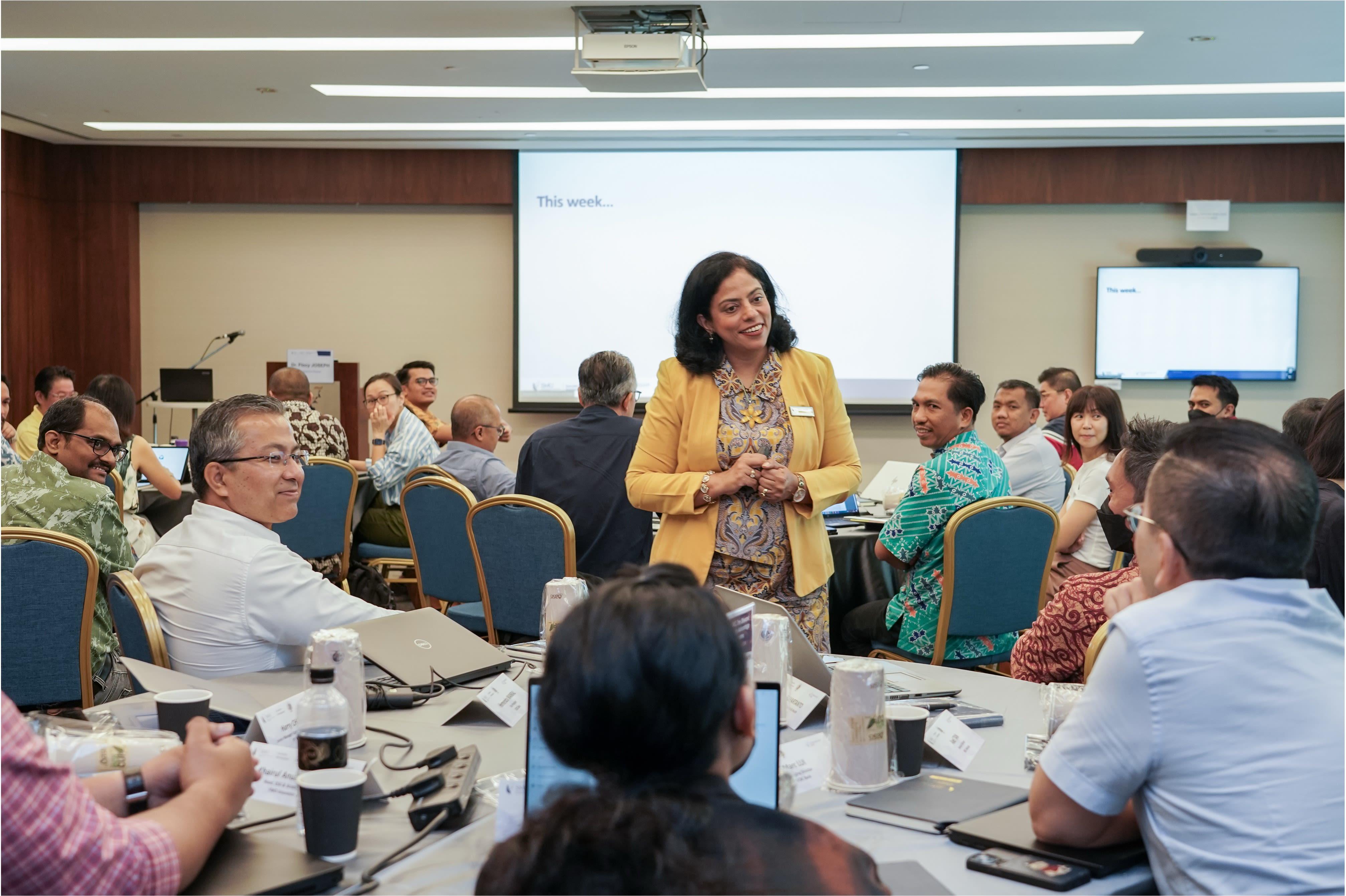
Education is no longer bounded by age — universities must be lifelong partners in learning.
Education is no longer bounded by age — universities must be lifelong partners in learning.
Interdisciplinary. At their best, interdisciplinary efforts do not dilute depth; they demand it. Tackling climate change or AI ethics requires deep disciplinary knowledge, but also fluency across boundaries. The same holds whether for education or research.
Innovation with intention
Even while the crisis in many places demand innovation, innovation without intention can deepen inequality. The most resourced institutions often have the greatest capacity to experiment, but their models may not be easily replicated elsewhere. Universities must therefore tie innovation to accountability: Are new models broadening access, enhancing social mobility, and creating opportunity for those beyond the already privileged?
Universities must reckon with their role in shaping inclusive societies and enhancing social mobility. They must be accountable not only to employers, but to the communities they serve. Governments, too, must see higher education as a public good worthy of investment. Policymakers should enable immigration systems to welcome global talent, not deter it.

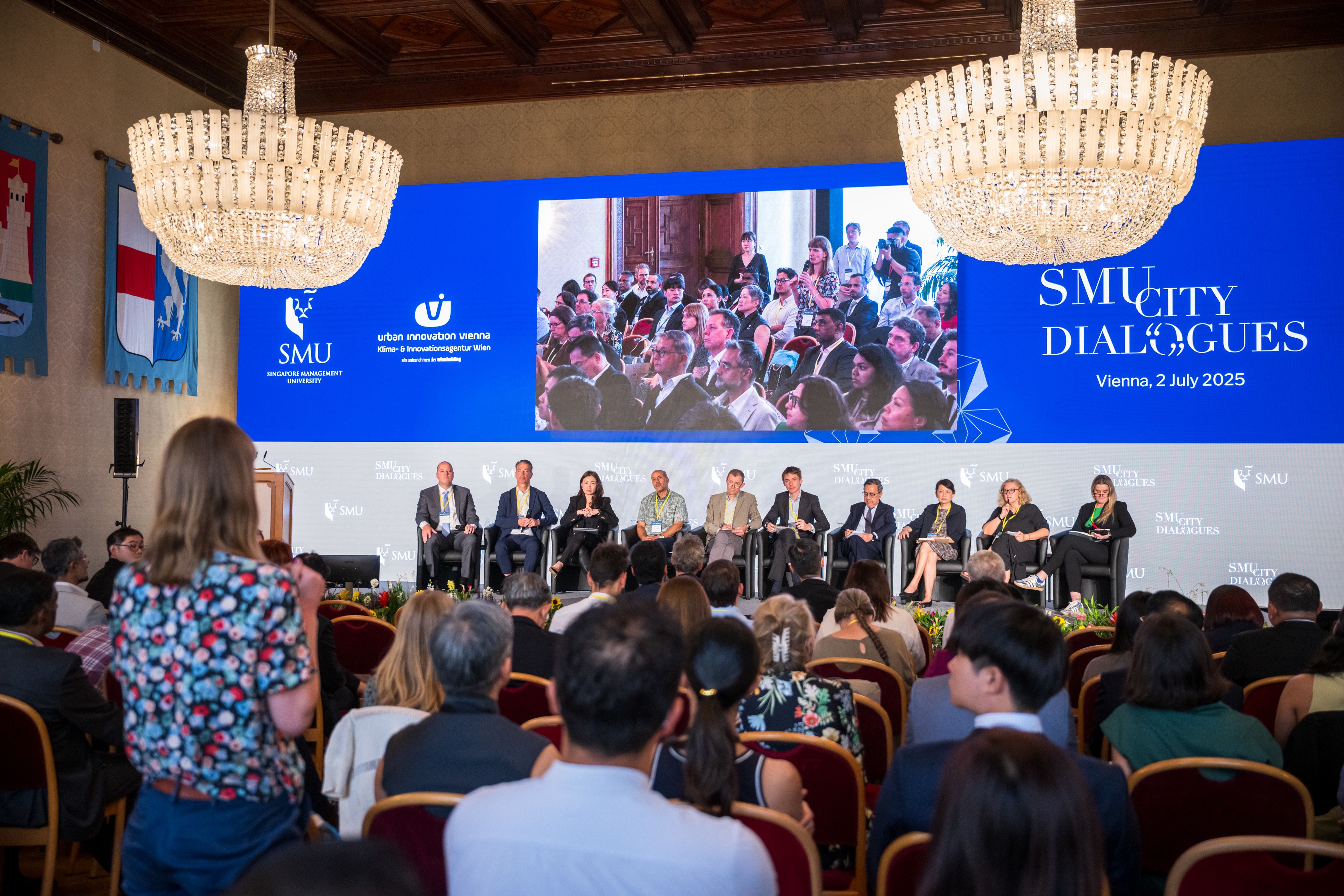
At the SMU City Dialogues in Vienna, global leaders explored how innovation must serve society.
At the SMU City Dialogues in Vienna, global leaders explored how innovation must serve society.
What must happen now
The question is not whether higher education will change, but how. Will it retreat into prestige and exclusivity, measured by rankings and star professors — or expand access, relevance, and opportunity? With public trust in flux, alternative measures of success deserve emphasis: serving diverse learners across lifetimes, supporting career mobility and social equity, and celebrating research that makes real-world impact.
The challenges are real, but so too is the opportunity. With courage, creativity, and collaboration, universities can move from being institutions under siege to engines of renewal for the societies they serve.
Singapore Management University (SMU) is a premier university in Asia, recognised internationally for its impactful research and distinctive pedagogy of small class sizes, interactive learning, and strong industry linkages. Anchored in the heart of Singapore’s city centre, SMU is a global gateway for thought leadership, preparing students and professionals to thrive in a rapidly changing world. Learn more at www.smu.edu.sg.

This content was paid for and created by Singapore Management University. The editorial staff of The Chronicle had no role in its preparation. Find out more about paid content.
 Built with Shorthand