
CASE STUDY
Teaching Civil Discourse:
How one college’s initiative is influencing campuses nationwide
By Graham Vyse

Saeran Dewar was at her Seattle high school on the day in 2022 when a shooting in the building left one of her fellow students dead. She remembers the terror she felt as the school locked down — lying on the floor with classmates, not knowing where the shooter was, crying and trying to muffle the sound.
Dewar was already a budding gun-control activist — she’d founded a local advocacy group in her community earlier in the year — but the harrowing experience intensified her feelings. The fervor fueled her activism, but she worried it also undermined her effectiveness. “It became so difficult for me to defend my position without getting really passionate and emotional.”
Today Dewar is a sophomore at Davidson College, in Davidson, N.C., and she credits the institution’s expanding efforts to teach civil discourse with helping her learn to engage with and understand alternative perspectives, and to be a persuasive advocate for her own.
“I’m not saying getting passionate and emotional in debates is a bad thing,” she says. “It’s a good thing, but so is being able to regard people with a different opinion as equally deserving of moral standing in these conversations. I found that really difficult, and it’s something I’ve gotten to work on, which has been really valuable.”

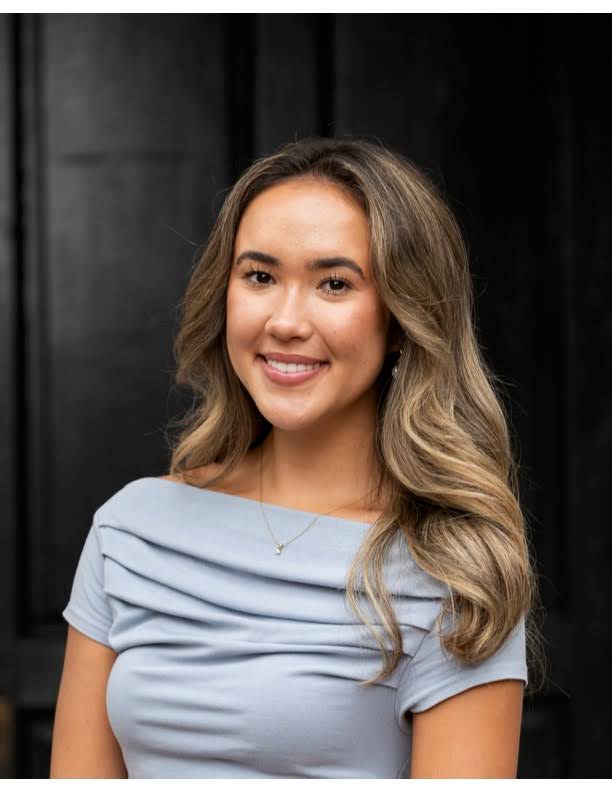
Saeran Dewar, a Davidson sophomore from Seattle, took an interest in the college’s civil-discourse efforts because she wanted to learn to have more constructive conversations on gun control and other issues she cares about. Photo courtesy of Saeran Dewar.
Saeran Dewar, a Davidson sophomore from Seattle, took an interest in the college’s civil-discourse efforts because she wanted to learn to have more constructive conversations on gun control and other issues she cares about. Photo courtesy of Saeran Dewar.
In an era of deeply felt divisions in politics and culture, a growing number of campuses across the country are starting new efforts to promote civil dialogue on contentious issues — and many higher-ed leaders are looking to Davidson as a model. The private liberal-arts college, which enrolls just over 2,000 students in an affluent Charlotte suburb, began its Deliberative Citizenship Initiative (DCI) in 2020. It’s a project that involves students, faculty members, staff members, alumni, and even residents of the local community who aren’t typically part of campus life.
DCI has paid fellowships for student leaders, who train to facilitate small-group discussions; campus events like speaker series and expert panels; faculty workshops and a Deliberative Pedagogy (DeeP) Collaborative to develop and share best practices for the classroom; and original research based on the work of the effort.
The organization estimates that several thousand people have participated in its programming over the last half dozen years, including roughly 1,500 during the 2024-25 academic year. The average forum that year had an audience of about 150 — in person and online — and there were nearly 400 participants for facilitated conversations.
Jacqueline Pfeffer Merrill, senior director of civic learning and free-expression projects at the Council of Independent Colleges, says DCI’s work is “distinctive and a cut above what’s being done on many other campuses,” in part because it’s so multifaceted.
She’s not alone in being impressed. Davidson recently announced it had won $4 million in federal funding — “the largest competitive government grant in the college’s history” — to help 100 other campuses learn from its approach. The effort will be run by Davidson’s Institute for Public Good, started last year to equip students “to address society’s challenges and emerge as ethical public leaders,” according to its website.
But what does Davidson’s approach entail, and how did the college arrive at it?
An Initiative Sparked by Societal Trends
Growing up in Washington, D.C., Graham Bullock developed an early awareness of politics — and the conflict it can create. He’s now an associate professor of political science at Davidson, and one of his core academic interests is studying polarization, which he sees as undermining good governance. He’s also DCI’s faculty director and the leader of Davidson’s nascent work with other institutions through what the college is calling its Deliberative Citizenship Network.
The work that led to DCI’s creation began more than a decade ago. Bullock says there wasn’t a specific catalytic event on Davidson’s campus, but he and some of his colleagues were generally concerned about societal trends that seemed to stigmatize free speech and candid conversation — people feeling afraid to speak their minds for fear of social or even professional backlash.
“Students, faculty, staff just aren’t talking to each other as much as they used to,” he explains. “They’re not as open in class. They’re not as open in private.” Another contributing factor was the 2016 election, which, Bullock says, showcased how America has “such deep divides, and such a deep lack of understanding of people across those divides.”
With the help of several others on campus — including Davidson’s vice president for student life, a former chair of the college’s communications program, and the directors of its writing program, Center for Civic Engagement, and Speaking Center — the initiative really started to come together in 2019. Bullock and his colleagues met with a range of campus stakeholders and formed working groups to move the effort forward. The Duke Endowment, a foundation supporting communities in the Carolinas, gave it a two-year grant in 2020.
DCI was inspired by many pre-existing programs advancing civil discourse. Bullock says he compiled “a database of more than 80 efforts” in higher ed and elsewhere. Though he and his colleagues thought many of these attempts did certain things well, DCI’s goal was to combine their strengths to do something more comprehensive.
Among many other sources, the initiative was influenced by the work of Sara A. Mehltretter — a rhetoric scholar at Wabash College who had studied deliberation as a pedagogical tool — and Martín Carcasson, founder of Colorado State University’s Center for Public Deliberation, which has a student-fellows program. Another inspiration was Wake Forest University’s work with alumni through its Call to Conversation effort, which fostered dinner discussions around the country between 2017 and 2021, seeking to promote “meaningful, face-to-face engagement” and build community. DCI also drew from Why We Argue (And How We Should) by a pair of Vanderbilt University philosophers, Scott F. Aikin and Robert B. Talisse, which is now a central text used in Davidson’s work.

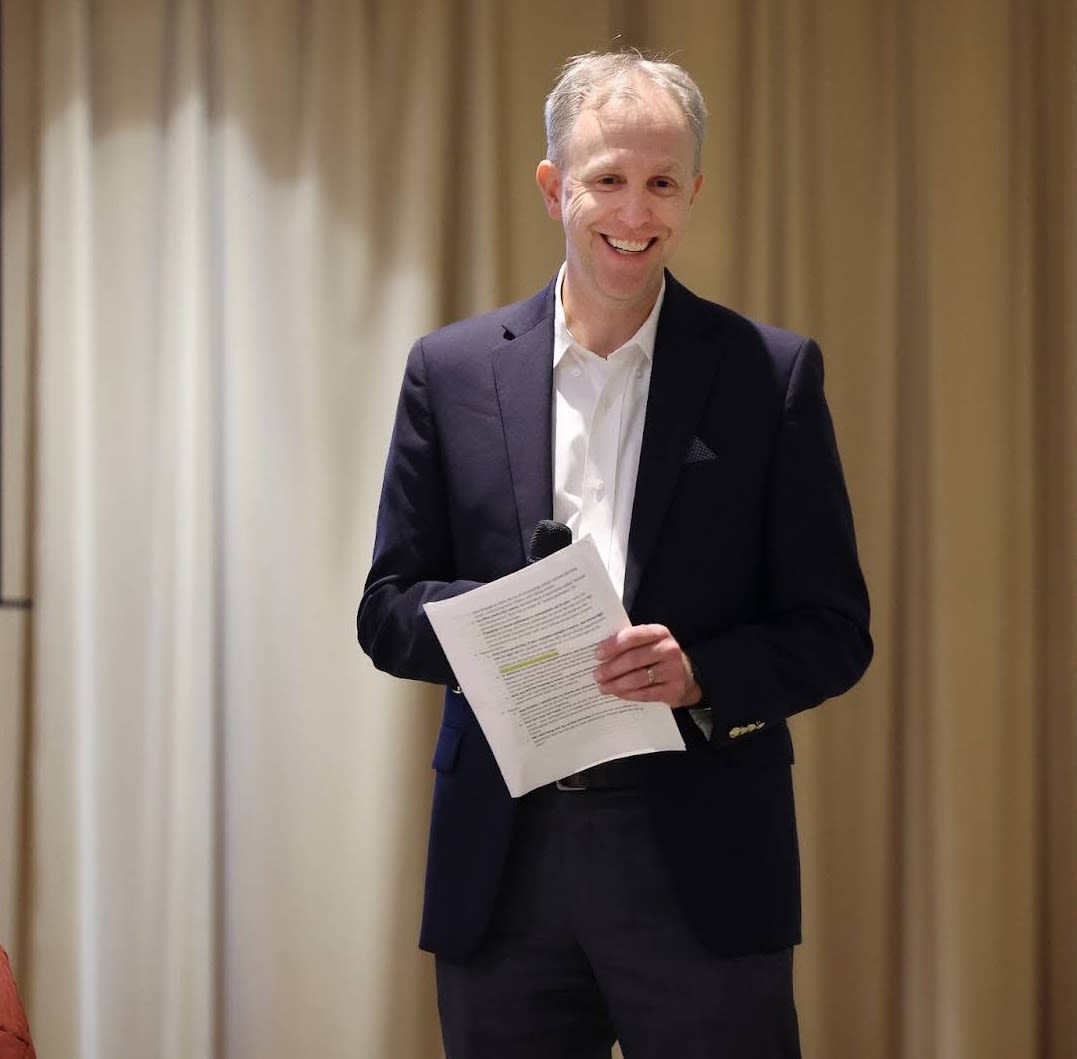
Graham Bullock, an associate professor of political science at Davidson, is the faculty director of the college’s Deliberative Citizenship Initiative. He compiled a database of more than 80 efforts in higher ed and elsewhere in the hopes of combining their strengths into something more comprehensive. Photo courtesy of Davidson College.
Graham Bullock, an associate professor of political science at Davidson, is the faculty director of the college’s Deliberative Citizenship Initiative. He compiled a database of more than 80 efforts in higher ed and elsewhere in the hopes of combining their strengths into something more comprehensive. Photo courtesy of Davidson College.
Learning to Look for “Shared Humanity”
Bullock says one of DCI’s recent events had about 100 attendees in person and just as many online. He reports that they get extremely positive feedback from post-event surveys.
Some students have found their way to DCI through taking a class with him, including Stephen Walker — a senior from Blue Bell, Pa., a small suburb about a 30-minute drive from Philadelphia.
Walker describes himself as a Trump-supporting Republican who generally assumes he’ll have different politics than “most people in any room I walk into” at Davidson. He’s not a stranger to disagreement — he grew up encountering a range of viewpoints in a swing state where both major political parties are competitive — but says it’s been “deeply meaningful” to be able to hone his ability to discuss and debate well. He views this as “a needed skill in my life.”
“If you open yourself up to having your views challenged for hours on end, you’re able to see the limits of them — or problems with how you defend them — in ways that wouldn’t be possible if you just avoided criticism,” Walker says. He also believes education in civil discourse can benefit students who may encounter political or cultural divisions in their families and communities as well as in the workplace.

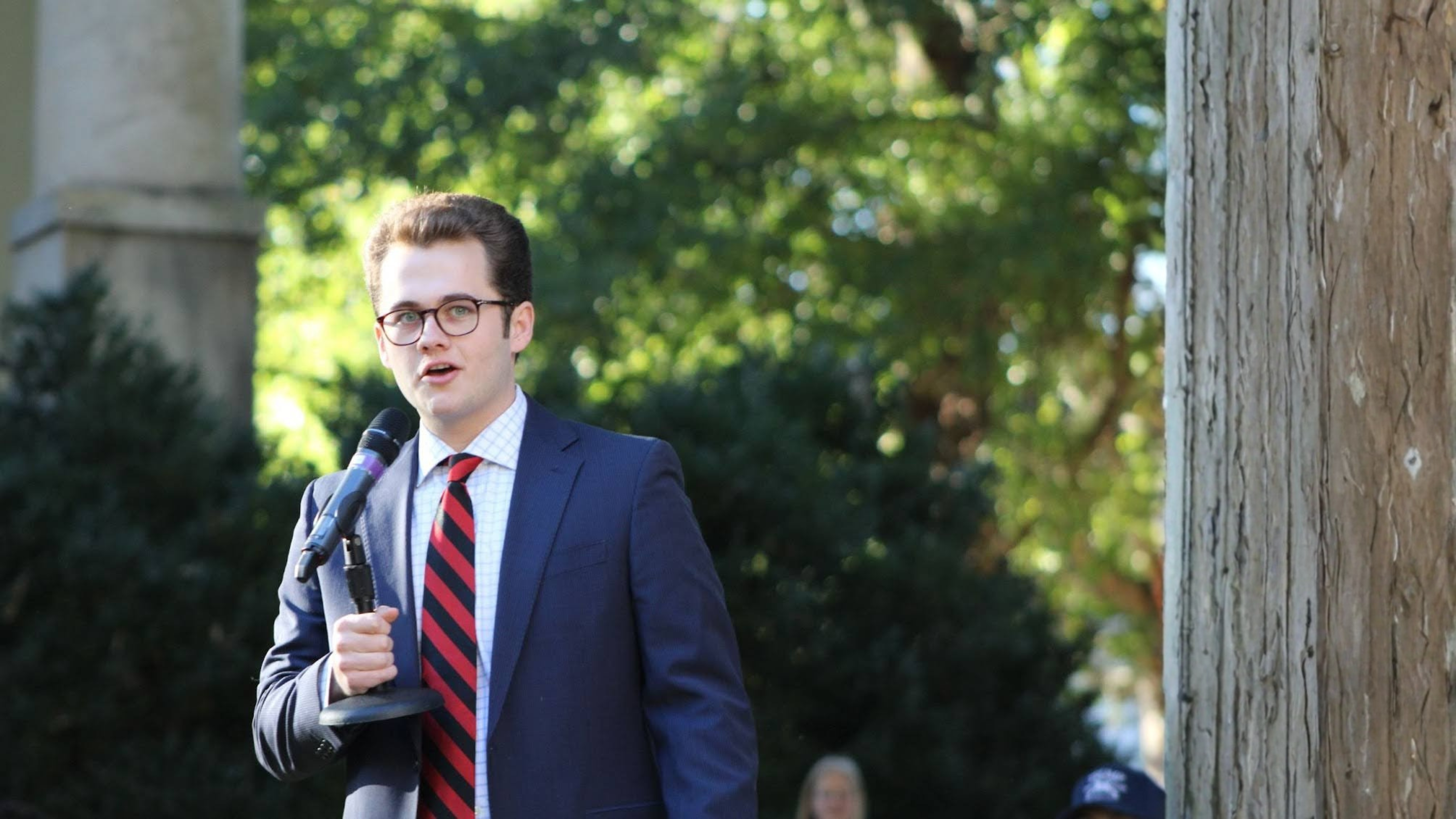
Stephen Walker, a senior from Blue Bell, Pa., says Davidson's lessons on civil dialogue have helped him hone his ability to discuss and debate issues. Photo courtesy of Stephen Walker.
One of the ways Davidson students can take on a leadership role in DCI is through its paid fellowship program. Up to 15 students are selected each year; Dewar and Walker have both participated. First-year fellows make $12 an hour, working about five hours a week, and seniors make slightly more.
Fellows are trained to facilitate discussions among Deliberative “D” Teams, which meet several times a semester and include students, faculty members, staff members, and community members. Each discussion session has a topic like health care or immigration policy. Dewar emphasizes how diverse the participants can be, creating opportunities for, say, “an 18-year-old freshman international student to debate with a retiree who’s lived his entire life in Davidson, N.C., about deportations.”
Fellows learn best practices for discussions, which include setting and adhering to conversational guidelines — not speaking in hostile or demeaning language, trying to be brave about sharing your views, cultivating empathy for the perspectives of others. Sometimes a facilitator might play “devil’s advocate” or bring in a point of view participants haven’t voiced.

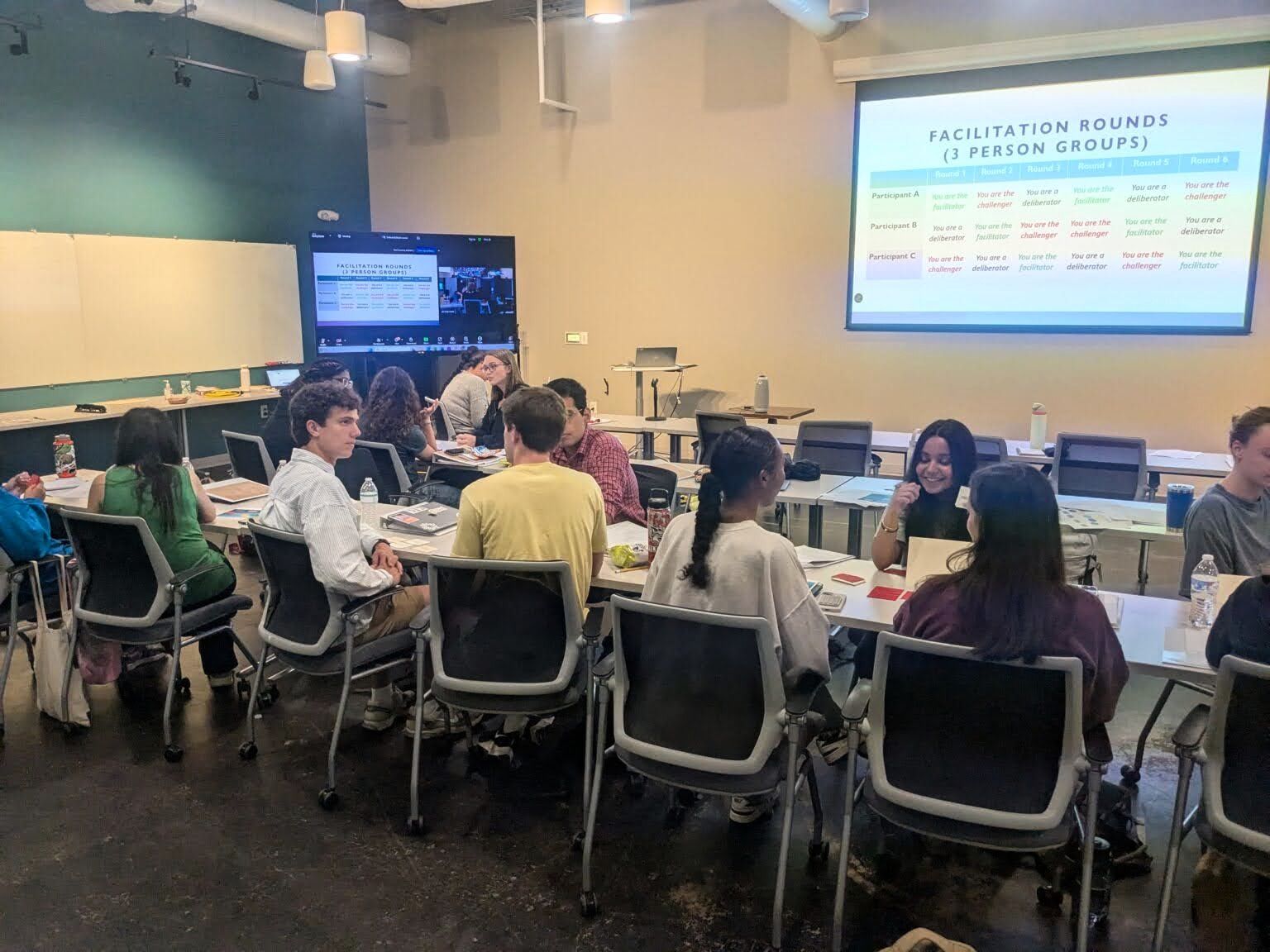
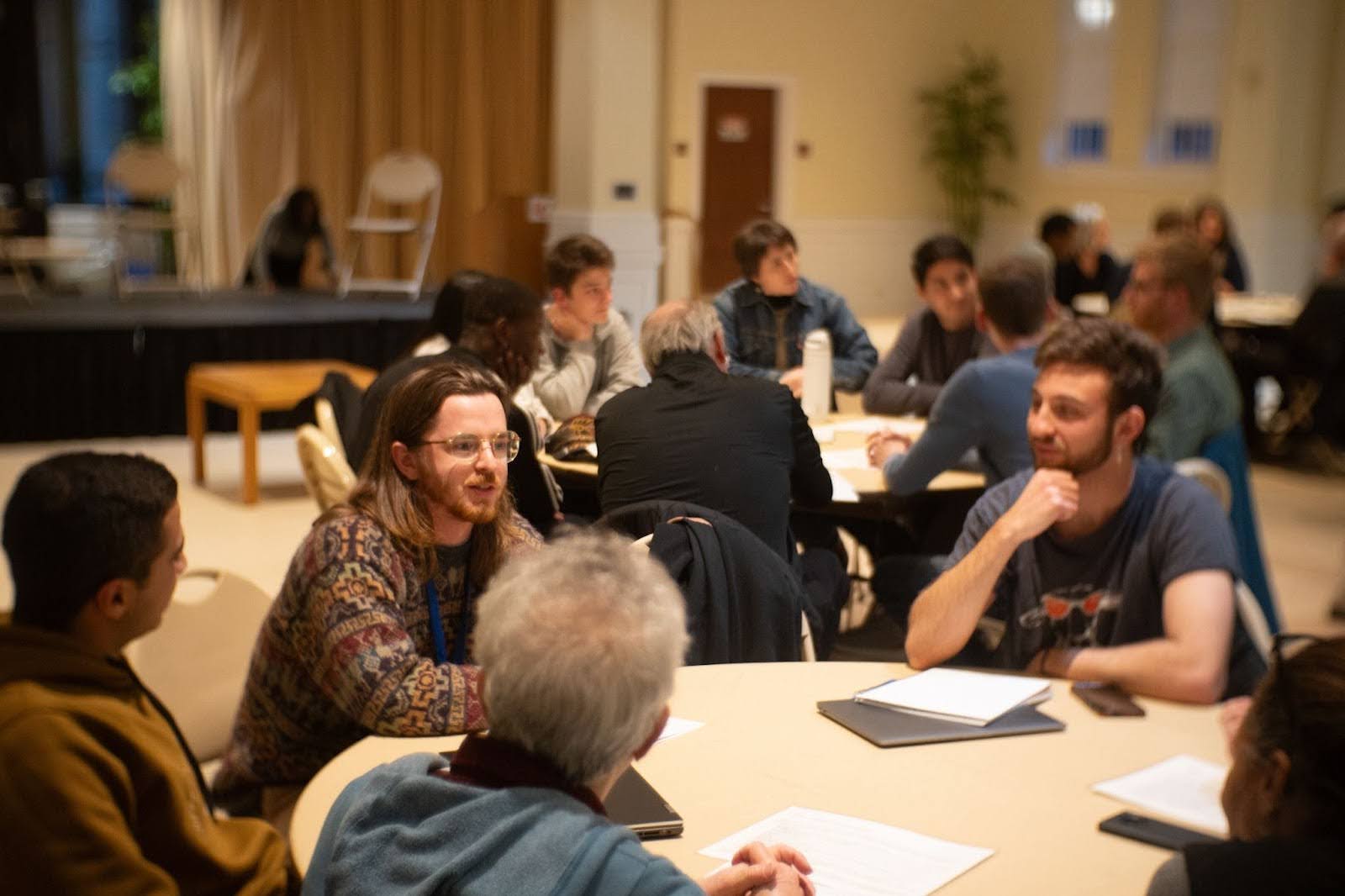
Participants in Davidson’s facilitated conversations are encouraged to understand alternative perspectives, not try to “win" arguments, though students say the experience has improved their ability to make a persuasive case. Photo courtesy of Davidson College.
Participants in Davidson’s facilitated conversations are encouraged to understand alternative perspectives, not try to “win" arguments, though students say the experience has improved their ability to make a persuasive case. Photo courtesy of Davidson College.
Dewar and Walker say the sessions haven’t changed their politics, though Walker notes that his view of climate change has evolved — he used to be skeptical of government intervention to tackle the issue; he now favors it.
Sometimes students simply develop a different style of conversation. Walker says he’s learned “to present views in a way that’s more accommodating to people with different opinions, so conversations don’t always devolve into unconstructive arguments.”
Dewar, a leader in the student Democrats club, may not have to navigate being a Republican at a predominantly progressive college, yet she says the politics on campus were “a little bit of an awakening” for her, too. “Davidson, while a very liberal college campus, has more intellectual diversity than where I grew up,” she explains. “Honestly, I’d never met a Republican. I’d never spoken to one. I’d definitely never been friends with one.”
Her work with DCI has reminded her to look for shared humanity in those she disagrees with. She still cares deeply about the issue of gun violence, but says her opponents’ motives matter. She knows none of them would say, “I like it when children die in school.”

A Learning Community for Faculty
Some faculty members are also benefiting from DCI’s efforts — and not just those who teach at Davidson. The Deliberative Pedagogy (DeeP) Collaborative is a learning community that helps participating scholars from Davidson and other colleges study the literature on deliberative pedagogy and incorporate its lessons in their classrooms.
DCI says 64 faculty members from 28 institutions — including 24 from Davidson — have participated since 2021.
May Mei, a professor of mathematics at Denison University, in Granville, Ohio, was part of the 2024-25 cohort. While she acknowledges math isn’t always associated with robust dialogue or heated disagreement, she says it’s a common — and frustrating — misconception that her field is all about getting to one inarguably right answer. Especially in the era of generative artificial intelligence, Mei says, mathematicians need to be able to identify and argue for the best answer, engaging in what she calls “the act of discernment” — and that requires discussion and debate.
In a multivariable-calculus course Mei taught recently, she provided students with questions and solutions that might be accurate or inaccurate, generating them with AI tools or pulling them from past students’ work. Then she asked the class to evaluate these answers. Were they well written and convincing? Were they supported by evidence and appropriate notation? The students wrote out assessments individually and then talked them through as a group.
Mei says the class struggled with justifying the answers she provided. Students would tell her things like “Well, you said it” or “it’s in the book.” Yet as they practiced over the semester, they got better at making a case, developing a skill Mei sees as vital for any academic discipline. “Arguing for a belief is how you come to possess that belief,” she says, noting that Aikin and Talisse emphasize this point. “It’s good thinking as well as good citizenship. It’s what all of us should be doing all the time.”
Students gather at an event on Davidson's campus hosted by the Deliberative Citizenship Initiative. Photo courtesy of Davidson College.
A Foundation to Build On
Colleges working on civil discourse have sometimes struggled with event attendance. They worry about reaching students with a diversity of identities and perspectives. And no one believes any of the colleges with civil-discourse programs, including Davidson, have all the answers, especially when it comes to engaging a wide array of students. Though Dewar and Walker have different politics, they share something fundamental: the desire to be politically engaged. They’re both majoring in political science, and it didn’t take much for them to see the value of what Bullock and his colleagues are doing. Reaching students like these — those predisposed to take part in efforts like DCI for whatever reason — may well make a difference in and of itself, but it will take more than that to bring about broad change on campus or in the wider culture.

Dewar believes Davidson’s efforts benefit from its small campus, where, she says, you’re “going to encounter people with different beliefs than you, whether you seek them out or not.” At the same time, she acknowledges that some students still worry about a “social cost” if they discuss difficult issues in public. They might fear being labeled a bigot, for example, in conversations related to various identity groups, even if they sincerely believe their perspectives aren’t rooted in prejudice or hate.

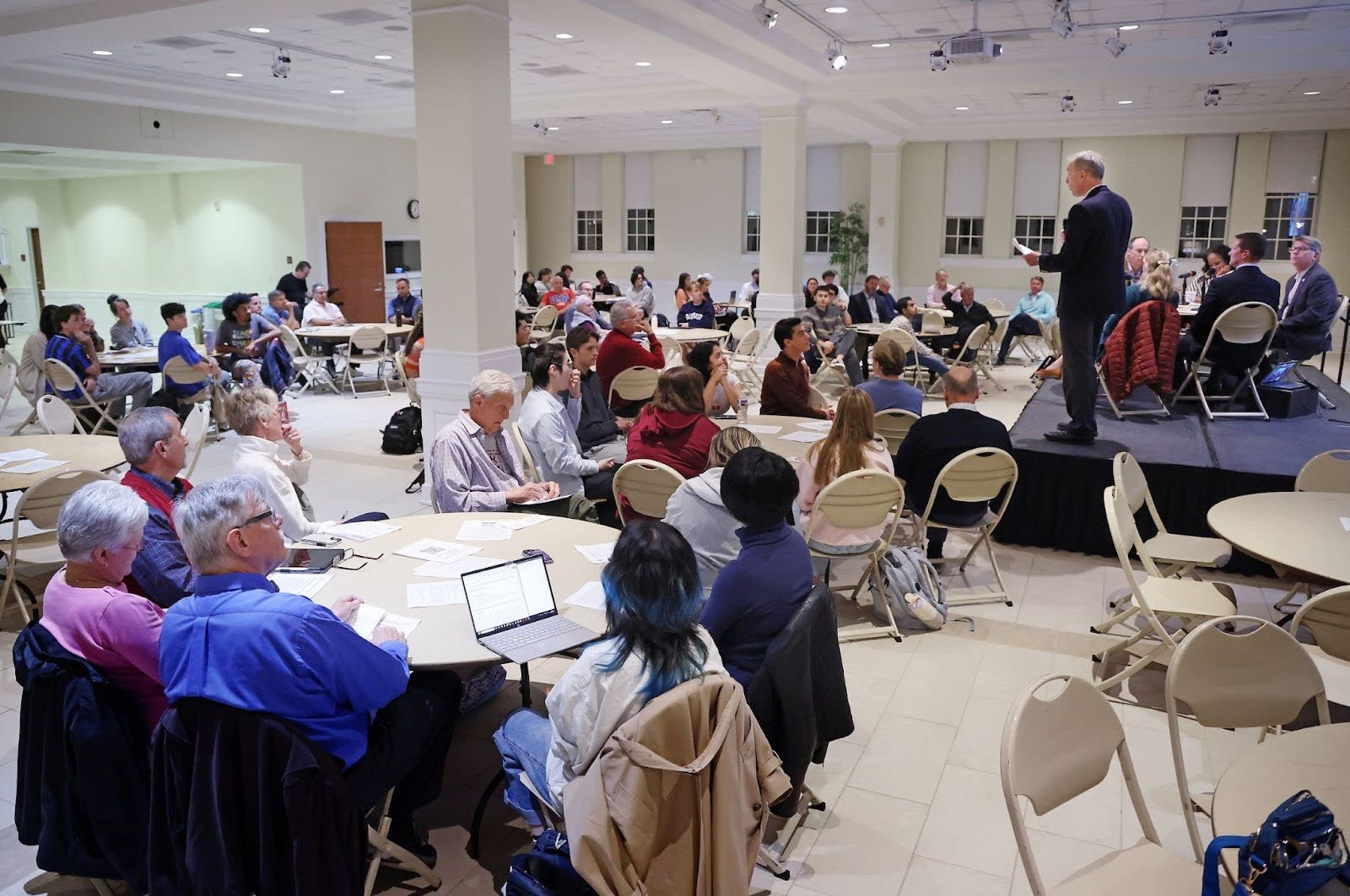
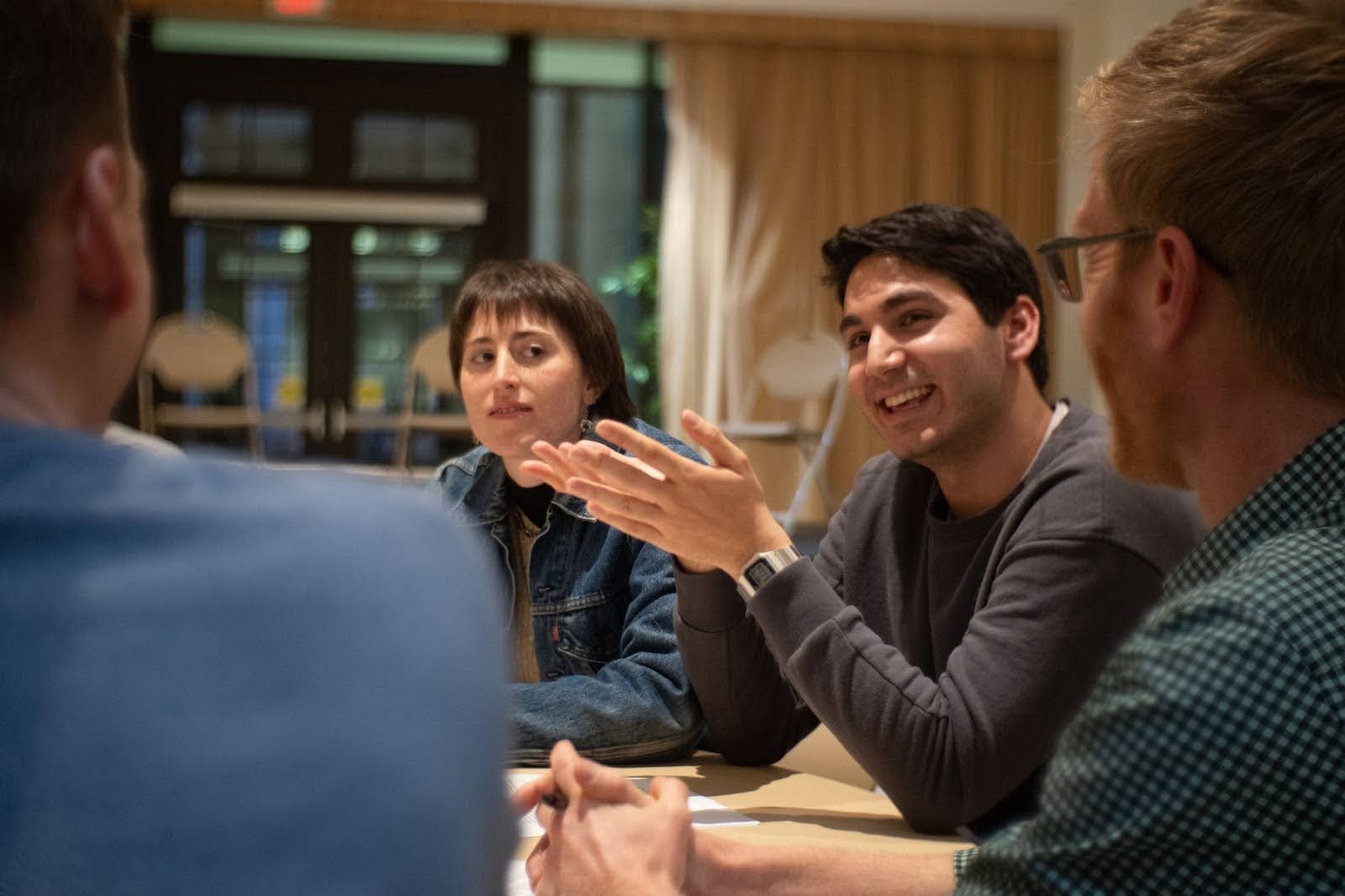
The Deliberative Citizenship Initiative includes campus speakers, forums, and facilitated small-group discussions on contentious issues. Participants may include students, alumni, and community members. Photo courtesy of Davidson College.
The Deliberative Citizenship Initiative includes campus speakers, forums, and facilitated small-group discussions on contentious issues. Participants may include students, alumni, and community members. Photo courtesy of Davidson College.
“Having the kind of structured, respectful dialogue DCI offers can be a refreshing, safe way to make mistakes and learn as they express their opinions, without a fear of repercussions,” she says. She argues that Davidson has “a really unique culture of people wanting to engage with each other” — and that DCI’s work is sustaining and strengthening that culture.
Bullock says the main pushback to their work “is concern about platforming viewpoints that some believe are harmful to particular members of our community,” but DCI believes engaging with others’ views “can help us re-humanize one another, promote more public-spirited conversations, and improve our own reasoning and persuasiveness; censorship usually doesn’t work and can contribute to even greater polarization and further retreat into our own ideological silos.” He also acknowledges that “recruiting participants with a wide range of backgrounds and perspectives is a challenge we share with similar initiatives across the country.”
Still, those working on these efforts — at Davidson and elsewhere — hope they’re creating a foundation to build on, especially as more campuses follow their lead. Merrill, of the Council of Independent Colleges, notes that “students are the most credible ambassadors and models for their peers,” and, if nothing else, the number of those models clearly is growing.
“Teaching Civil Discourse” was written by Graham Vyse. The Chronicle is fully responsible for the report’s editorial content. ©2026 by The Chronicle of Higher Education Inc. All rights reserved. This material may not be reproduced without prior written permission of The Chronicle. For permission requests, contact us at copyright@chronicle.com.
 Built with Shorthand