


How Touro Is Putting AI to Work Across Its Campuses
Touro doesn’t just talk about AI. It funds faculty, supports experimentation, and embeds AI across disciplines


Across higher education, conversations about artificial intelligence are everywhere. But at many colleges and universities, AI remains confined to task forces, pilot classrooms, or speculative discussions about academic integrity.
At Touro University, however, AI adoption is being pursued at scale and across disciplines
AI@Touro
Through its institution-wide AI@Touro initiative, the university is working to transform itself into a fully AI-enabled institution by training faculty, staff, and students in the use of artificial intelligence.
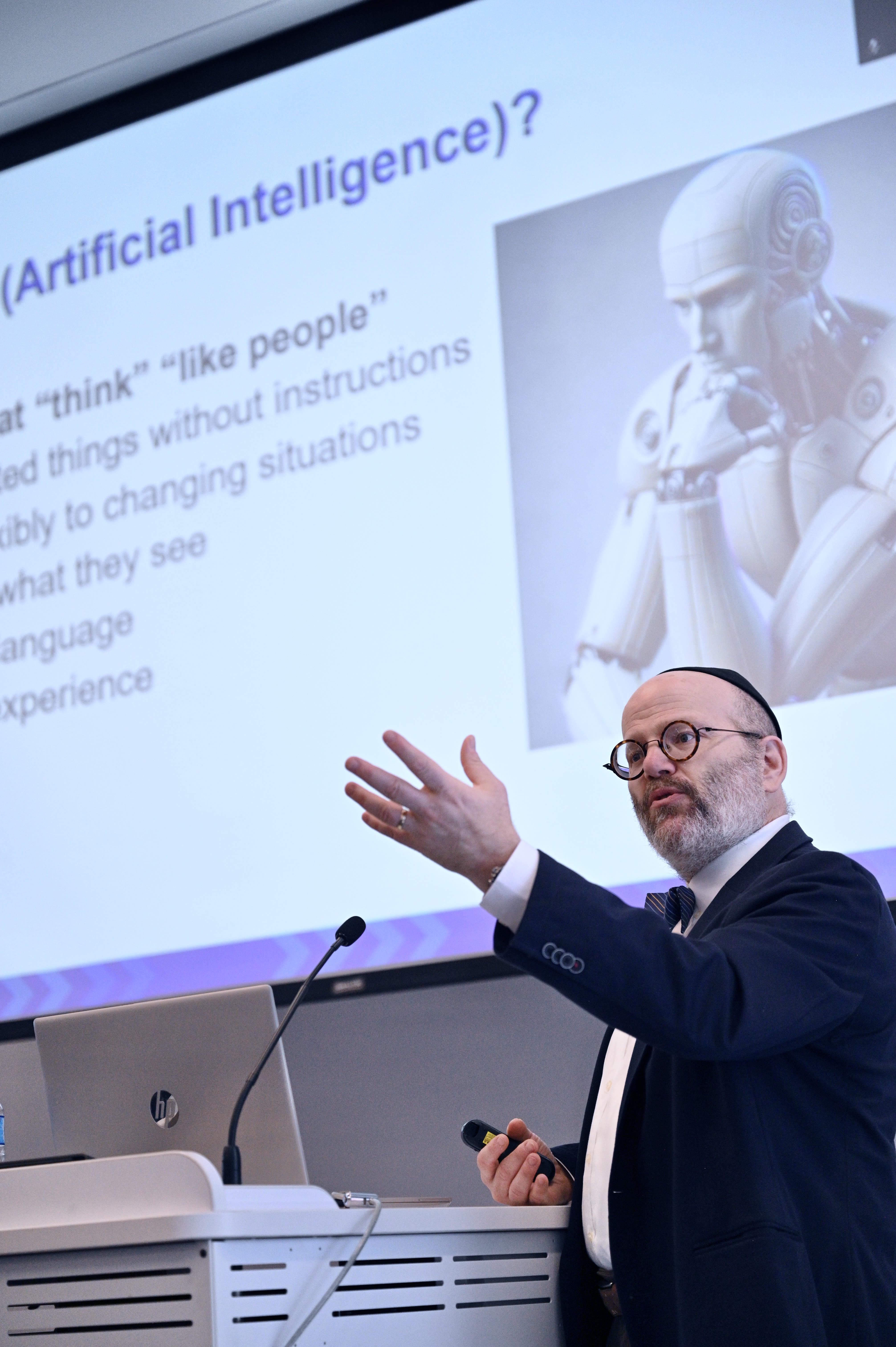
Rather than treating AI as a novelty or a future concern, Touro has taken a practical approach: fund faculty innovation, support experimentation, and integrate AI into the professional preparation of students across programs. As Touro associate provost for AI, Shlomo Argamon, says, "A university's greatest resource for creativity and innovation is its faculty. The best thing we can do is support them in innovation and get out of their way."
In fact, beginning last year, thanks to the generous support of a donor, the university launched a Faculty Innovation Grant Program to support instructors in developing AI-enhanced curricula.
The result is a growing portfolio of classroom innovations across the university, including:
● AI-powered exercises in contracts and criminal law that sharpen legal reasoning
● AI-generated patient simulations and health literacy tools for health science training
● Lesson planning and classroom simulations that prepare future educators
● Simulated therapy sessions for clinical mental health training
● Advertising campaign development using AI tools
● AI-powered study guides and chatbots for infectious disease education
● Simulated patient interactions to strengthen medical training
These projects illustrate a broader philosophy: AI is not being treated as a single technology to adopt, but as a tool that must be adapted to the needs of each discipline.
Below is a deeper look into some examples of how faculty are putting that philosophy into practice.

Social Work: Practicing Clinical Judgment in a Safe Environment
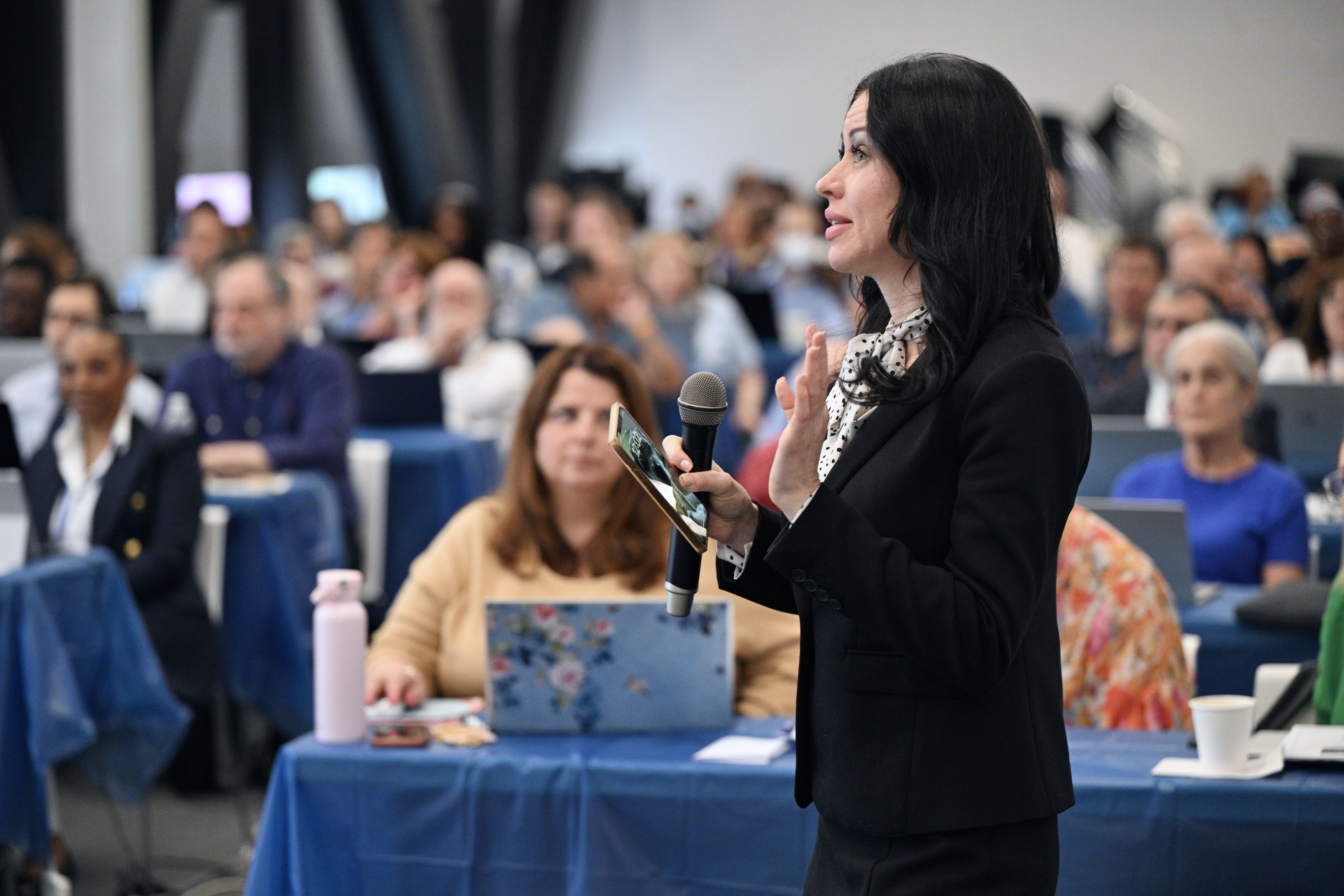
At Touro’s Graduate School of Social Work, Dr. Jamie Sundvall, Director of the Online Master of Social Work (MSW) program, is integrating artificial intelligence into the curriculum to help students build clinical judgment before entering the field.
AI in action: Through AI-powered tools, students practice real-world scenarios using virtual patients, simulations, and decision-making platforms that mirror the complexities of social work practice.
For example, decision-making trees in virtual environments allow students to interact with simulated clients dealing with issues such as substance use or suicide risk. As students ask questions and apply therapeutic approaches, the “client” responds in real time—through dialogue, facial expressions, and tone of voice—helping students adjust their approach and refine their assessment skills.
Other tools allow students to practice administrative tasks that are often difficult to learn in the classroom, including documentation, billing, referrals, and interdisciplinary collaboration. Simulated platforms replicate real healthcare systems and offer hundreds of customizable patient cases.
The takeaways: These AI-powered environments allow students to practice challenging scenarios repeatedly in a low-risk, controlled setting, while faculty also gain valuable insights into student learning. Because the simulations track decisions and responses, instructors can identify patterns in a student’s strengths and areas for growth and provide more targeted coaching.
Another unexpected benefit: reduced anxiety. Many social work students feel nervous about being observed while interacting with clients. AI simulations allow them to practice skills and build confidence before working with real patients.

As Dr. Sundvall explains:
“AI tools like decision trees reduce a lot of that anxiety for students, and with personalized coaching that targets their strengths and areas for improvement, students are learning faster and more effectively—and better retaining competencies.”
Pediatric Physical Therapy: Enhancing Experiential Learning
At Touro’s School of Health Sciences, Dr. Bhavini Surana, Assistant Professor in the Doctor of Physical Therapy (DPT) program, received a Faculty Innovation Grant to explore how generative AI can support pediatric physical therapy education.
AI in action: Dr. Surana asked third-year DPT students to use Google Gemini to design weekly physical activity plans for children and young adults—an exercise grounded in a real public health challenge: childhood inactivity and obesity.
Each plan had to include aerobic, muscle-strengthening, and bone-strengthening activities, along with equipment needs, activity settings, and evidence-based guidelines for frequency and intensity.
The takeaways: As students refined their prompts, they saw how dramatically AI outputs could change. Clearer instructions produced stronger results. Gemini began generating more creative activity ideas, simpler explanations for children, and visuals demonstrating strengthening and aerobic exercises.
Just as important, the exercise reinforced clinical responsibility. Students evaluated AI-generated content against established evidence and reflected on the clinician’s role in validating AI outputs.
For faculty leaders involved in the project, the lesson is clear: AI can extend experiential learning opportunities rather than replace them. In fields where clinical hours and patient access may be limited, AI-supported exercises can help students build foundational competencies before working with real patients.
As Dr. Surana explains:
“Ultimately, the project demonstrated how AI can help PTs efficiently create clear, comprehensive, and patient-friendly exercise plans, which in turn gives them more time for direct patient care and benefits patients and providers alike.”
Education: Preparing Teachers to Use AI Thoughtfully
At Touro’s Graduate School of Education, Gregory Cassiere integrated artificial intelligence into his course Introduction to Educational Technology to help future teachers develop both AI fluency and responsible technology practices.
AI in action: Throughout the semester, students explored a range of AI tools designed to support real classroom tasks—from lesson planning to accessibility.
They experimented with:
● Programs such as Ready Player Me, designing digital avatars that could speak multiple languages and be used in simulated lessons for English-language learners and students with disabilities
● Custom AI chatbots that could assist with homework questions and classroom discussions
● AI-powered search tools like Scite.ai, Perplexity, and Diffit to help evaluate sources, refine prompts, and generate discussion questions
● MagicSchool AI to create Individualized Education Programs (IEPs) for fictional students
The assignments were designed to mirror real teaching challenges, including creating accessible materials and adapting instruction for diverse learners.
The takeaways: Showing students how to search with AI and refine their prompts encouraged them to become tool critics rather than tool consumers. The course emphasized ethical AI use, attribution, and identifying potential bias in AI-generated content.
By the end of the semester, every student had incorporated multiple AI tools into their final projects. Surveys showed a 30% increase in confidence in using AI in educational settings, and 100% of students passed the AI plagiarism and attribution quiz.
Cassiere says:
"The goal is not to teach students to depend on AI, but to teach them how to think with it, question it, and use it responsibly to support real learning."

A Blueprint for Institutional AI Adoption
Across these examples, a clear pattern emerges. At Touro, AI isn’t being treated as a side project or a campus buzzword. It’s being integrated directly into how students prepare for their professions—from healthcare and social work to education and business.
For institutional leaders thinking about how to move from conversation to action, several lessons stand out:
● Faculty innovation grants create buy-in rather than resistance. They give instructors the freedom to experiment, test ideas, and build AI applications that make sense in their disciplines.
● AI implementation must be discipline-specific. The needs of a social work classroom are very different from those of a clinical training program or an education course. Successful implementation respects those differences.
● Focus on professional outcomes. At Touro, AI tools are being introduced in ways that strengthen the real-world competencies students will need in their careers.
When those elements come together, AI becomes a practical tool that helps students think better, practice more, and graduate ready to make a meaningful impact in their professions and in the communities they serve.


This content was paid for and created by Touro University. The editorial staff of The Chronicle had no role in its preparation. Find out more about paid content.
 Built with Shorthand