



How Rice University is reframing the role of the arts and humanities in a research institution

Over the past decade, arts and humanities programs across the United States have faced declining enrollments, public skepticism about their economic value and, in some cases, institutional retrenchment. Departments have been consolidated, majors suspended and resources redirected toward fields perceived as more directly tied to workforce outcomes.
Against that backdrop, Rice University has expanded its commitment to the arts and humanities. The university has treated creative disciplines as integral to its research mission. Recent decisions reflect an institutional conviction that creative practice belongs at the center of a research university, not at its margins.
A new chapter for the arts at Rice
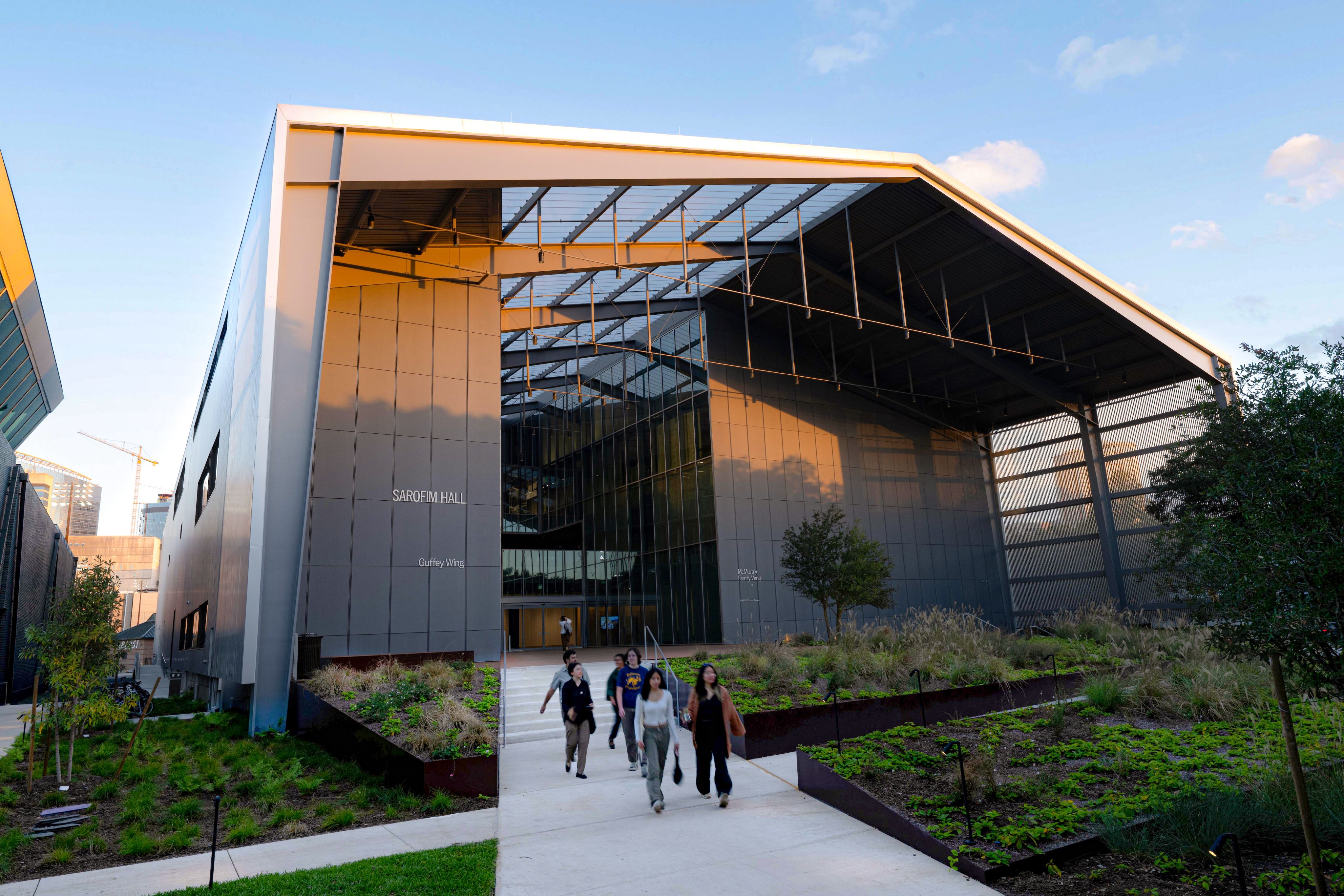
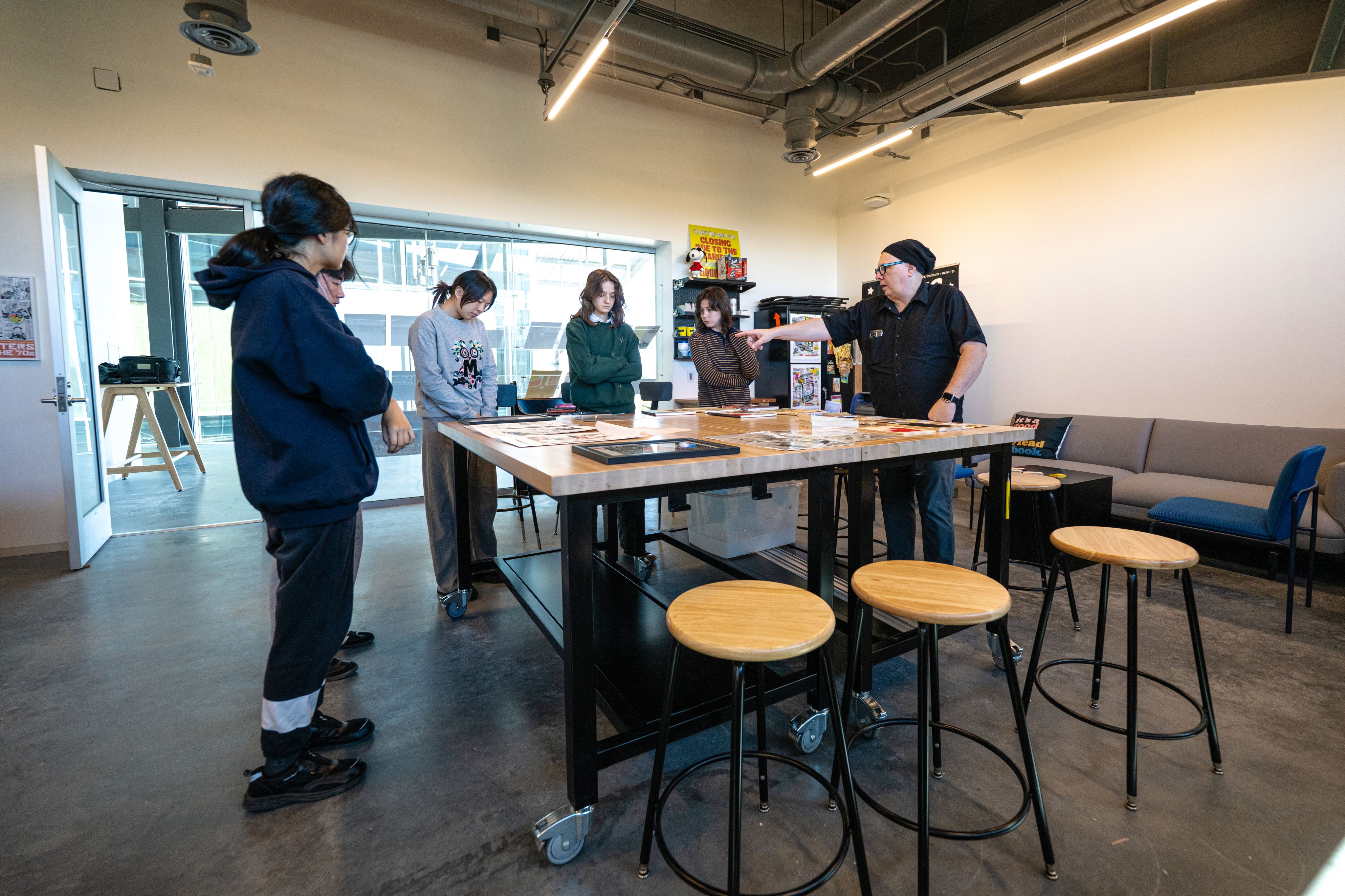
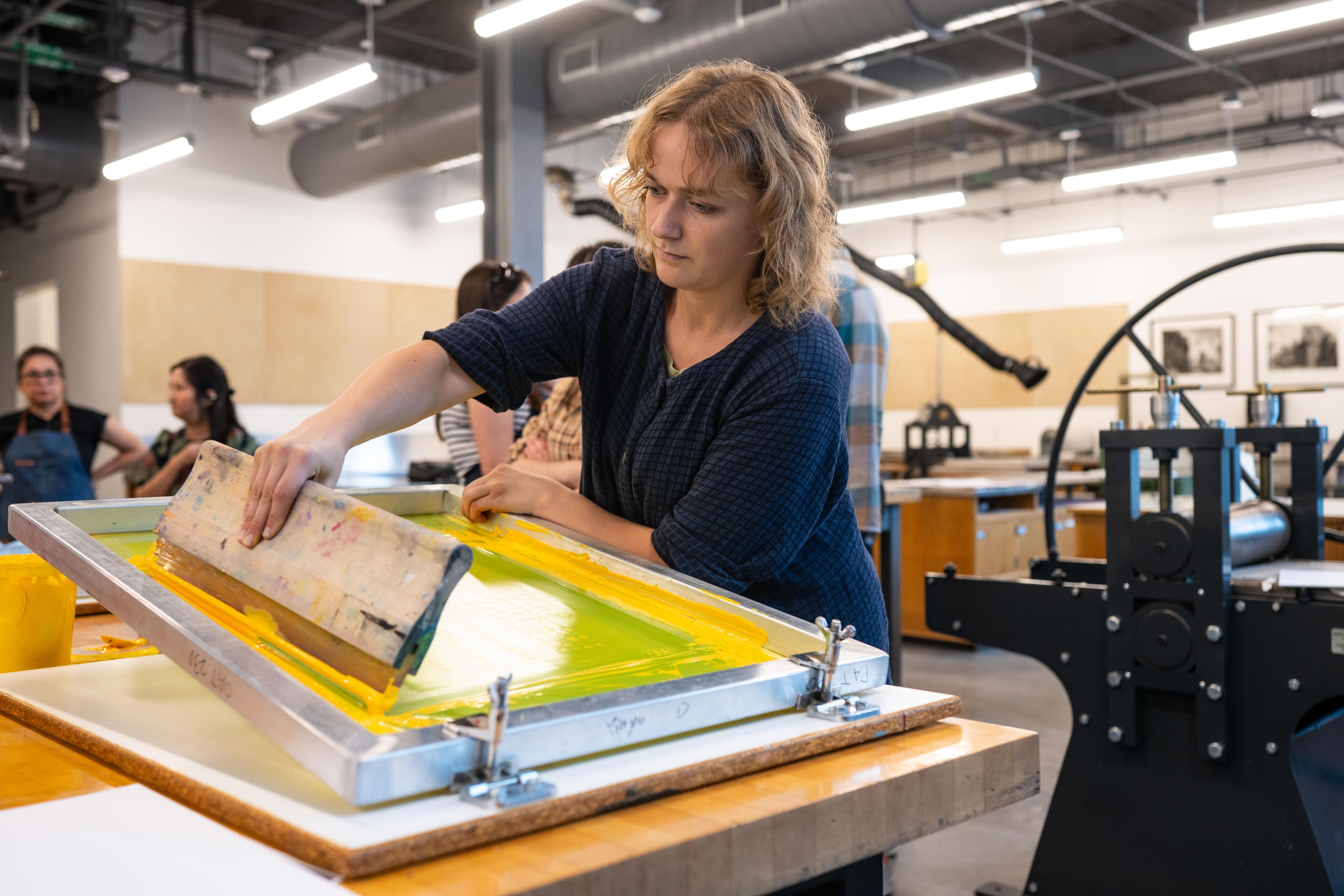
Art is the second-largest major after English in the School of Humanities and Arts and students from science and engineering fields make up roughly half of enrollment in art courses. Those classrooms challenge the assumption that creative study belongs primarily to students pursuing arts degrees and institutional changes have reinforced that shift. The opening of Susan and Fayez Sarofim Hall and the renaming of the School of Humanities to the School of Humanities and Arts formalized an expanded role for creative practice within the university’s academic framework.
“When I first arrived, I used to say ‘The arts are at the heart of the humanities,’ but that felt vague,” said Kathleen Canning, dean of the School of Humanities and Arts. “Renaming it the School of Humanities and Arts acknowledges the arts’ power.”
“Symbolically, it’s huge,” said John Sparagana, chair of the Department of Art. “It acknowledges how the arts enrich the humanities and vice versa.”
Sarofim Hall, a 94,000-square-foot, $76 million building that houses the Department of Art, is located at a prominent campus gateway, placing creative practice in one of the university’s most visible spaces. Designed by alumnus Charles Renfro (’87, ’89), who was selected through an international competition, the building organizes space around interaction. A V-shaped structure separates public spaces including a cinema, gallery and performance areas from studios and workrooms while connecting them through a shared central atrium. Renfro refers to the junction simply as “the kiss.”
“Charles Renfro’s design stood out: intimate, interdisciplinary, beautifully functional,” said Canning. “As a Rice alum who studied art and architecture here, he truly understood what was needed.”
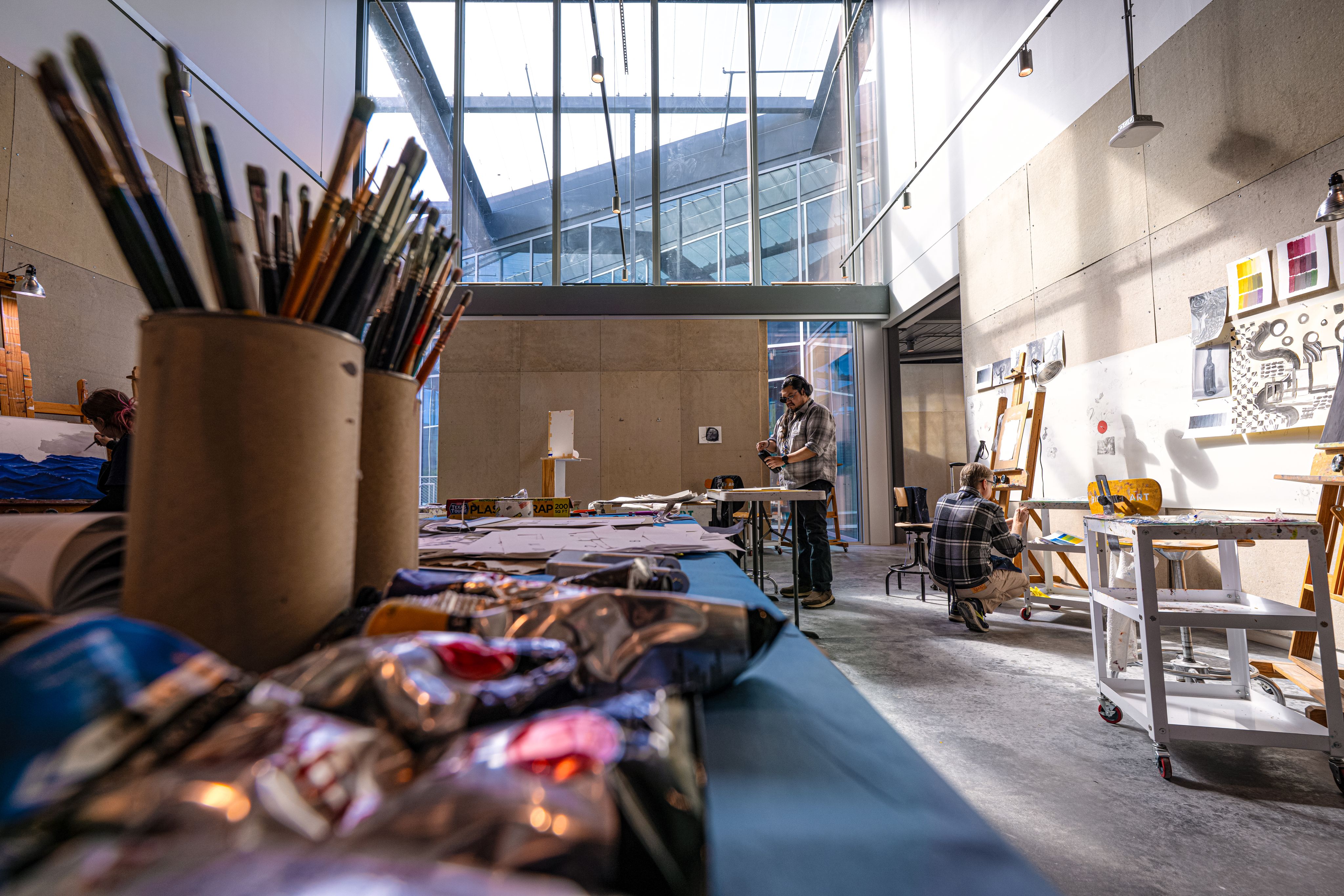
Studios open onto communal areas rather than closed corridors, encouraging critique and exchange. The design supports a pedagogical approach in which disciplines intersect and students encounter one another’s processes in real time.
“Contemporary art today thrives on permeability,” Sparagana said. “Painting, sculpture, video and performance interact with one another. Sarofim was intentionally designed to encourage that.”
The building reflects an institutional decision to treat creative practice as part of the research enterprise. Shared spaces create opportunities for collaboration that extend beyond studio work into interdisciplinary projects and public engagement.

Humanities in the research ecosystem
The emphasis on integration is also evident in research initiatives that connect the arts and humanities to medicine, public health and community partnerships.
The Medical Humanities Program offers one example. Housed within a research university that does not operate its own medical school yet sits adjacent to the Texas Medical Center, the largest medical center in the world, the Medical Humanities Research Institute occupies a distinctive position. Faculty and students have partnered with clinicians on projects examining pain perception in pediatric intensive care units and exploring how patient narratives can be incorporated into electronic medical records. Their work influences clinical practice and research design.
A similar approach shapes the Center for the Study of Women, Gender and Sexuality. Through its annual Seminar and Practicum in Engaged Research, dozens of students have collaborated with more than 100 community organizations. Some projects have contributed to peer-reviewed scholarship while others have produced policy reports and resources that remain in use by local partners. Humanities research operates within the institutions and communities it studies, contributing to outcomes as well as interpretation.


Creative practice in global context
International programs extend that framework beyond Houston. Faculty in the School of Humanities and Arts lead and teach courses abroad that situate creative and humanistic inquiry within different cultural contexts.
Through Rice In Country programs, students earn academic credit while spending six weeks immersed in overseas coursework, language study, homestays and community engagement. These faculty-led summer experiences offered in multiple countries fulfill experiential learning requirements and connect classroom inquiry with local cultural and linguistic contexts.
At the Rice Global Paris Center, humanities and arts courses use the city itself as a classroom. For example, the 2025 summer offering “Belonging and Exile” allowed students to trace the work and lives of Black American artists from James Baldwin’s Left Bank cafés to Nina Simone’s concert stages, pairing readings and screenings with site visits and reflections across the city. Daily excursions deepened students’ engagement with performance history and artistic practice in situ.
Taken together, these programs extend the university’s approach into global settings where cultural history, language and artistic expression become central to academic inquiry.
A model for research universities
The developments at Rice raise a broader question for research universities: what role should the arts and humanities play in shaping institutional priorities during a period of financial pressure and disciplinary realignment? In the face of rapidly advancing AI, that is challenging the very terms of human agency and creativity.
The growth of visual arts and creative writing at Rice particularly among students pursuing pre-med, science and engineering reflects a generation comfortable moving between analytical precision and creative exploration. Many students do not see those domains as separate spheres, but as complementary modes of inquiry. As universities continue to reassess mission and value, Rice has positioned the arts as central to the education of future scholars, professionals and civic leaders.
“I’m trying to get the humanities and arts at Rice to the highest level we can reach,” Canning said. “Our faculty are pursuing cutting-edge research and they bring that research acumen into their teaching and show our students how to become great scholars.”


This content was paid for and created by Rice University. The editorial staff of The Chronicle had no role in its preparation. Find out more about paid content.
 Built with Shorthand