



Hope, Made Here: President Thomas Poon, Ph.D., Begins LMU’s Next Chapter
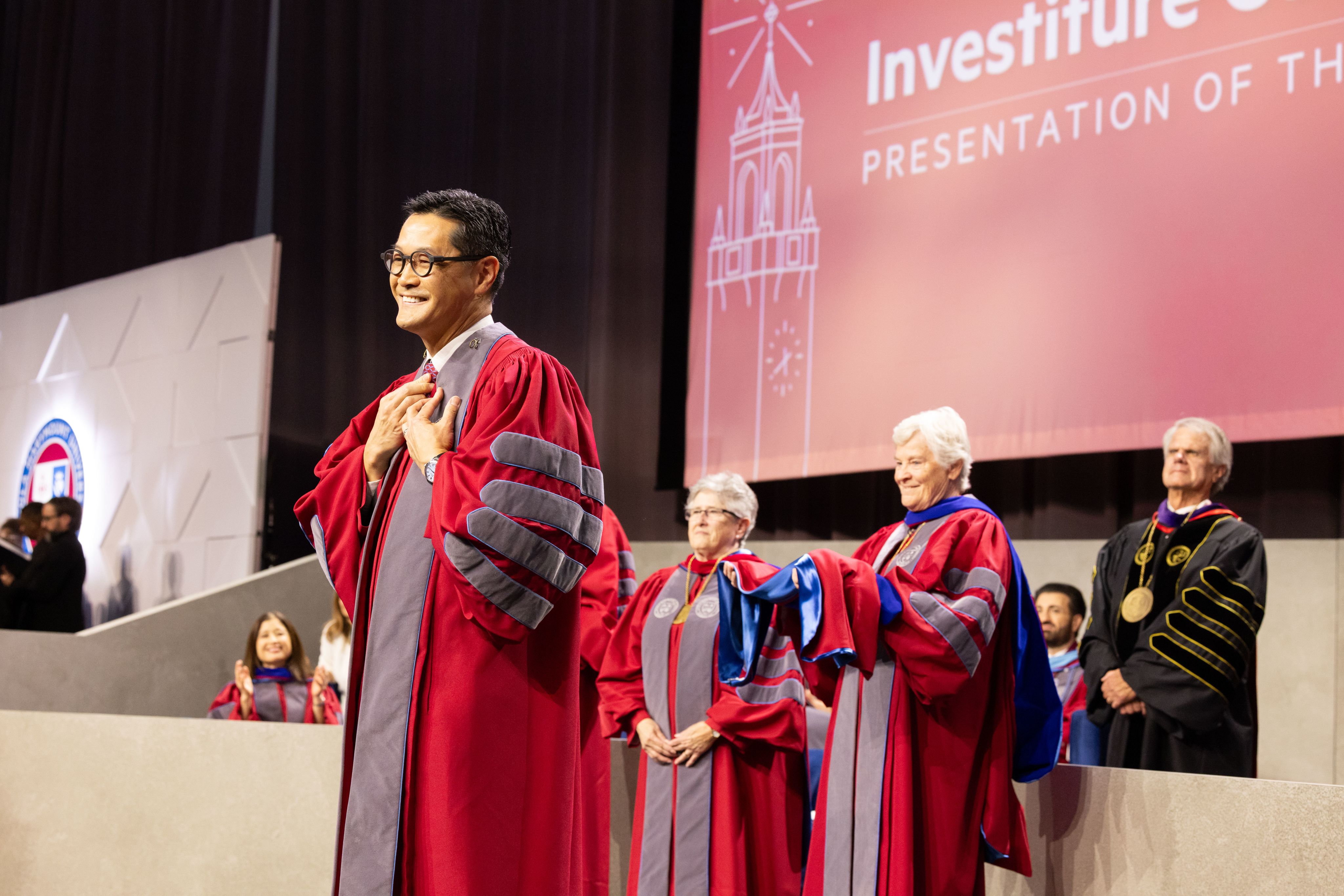

Hope, Made Here: President Thomas Poon, Ph.D., Begins LMU’s Next Chapter

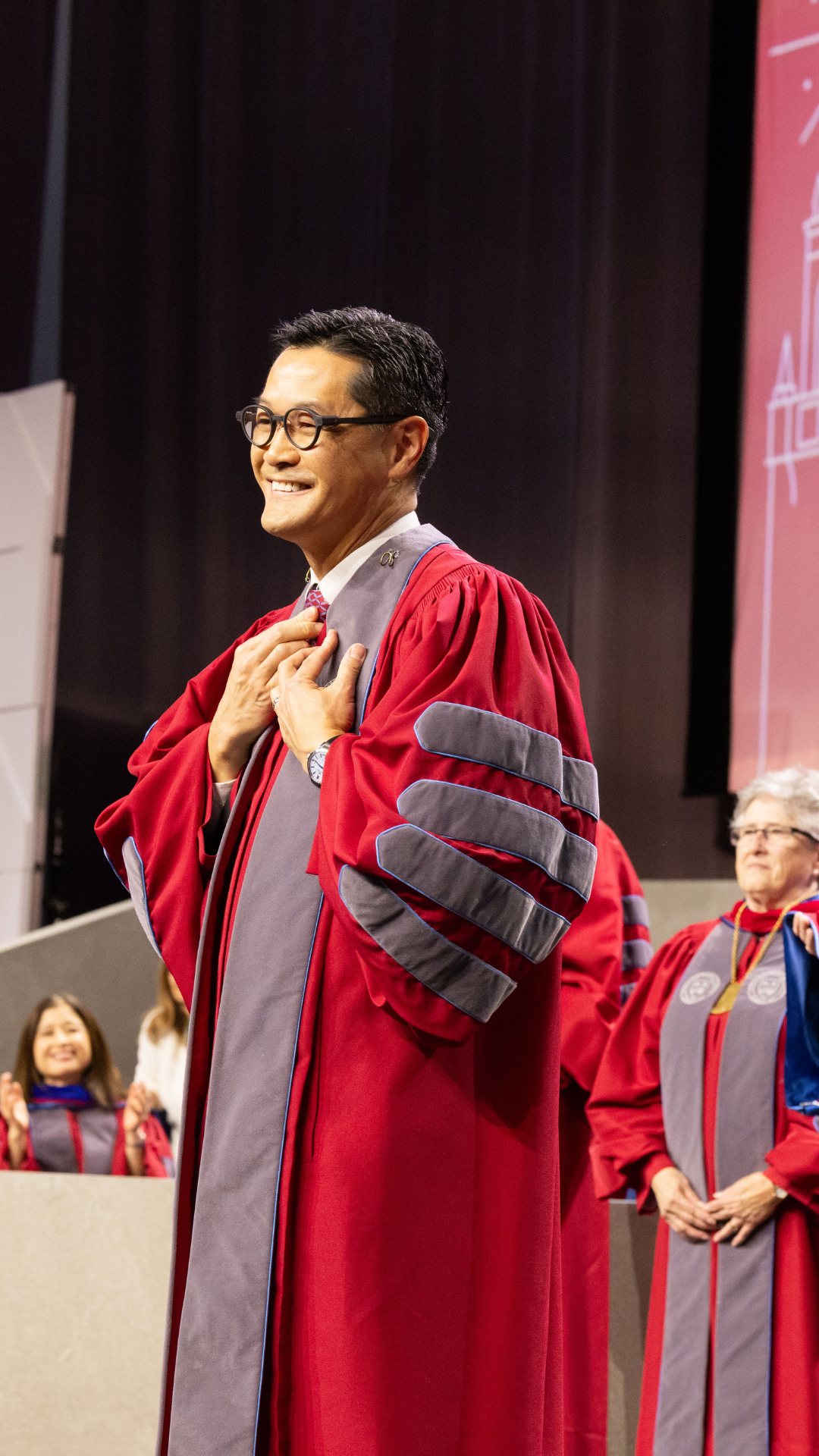
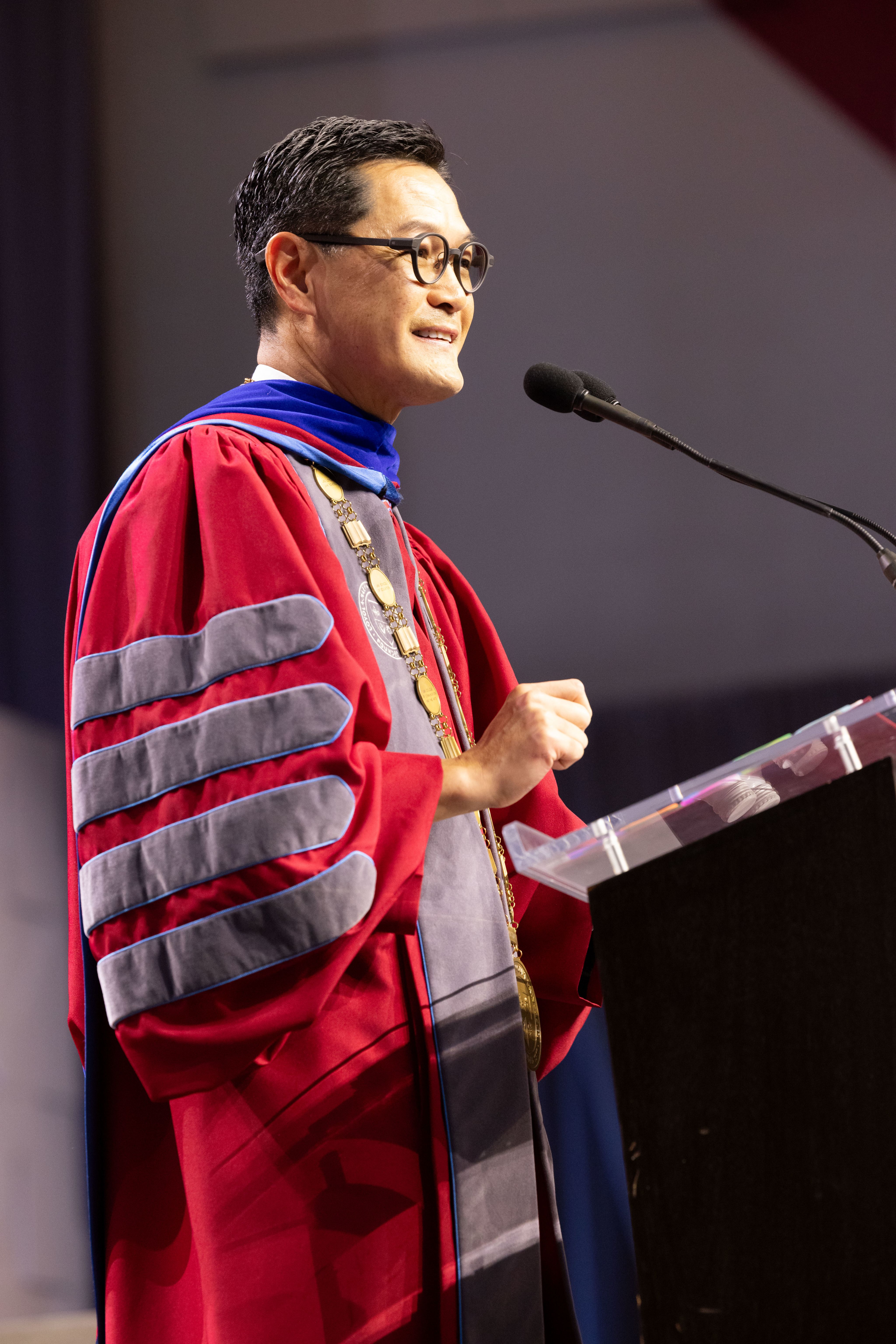
“Honoring our legacy begins with hope,” Thomas Poon, Ph.D., declared. “Hope isn’t passive. It is, as the Jesuits say, ‘contemplatives in action.’ Hope rolls up its sleeves and asks, ‘What’s the work we need to do to make things happen?’”
On that emphatic note, Loyola Marymount University’s 17th President Thomas Poon, Ph.D. shared his vision for LMU and the future of higher education at his inauguration before 1,200 community members, delegates, and invited guests on Tuesday, Dec. 9, 2025.
It was an inaugural ceremony steeped in tradition celebrating LMU’s enduring ties to the city of Los Angeles, and LMU as a hub for knowledge, human potential, and global opportunities.
At a moment when higher education remains an essential engine for innovation, social mobility, and civic leadership — yet is being reshaped by demographic shifts, technological disruption, and evolving global challenges — President Poon championed a theme of “Hope, Made Here.” Through his three shared “hopes” Poon affirmed the university’s core function of creating service-minded leaders able to engage a complex world and redefined how universities can serve their communities by converting mission to impact through new partnerships.

“My first hope: to expand access and open doors. We must make an LMU education attainable for every talented student called to our mission. And once they’re here, ensure they have every opportunity to thrive.”

Nearly 90% of LMU students receive some sort of financial aid, supported by LMU’s 338 various scholarships. At the close of the last academic year, LMU awarded over $183.3 million in grants and scholarships to students. Poon’s commitments to accessibility also echoed recent partnerships with the Department of Catholic Schools of the Archdiocese of Los Angeles which creates new pathways for local students through guaranteed admissions.
Illustrating the need for accessibility and value of LMU’s teacher-scholar model — which emphasizes both research and scholarship — President Poon told of Frank R. Seaver College of Science and Engineering alumnus Max Isi, who came to LMU from Uruguay, double majored in physics and mathematics, and went on to lead the team that detected gravitational waves produced by the collision of black holes.
“One generous donor’s scholarship was the key; LMU faculty opened the door; and an LMU student-turned-alum blew the door off its hinges with his scientific breakthrough,” Poon summarized.

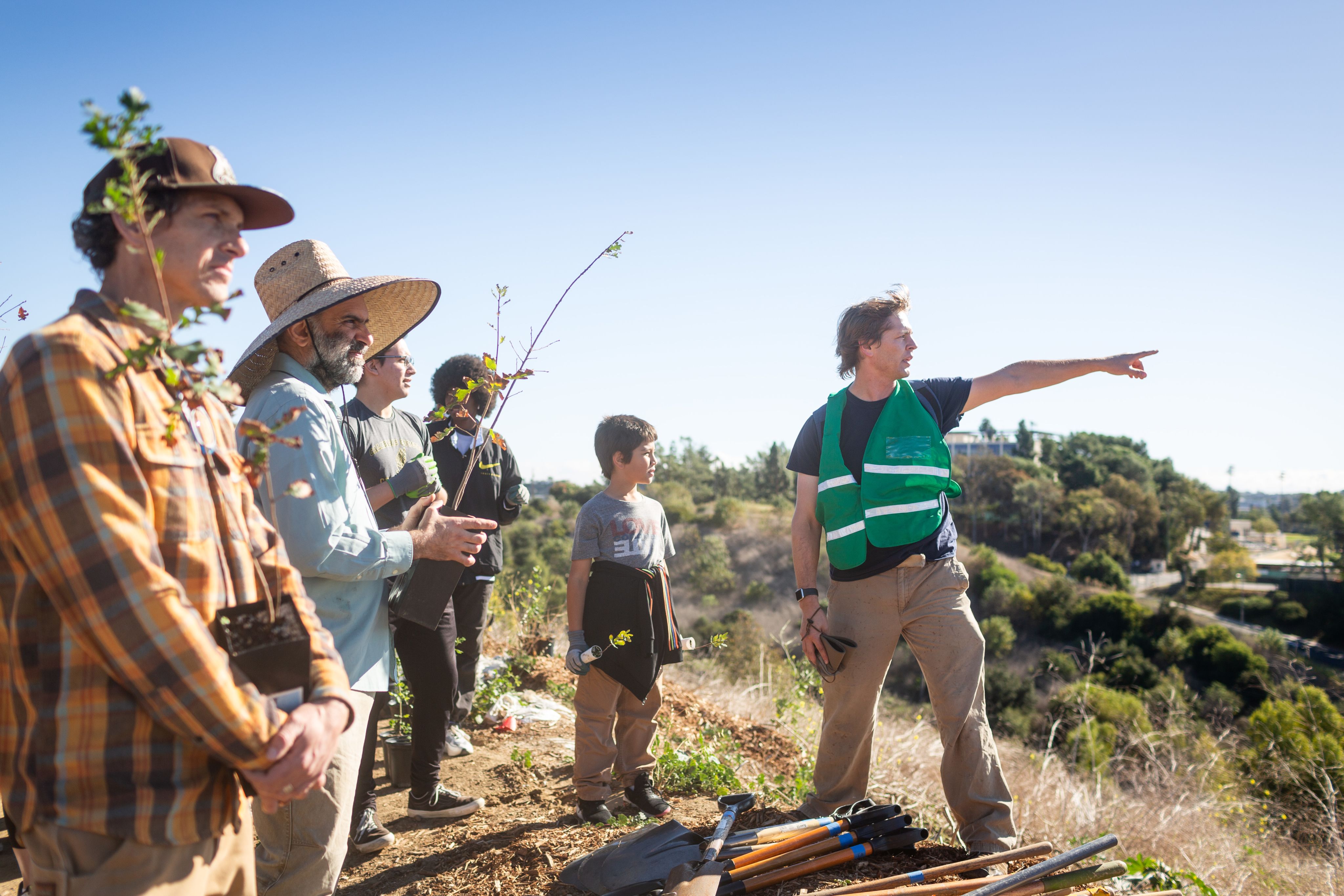
“My second hope is that LMU will build bridges between our campuses and our communities,” Poon said, highlighting LMU’s positioning in Los Angeles as a hub of connectivity and center of culture, creativity and ideas.

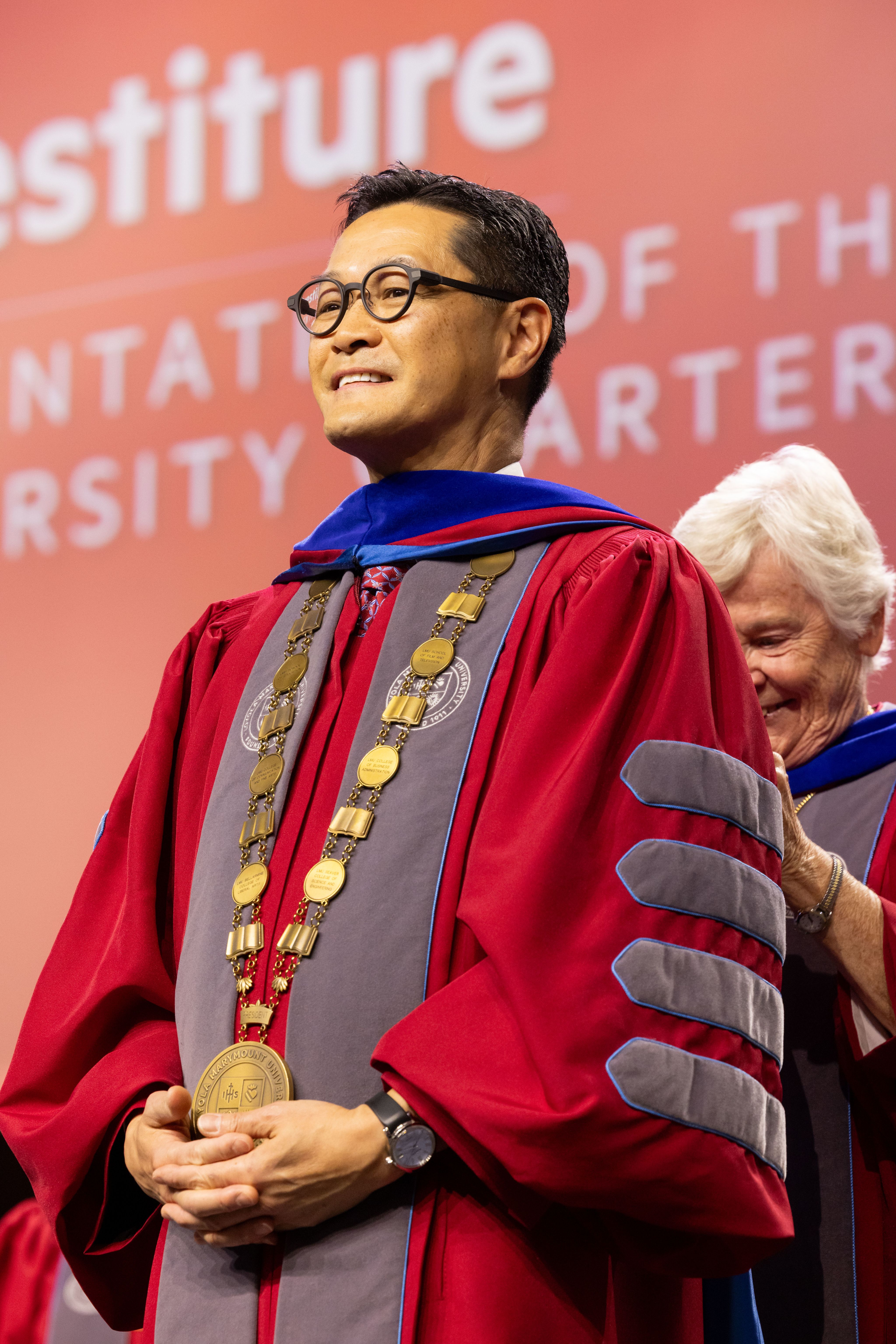
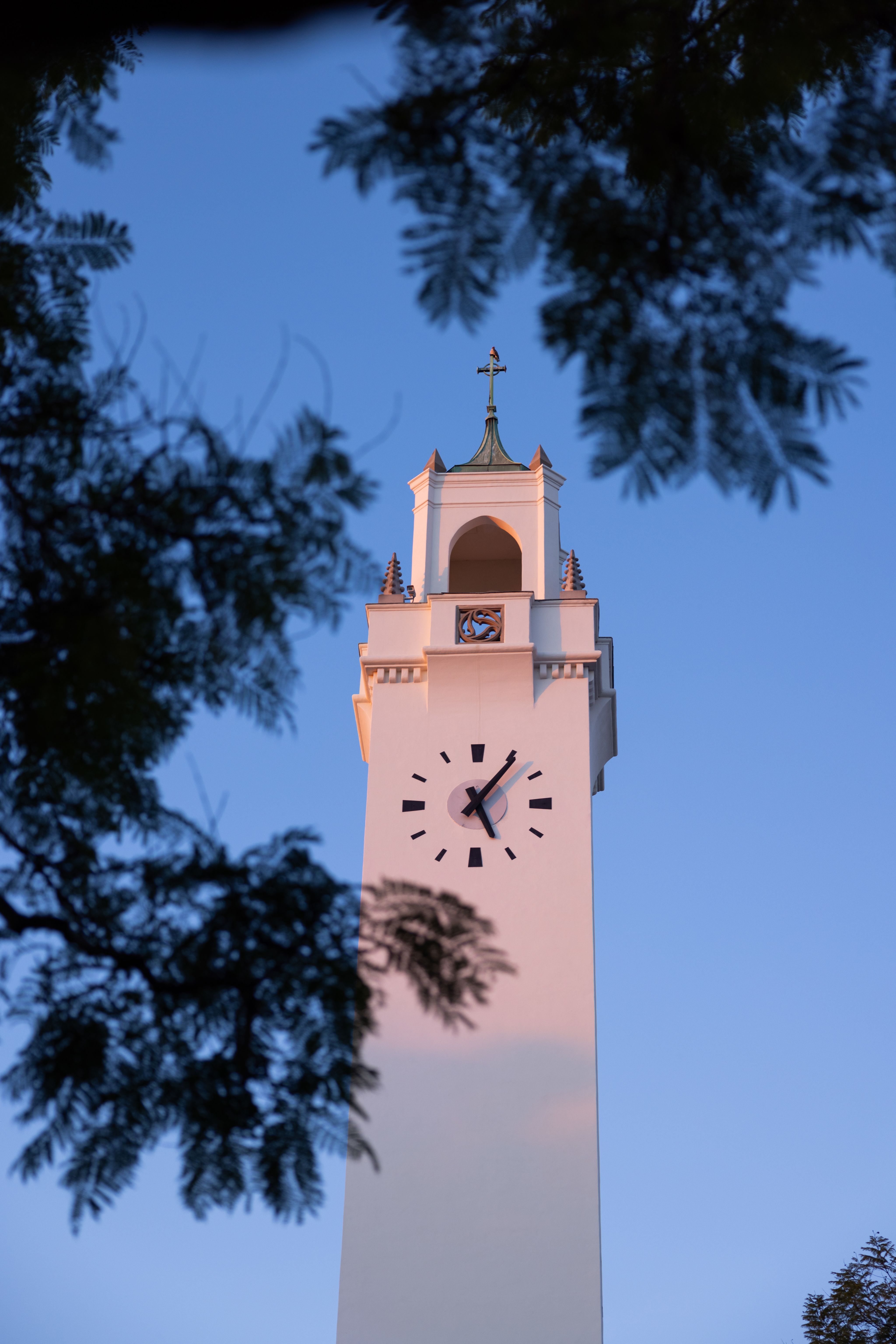
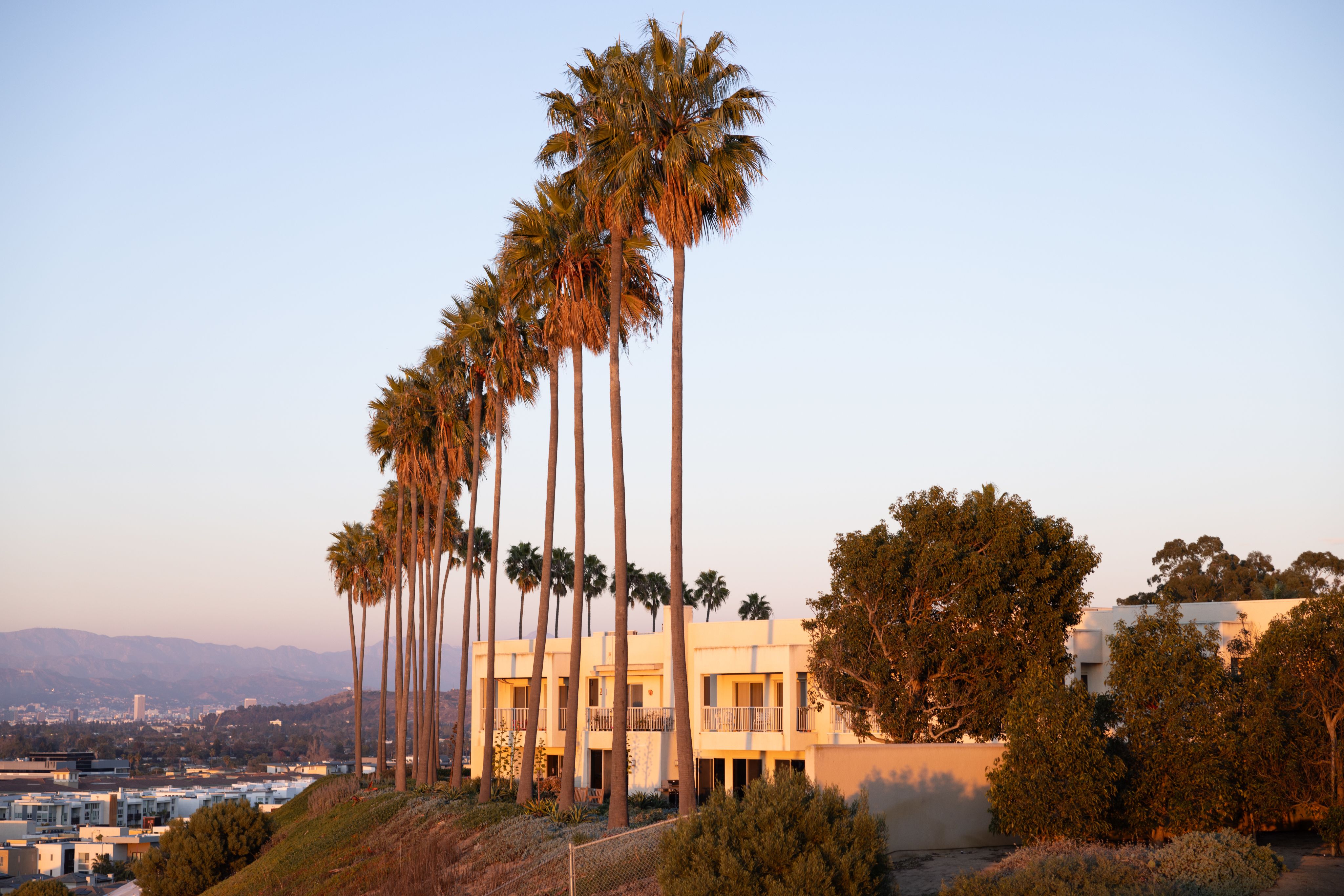
LMU has three campuses spanning Los Angeles — its Westchester campus overlooking the Pacific Ocean and ten minutes from LAX; Loyola Law School located in the heart of downtown; and LMU’s Playa Vista Campus, home to LMU School of Film & Television, one of the nation’s best film schools.
“These are the connections that converge at LMU, each one shaping who we are, where we are, and how we serve. And because I believe education is the ultimate sector that will define the future, LMU will serve to bridge and integrate these worlds,” said Poon.
LMU generates more than $1.4 billion in economic impact, supporting more than 10,200 jobs across the U.S. Locally, LMU has deepened its civic, business and nonprofit partnerships in the Los Angeles region, including through the L.A. Area Chamber Business and Education Innovation Summit, the Social Impact Filmmaking Lab, LMU Innovation Symposium, and partnership with the L.A. Rams.

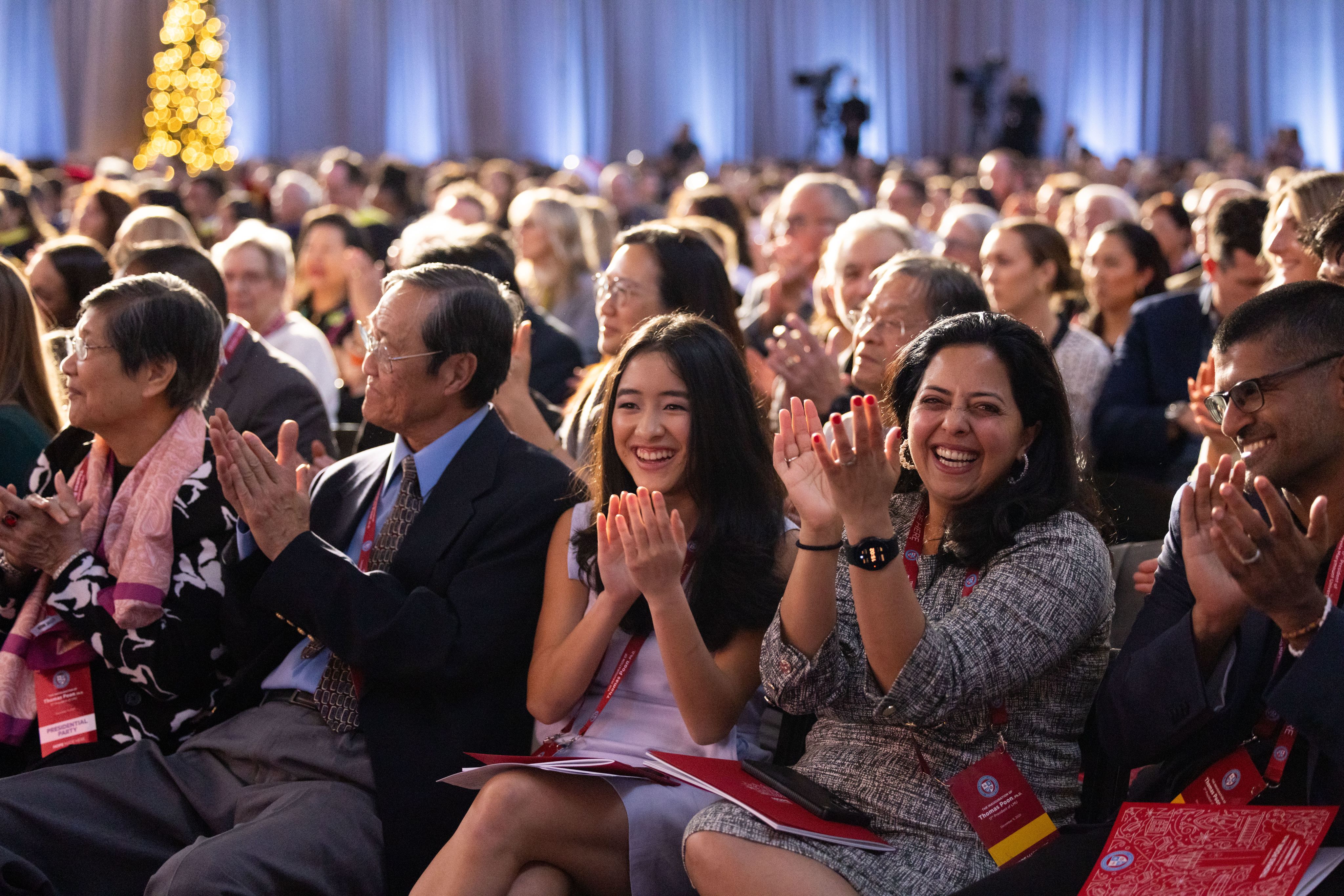
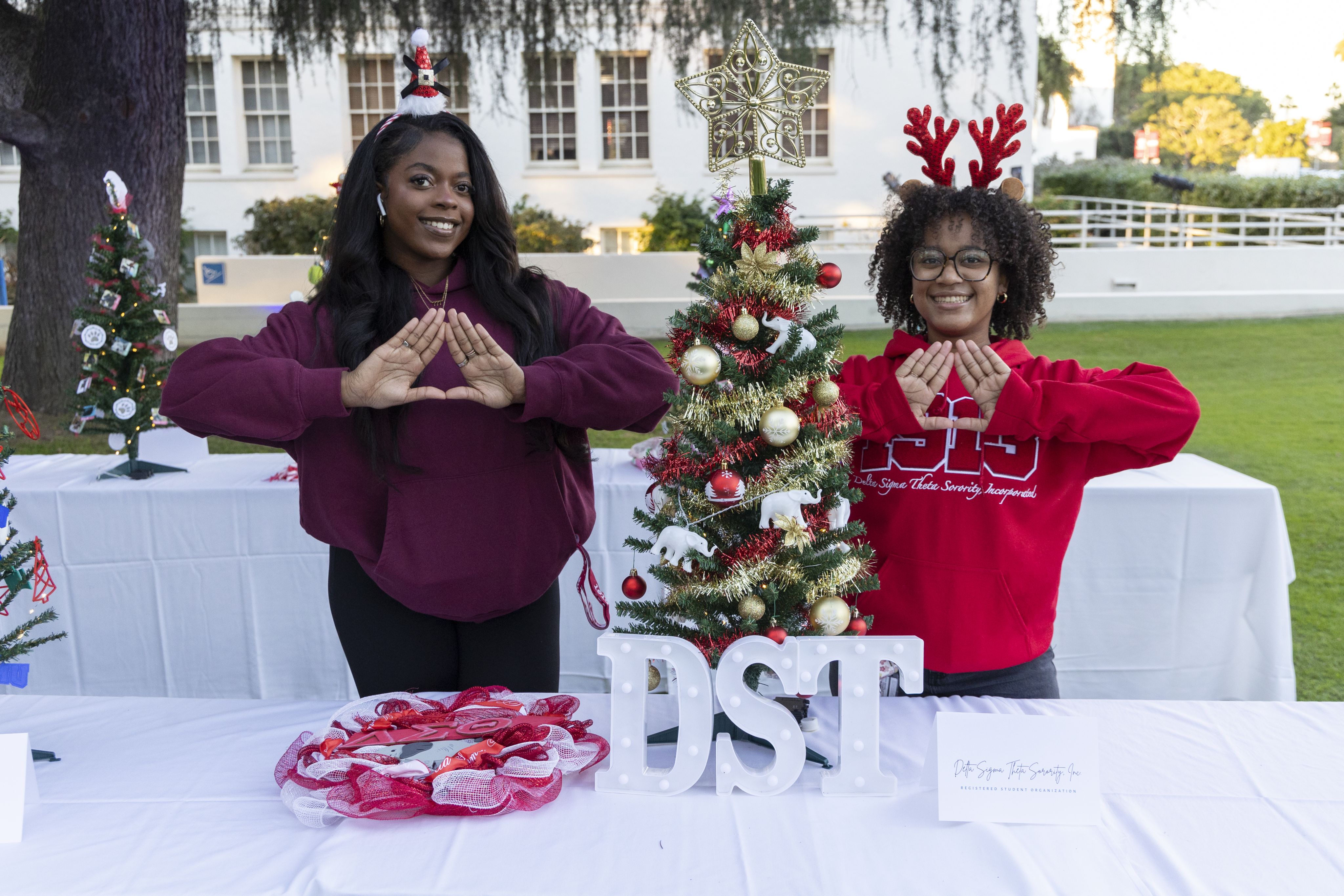
Two new partnerships were also announced in Poon’s address. The first with Homeboy Industries. Founded by LMU alum Reverend Greg Boyle, Homeboy Industries has gone onto become the model for engagement of at-risk youth and currently operates the largest gang rehabilitation and re-entry program in the world. The new partnership ties mission to impact, launching a credit-bearing certificate program in business management and social services, and creating pathways to higher education for those who have been historically excluded.
The second, with the 2028 Olympic and Paralympic Games, designates LMU as a high-performance center for Team USA and positions LMU as an important convener within Los Angeles—a frequent host to world-class sporting events.
President Poon then laid out his third and final hope: The formation of LMU leaders through “Ignatian excellence.”
Reflecting on the life and conversion of St. Ignatius Loyola, the founder of the Jesuits, Poon intoned, “out of his own conversion came a new way of seeing God in all things, a new way of discerning purpose, and a new way of forming leaders, one that unites intellect with reflection and hope with action.”
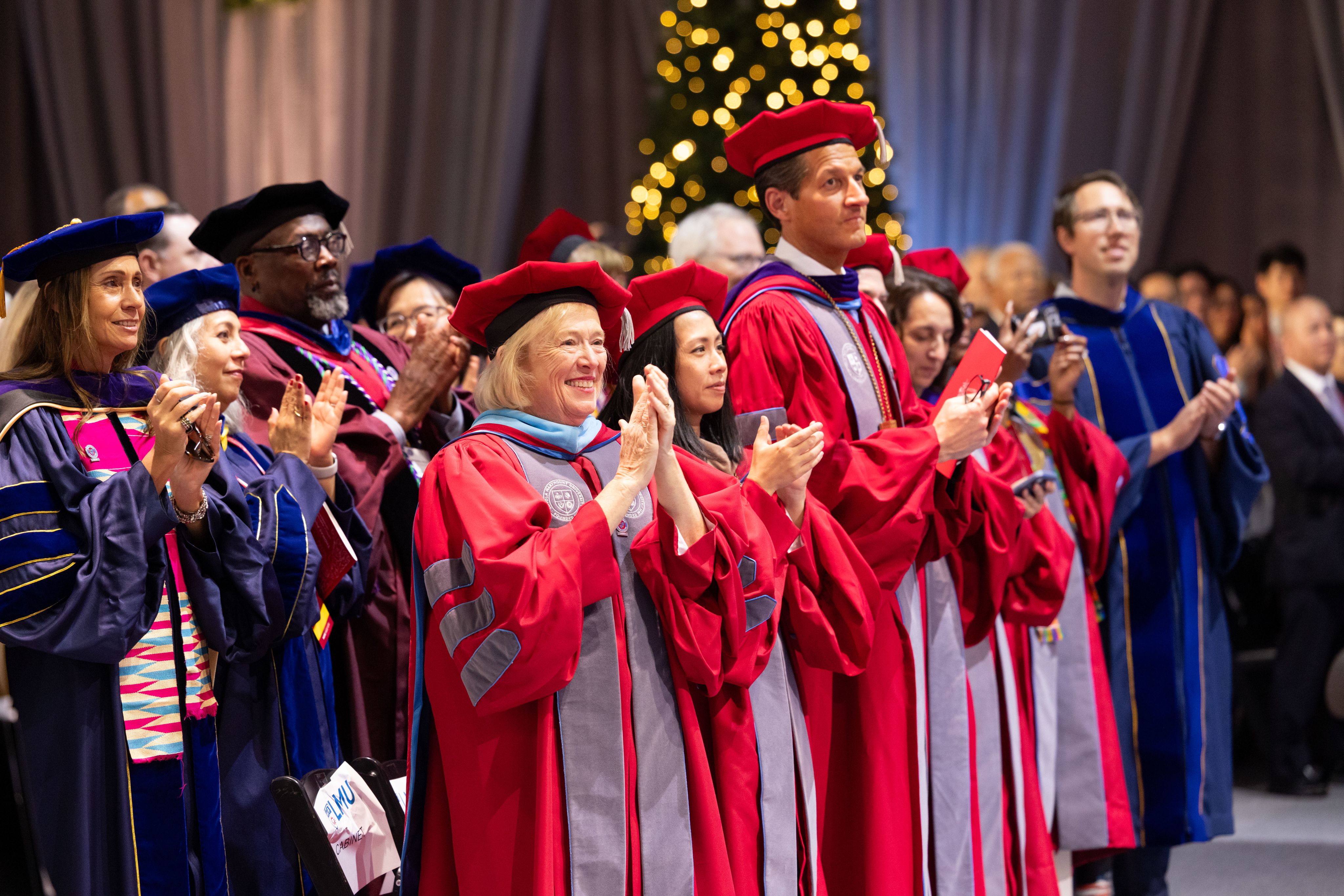
The inauguration’s installation ceremony was the centerpiece of a season of events, welcoming higher education delegates from around the country, and guests including Los Angeles Archbishop José H. Gomez, Jesuits West Provincial Sean Carroll, S.J., former Democratic congressman and disability rights icon Tony Coelho ’64, and past LMU presidents David W. Burcham, Timothy Law Snyder, and Robert Lawton, S.J. Among the inaugural events was a university-wide symposium on the societal implications of artificial intelligence – positioning LMU at the heart of one of the defining conversations of our time and reflecting its commitment to scholarship that engages the world.
Poon was unanimously elected as LMU president in April by the Board of Trustees, and began his term in June. In his previous role as LMU’s executive vice president and provost, he shaped nearly every aspect of academic life, leading efforts to achieve Carnegie R2 status, expand tenure-line faculty diversity, launch new academic programs, and advance major strategic goals. His leadership ushered in the introduction of 21 new academic programs in fields such as business analytics and computer science, alongside a more than 80% increase in support for research and creative endeavors.
Poon earned a B.S. in chemistry from Fairfield University and a Ph.D. in organic chemistry from the University of California, Los Angeles.
LMU, the largest Catholic university on the West Coast, offers rare access to partnerships across entertainment, tech, business, and the arts, and has earned recent accolades for the excellence of its School of Film and Television, Loyola Law School, and the School of Education. Academics at the institution’s largest college, the Bellarmine College of Liberal Arts, have become relied-upon experts by media nationwide. The College of Communication and Fine Arts has earned plaudits for its dance, theatre, and its community engagement through art therapy. In January, LMU’s College of Business Administration will celebrate its 100-year anniversary.
In closing, Poon told the assemblage, “This next chapter will be written by all of us. Each of you holds the pen. Each of you is part of the story. And together, we will write the next chapter of Loyola Marymount University: one filled with purpose, possibility, and hope, made here.”




This content was paid for and created by the Loyola Marymount University. The editorial staff of The Chronicle had no role in its preparation. Find out more about paid content.
 Built with Shorthand