



How Universities Are Building the Next Frontier of Space Manufacturing
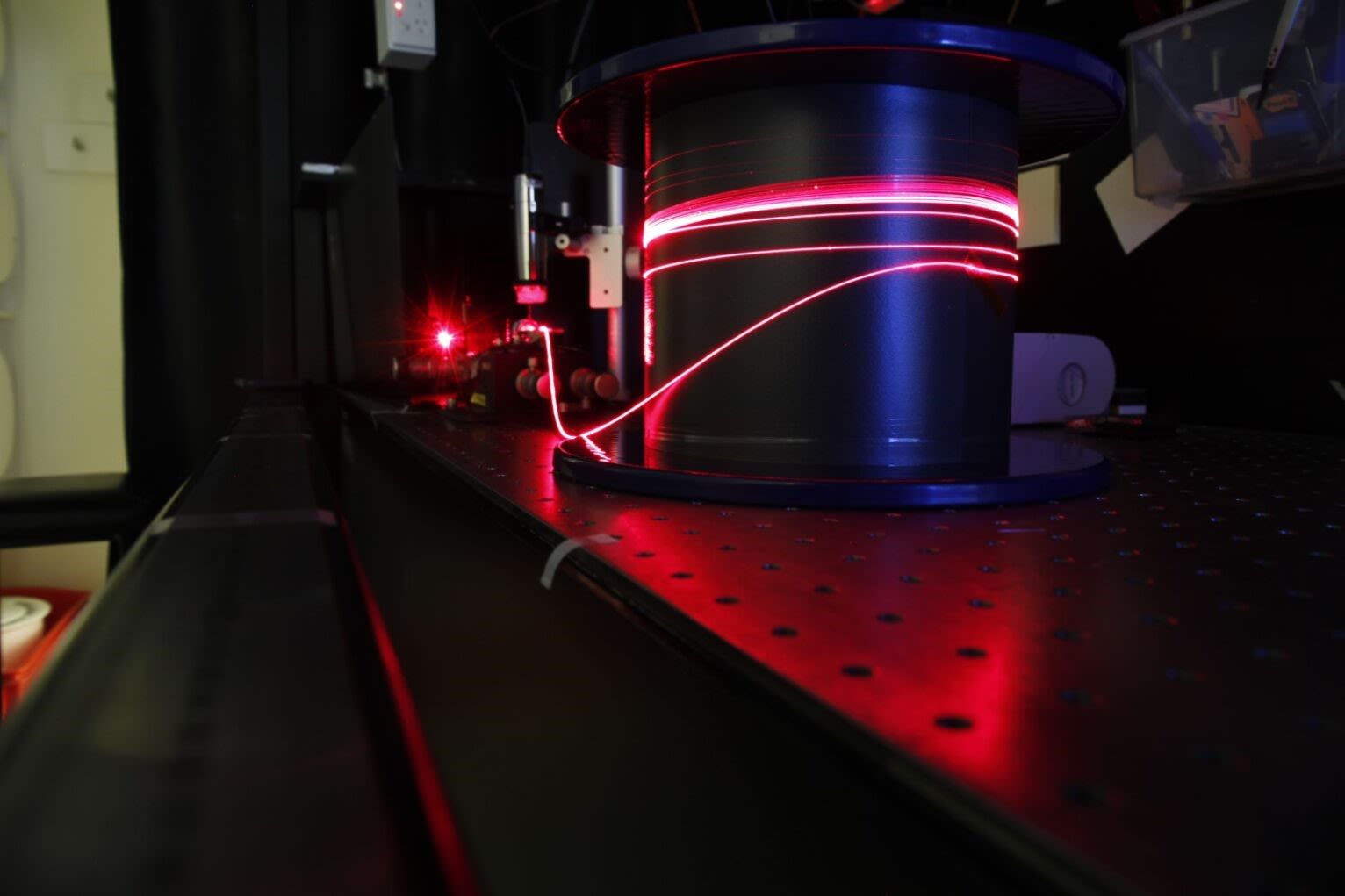

SPACE MANUFACTURING INNOVATIONS
At the intersection of academia, science, engineering, and industry, Adelaide University researchers are boldly pursuing novel solutions to earthly conundrums––on and off planet.
From manufacturing optical fibres in space that could supercharge internet capabilities, to developing new materials for space missions, the sky really is the limit.
Home to the Australian Space Agency, South Australia is a leader in the space sector, with Adelaide University at the leading edge.
Opening in January, Adelaide University is Australia’s newest Group of Eight member, ranked #82 in the QS Global Top 100 Universities for 2026. Formed by the foundation institutions of The University of Adelaide and the University of South Australia, it has been selected to support NASA’s Artemis III lunar science missions and advances the state’s reputation as a destination for innovation, as these case studies show:
MAKING INTERNET FASTER WITH SPACE-DRAWN GLASS
Before dawn on 29 February 2024, Professor Heike Ebendorff-Heidepriem and her research teams gathered to watch a manufacturing milestone that NASA's strategy lead later lauded as "in a class by itself."
Leveraging the unique zero-gravity conditions on the International Space Station (ISS), the researchers watched via Teams as a record-breaking draw of pen-sized glass rods of ZBLAN––a highly transparent and stable glass––signalled promising improvements in internet speed on Earth.
This process was a collaboration between Professor Ebendorff-Heidepriem’s teams, the ANFF OptoFab Hub and the Photonics Materials and Optical Fibres research group, and Silicon Valley industry partner Flawless Photonics, which engineered a custom device fitted to the ISS’ Microgravity Science Glovebox. International partners, including US and European space agencies, also watched live as NASA astronaut Jasmin Moghbeli installed and operated the fibre-drawing module transforming ZBLAN glass rods into fibres.
The result was a record 7 miles (11.9km) of SpaceFiber™, the longest continuous length of fibre produced in space.
The fibres are compact and valuable, making them prime candidates for in-space manufacturing, and zero-gravity reduces crystallization defects, reducing signal loss––highly beneficial in a data-hungry world. This has potential for improved and novel applications, notably superior optical cables for long-haul data transfer, with ultra-fast speeds, higher capacity internet connections, and reduced energy usage.

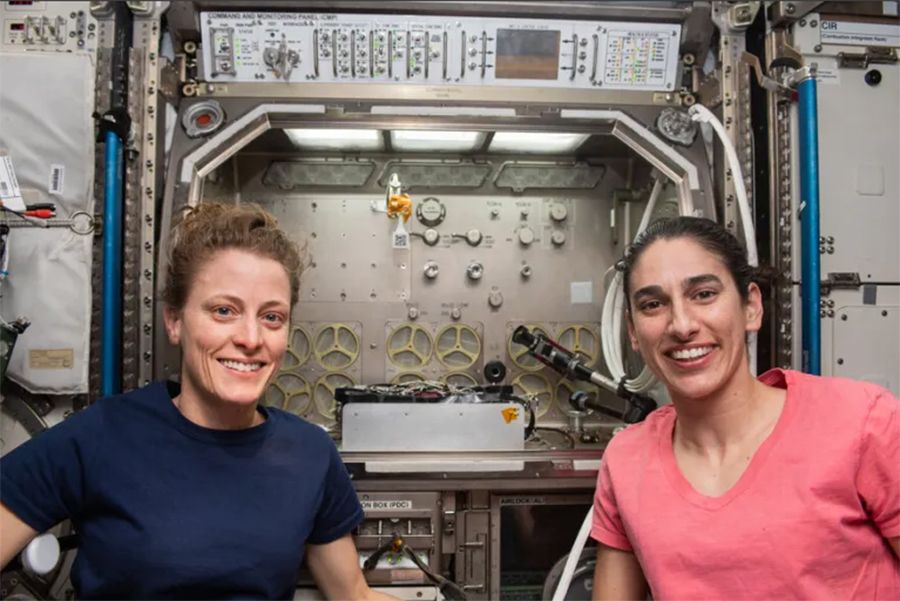
Astronauts Loral O’Hara and Jasmin Moghbeli in front of the Microgravity Science Glovebox inside the Destiny laboratory module on the ISS.
Astronauts Loral O’Hara and Jasmin Moghbeli in front of the Microgravity Science Glovebox inside the Destiny laboratory module on the ISS.
The SpaceFiber™ was wound onto five spools for its return journey aboard the Space X Dragon spacecraft. The precious payload splashed down in the Pacific Ocean, from where it was transported to a NASA site, then Europe.
Professor Ebendorff-Heidepriem and team members attended the “unboxing’’ in Luxembourg. ZBLAN glass had been pitched as a game-changer in space manufacturing for years, but here was proof: a successful commercial-scale fibre draw.
Samples travelled to Adelaide, the University of Warsaw and University of Denmark, where researchers examined the fibres, measured quality and light loss properties, mined data, and analysed findings.
More than halfway into a four-year, $3.3M+ Australian Research Council Industry Laureate Fellowship, Professor Ebendorff-Heidepriem is determined to break the ‘glass ceiling’ for ZBLAN glass fibres and in-space manufacturing.
She has managed multiple projects, including the first prototype of a Camouflaged Tactical Solar module and strategic collaborations with key leading experts from 82 university research groups and 30 industry and defence partners.
For this visionary, who came to Adelaide from Germany in 2005, communicating research impact is key to recruiting brilliant minds.
“People respond to a simple story, a heroic goal,” she says. “Delivering faster internet – now that is attractive to talent in the real world, on the street!’’

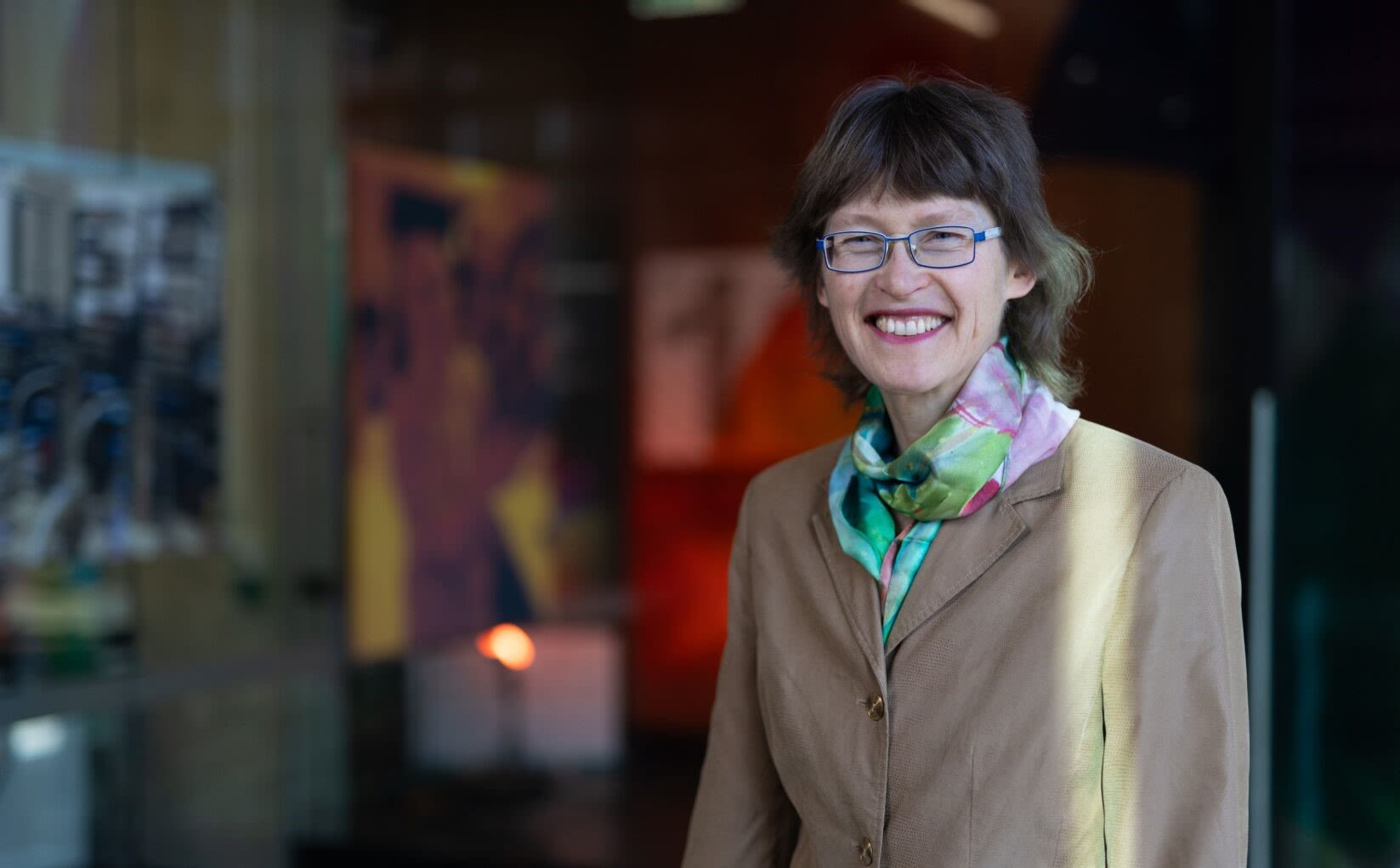

Prof Heike Ebendorff-Heidepriem, Deputy Director of the Institute for Photonics and Advanced Sensing (IPAS) and Director of the Optofab Adelaide Hub at the Australian National Fabrication Facility (ANFF).
Prof Heike Ebendorff-Heidepriem, Deputy Director of the Institute for Photonics and Advanced Sensing (IPAS) and Director of the Optofab Adelaide Hub at the Australian National Fabrication Facility (ANFF).
MAKING INTERNET FASTER WITH SPACE-DRAWN GLASS
Before dawn on 29 February 2024, Professor Heike Ebendorff-Heidepriem and her research teams gathered to watch a manufacturing milestone that NASA's strategy lead later lauded as "in a class by itself."
Leveraging the unique zero-gravity conditions on the International Space Station (ISS), the researchers watched via Teams as a record-breaking draw of pen-sized glass rods of ZBLAN––a highly transparent and stable glass––signalled promising improvements in internet speed on Earth.
This process was a collaboration between Professor Ebendorff-Heidepriem’s teams, the ANFF OptoFab Hub and the Photonics Materials and Optical Fibres research group, and Silicon Valley industry partner Flawless Photonics, which engineered a custom device fitted to the ISS’ Microgravity Science Glovebox. International partners, including US and European space agencies, also watched live as NASA astronaut Jasmin Moghbeli installed and operated the fibre-drawing module transforming ZBLAN glass rods into fibres.
The result was a record 7 miles (11.9km) of SpaceFiber™, the longest continuous length of fibre produced in space.
The fibres are compact and valuable, making them prime candidates for in-space manufacturing, and zero-gravity reduces crystallization defects, reducing signal loss––highly beneficial in a data-hungry world. This has potential for improved and novel applications, notably superior optical cables for long-haul data transfer, with ultra-fast speeds, higher capacity internet connections, and reduced energy usage.
Astronauts Loral O’Hara and Jasmin Moghbeli in front of the Microgravity Science Glovebox inside the Destiny laboratory module on the ISS.
Astronauts Loral O’Hara and Jasmin Moghbeli in front of the Microgravity Science Glovebox inside the Destiny laboratory module on the ISS.
The SpaceFiber™ was wound onto five spools for its return journey aboard the Space X Dragon spacecraft. The precious payload splashed down in the Pacific Ocean, from where it was transported to a NASA site, then Europe.
Professor Ebendorff-Heidepriem and team members attended the “unboxing’’ in Luxembourg. ZBLAN glass had been pitched as a game-changer in space manufacturing for years, but here was proof: a successful commercial-scale fibre draw.
Samples travelled to Adelaide, the University of Warsaw and University of Denmark, where researchers examined the fibres, measured quality and light loss properties, mined data, and analysed findings.
More than halfway into a four-year, $3.3M+ Australian Research Council Industry Laureate Fellowship, Professor Ebendorff-Heidepriem is determined to break the ‘glass ceiling’ for ZBLAN glass fibres and in-space manufacturing.
She has managed multiple projects, including the first prototype of a Camouflaged Tactical Solar module and strategic collaborations with key leading experts from 82 university research groups and 30 industry and defence partners.
For this visionary, who came to Adelaide from Germany in 2005, communicating research impact is key to recruiting brilliant minds.
“People respond to a simple story, a heroic goal,” she says. “Delivering faster internet – now that is attractive to talent in the real world, on the street!’’
BUILDING SPACE CAPACITY THROUGH ADVANCED MATERIALS
As head of South Australia’s node of the iLaunch Trailblazer Universities Program, Professor Colin Hall is advancing Australia’s sovereign space capability through manufacturing breakthroughs on Earth.
The materials scientist has pioneered academic-industry synergy for two decades.
“Our node is focussed on creating an overall uplift in South Australia’s space engineering capacity,’’ he says.
“We employ staff from our industry partners on projects within the University. It shifts the balance. It encourages different points of view and different timelines.”
Professor Hall’s focus is on identifying new materials and enhancing current material uses, specialising in additive manufacturing and coatings for industry partners in aerospace, automotive, mining, agriculture, and now space.
In 2024, he watched his first space launch carrying iLaunch Trailblazer-created componentry – a satellite whose payload included a light filter for a hyperspectral imager for CSIRO water quality monitoring.
“Space is something that captures everyone’s imagination,’’ he says. “The sector creates instant engagement with people of all ages.”
Projects being developed by Professor Hall’s node include:
- A communications system, using laser light and radio frequencies for data transfer, for Optus’s sovereign LEO Satellite, delivering jam resistance and location stealth.
- An AI/ML-enabled space surveillance system for hypersonic missile using optical wavelengths to detect a telltale fingerprint/signal.
- An Australian Radioisotope Heating Unit using low-level radioactive waste to make “warm pockets” that stop satellites and mechanical devices freezing in space.
Professor Hall is best known for innovating plastic mirrors and hi-tech finishes used by famous automotive marques in the US and Europe, but he has found space to be the “most collaborative” sector, which he looks forward to after joining Adelaide University.
“We are tripling research capacity, opening greater collaboration opportunities and new capabilities to offer our industry partners.”

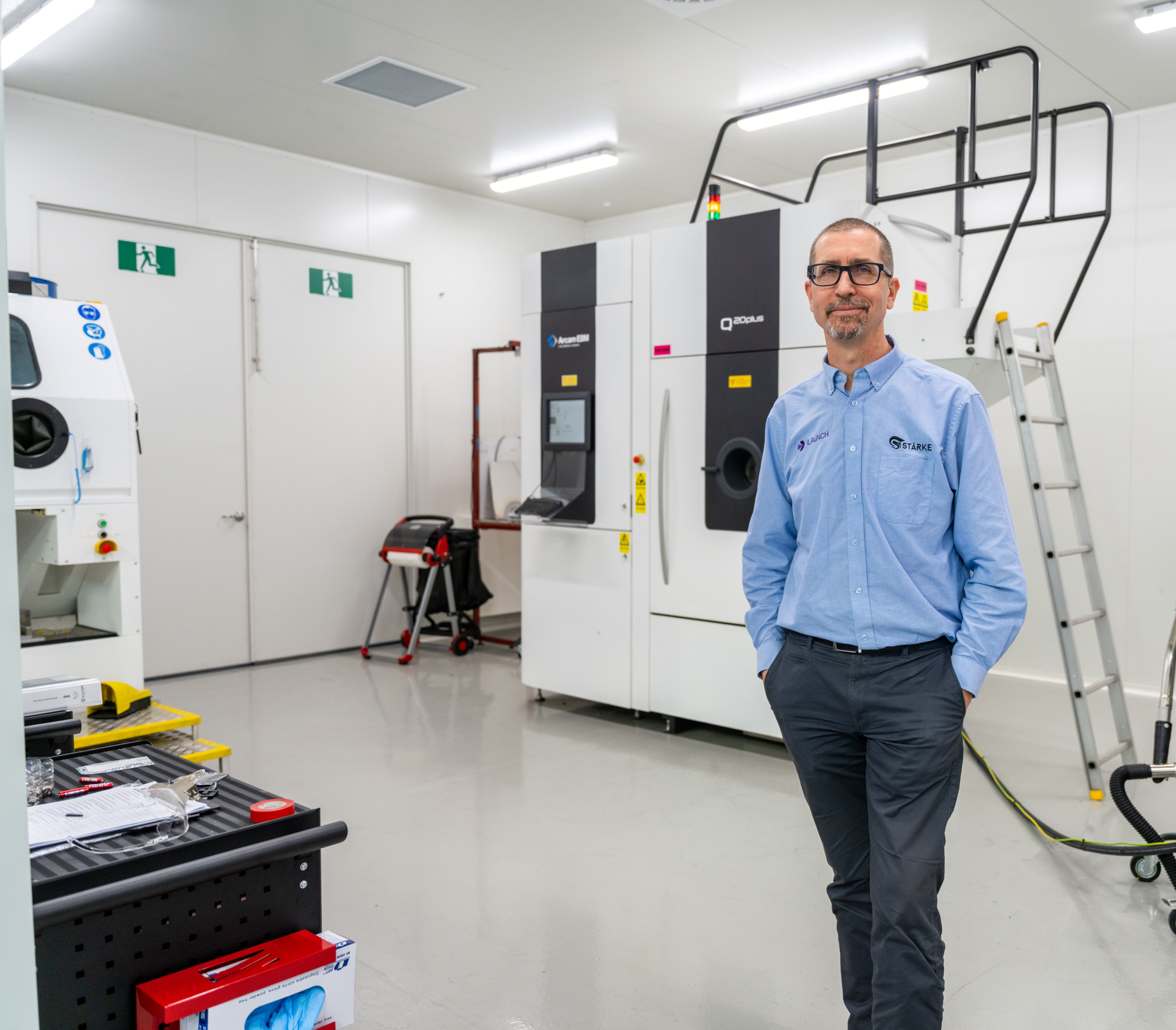

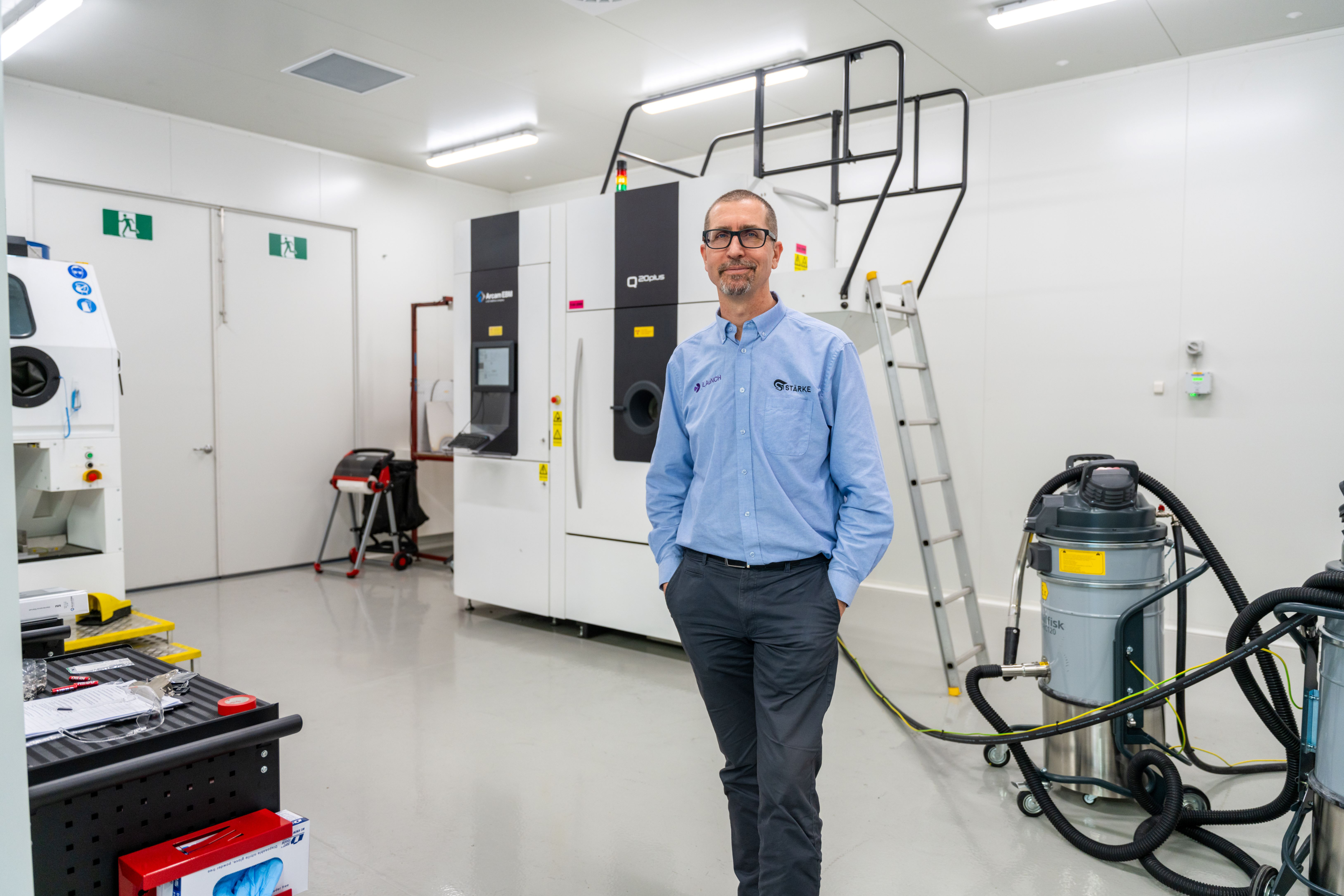
Professor Colin Hall, Future Industries Institute
Professor Colin Hall, Future Industries Institute
BUILDING SPACE CAPACITY THROUGH ADVANCED MATERIALS
As head of South Australia’s node of the iLaunch Trailblazer Universities Program, Professor Colin Hall is advancing Australia’s sovereign space capability through manufacturing breakthroughs on Earth.
The materials scientist has pioneered academic-industry synergy for two decades.
“Our node is focussed on creating an overall uplift in South Australia’s space engineering capacity,’’ he says.
“We employ staff from our industry partners on projects within the University. It shifts the balance. It encourages different points of view and different timelines.”
Professor Hall’s focus is on identifying new materials and enhancing current material uses, specialising in additive manufacturing and coatings for industry partners in aerospace, automotive, mining, agriculture, and now space.
In 2024, he watched his first space launch carrying iLaunch Trailblazer-created componentry – a satellite whose payload included a light filter for a hyperspectral imager for CSIRO water quality monitoring.
“Space is something that captures everyone’s imagination,’’ he says. “The sector creates instant engagement with people of all ages.”
Projects being developed by Professor Hall’s node include:
- A communications system, using laser light and radio frequencies for data transfer, for Optus’s sovereign LEO Satellite, delivering jam resistance and location stealth.
- An AI/ML-enabled space surveillance system for hypersonic missile using optical wavelengths to detect a telltale fingerprint/signal.
- An Australian Radioisotope Heating Unit using low-level radioactive waste to make “warm pockets” that stop satellites and mechanical devices freezing in space.
Professor Hall is best known for innovating plastic mirrors and hi-tech finishes used by famous automotive marques in the US and Europe, but he has found space to be the “most collaborative” sector, which he looks forward to after joining Adelaide University.
“We are tripling research capacity, opening greater collaboration opportunities and new capabilities to offer our industry partners.”


This content was paid for and created by the University of Adelaide. The editorial staff of The Chronicle had no role in its preparation. Find out more about paid content.
 Built with Shorthand