



Flying First Responders:
How University research is redefining emergency care
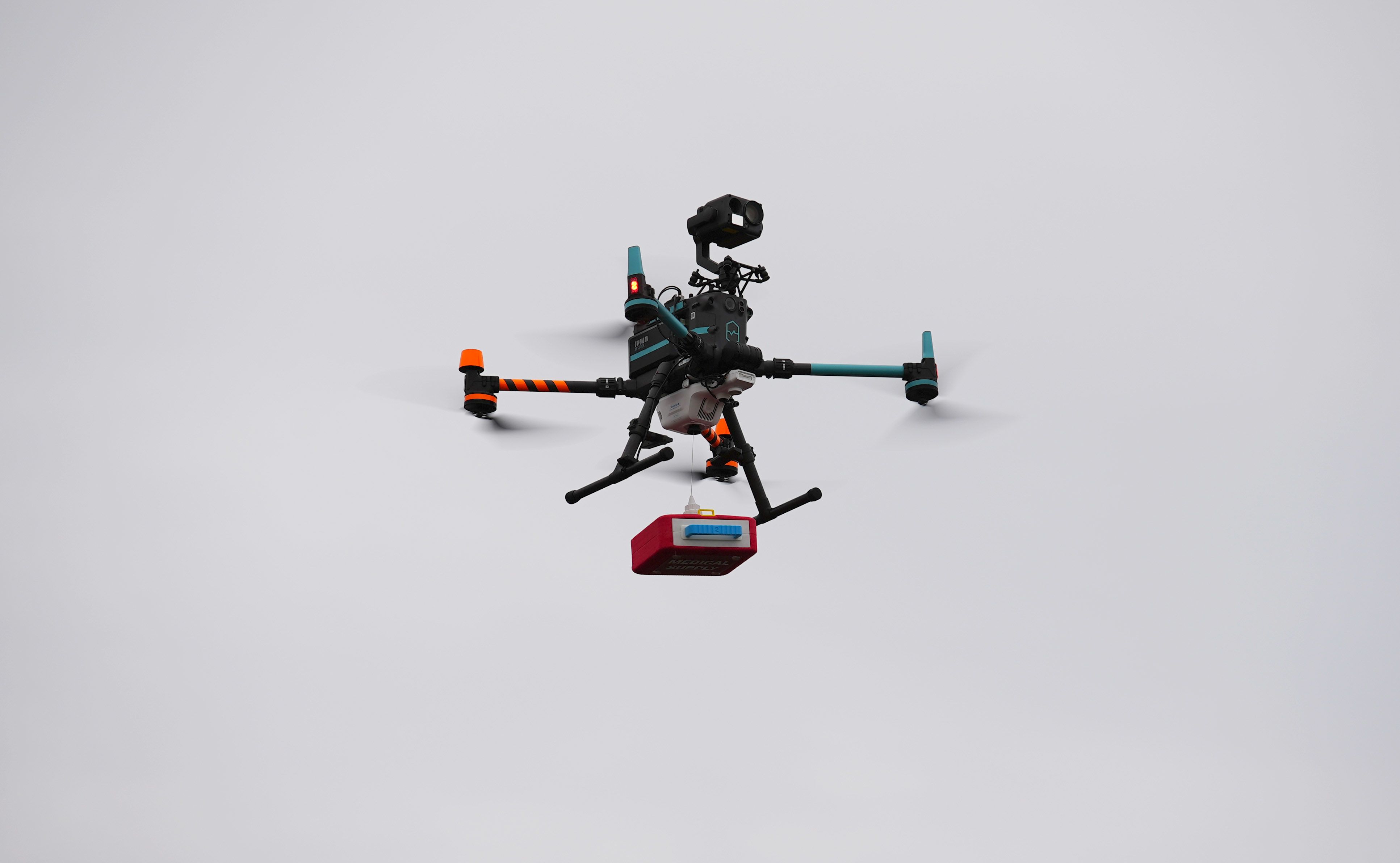

When someone collapses from cardiac arrest, every minute without intervention sharply reduces their chance of survival. Yet for tens of thousands of people each year, particularly those in rural or hard-to-reach locations, emergency help simply cannot arrive fast enough.
Researchers at the University of Warwick, UK, asked the vital question of how to reach patients with life-saving equipment quicker – and their answer is taking flight!
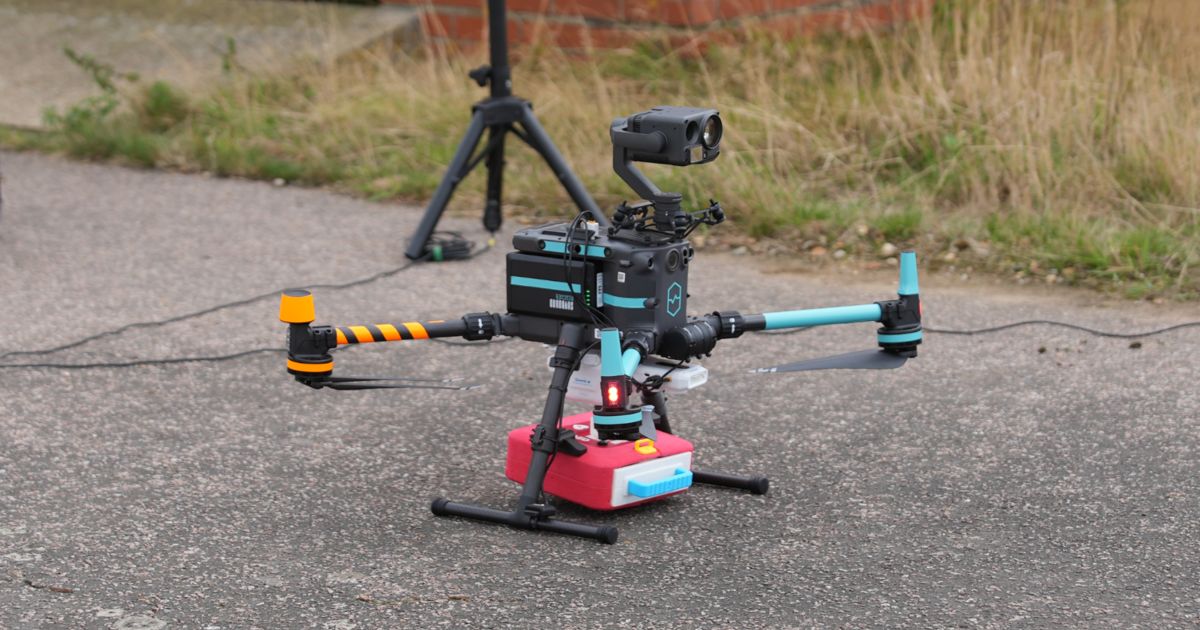
Warwick researchers have demonstrated the feasibility of using drones to deliver automated external defibrillators (AEDs) directly to the scene of a suspected out-of-hospital cardiac arrest. Through a collaboration with the Welsh Ambulance Services University NHS Trust and autonomous drone specialists SkyBound, the project offers a glimpse of how academic innovation could reshape emergency response systems, and, ultimately, save lives.
A race against time
More than 40,000 people in the UK and 350,000 people in the US experience out-of-hospital cardiac arrest each year, and fewer than one in ten survive. Early cardiopulmonary resuscitation and rapid defibrillation can at least double survival rates, yet AEDs are often difficult for bystanders to locate under pressure.
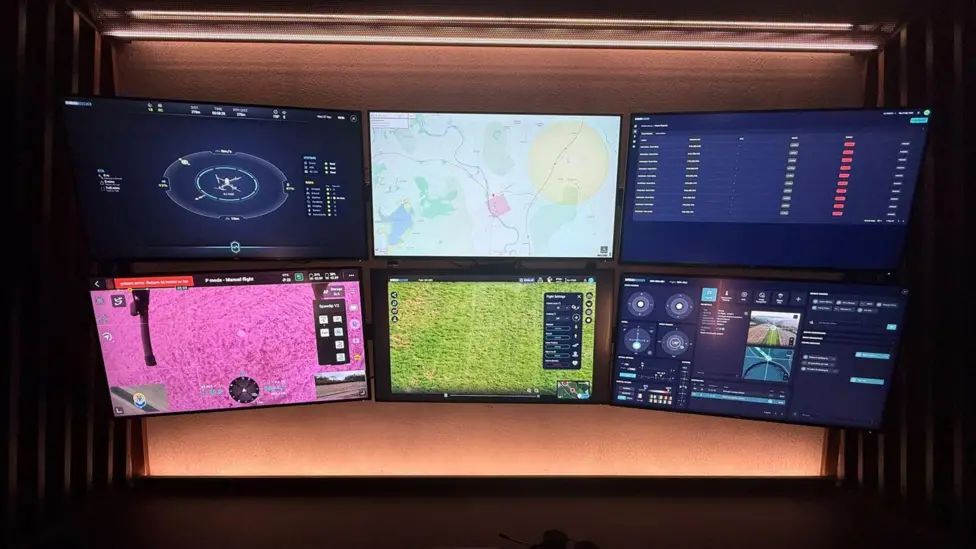
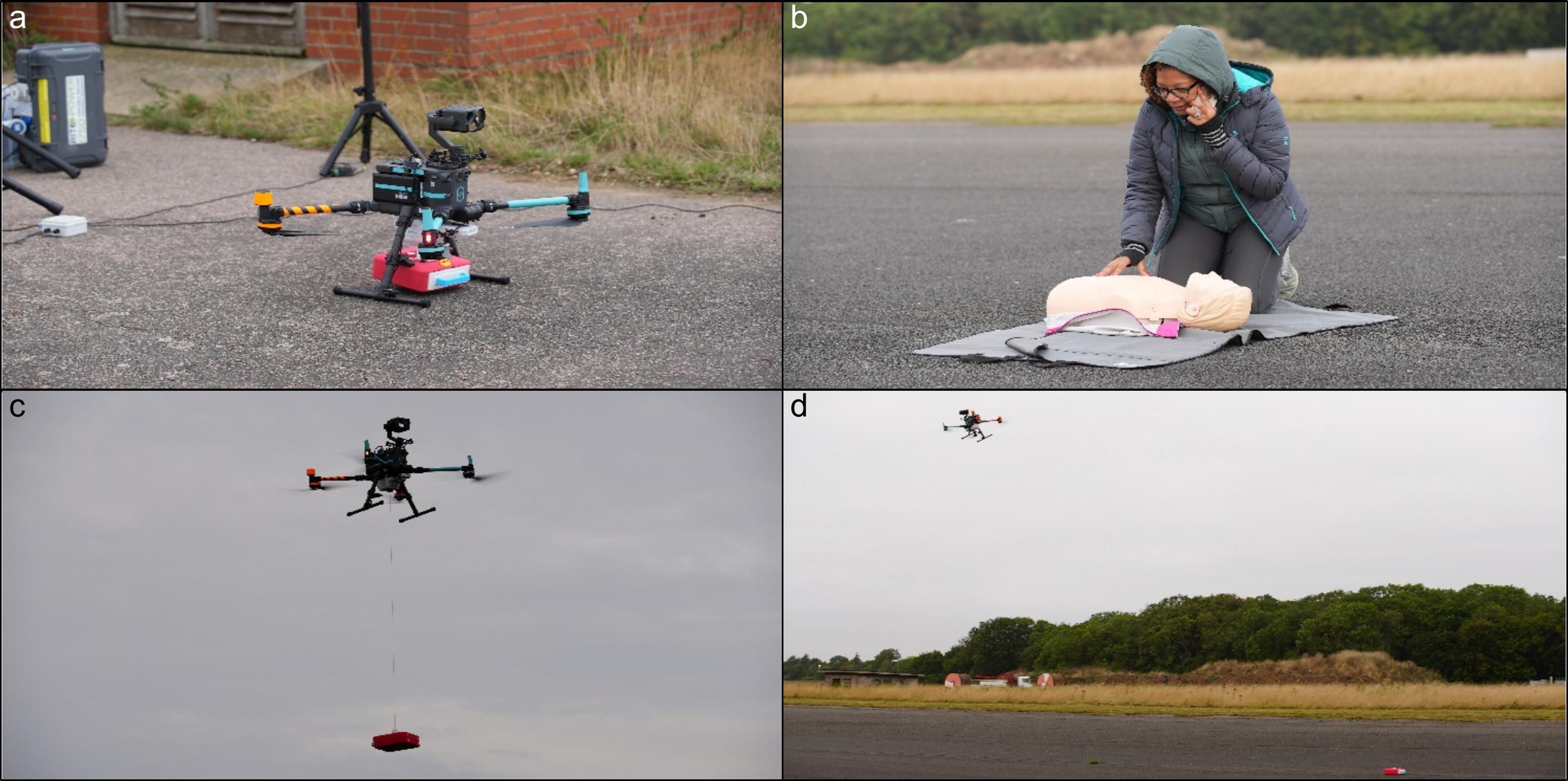
The Warwick-led study, funded by the National Institute for Health and Care Research (NIHR), explored whether drones could bridge this critical gap. In emergency simulations conducted in remote countryside settings, drones were dispatched in response to emergency calls, autonomously flying defibrillators to the scene while ambulance call-handlers stayed on the line with bystanders.
The results were striking. Drone launch procedures were rapid, with take-off occurring just over two minutes after the emergency call. The aircraft flew safely over long distances, maintained real-time communication with emergency services, and successfully lowered defibrillators to bystanders via a winch system.
“Ambulance services work as swiftly as possible to get to patients who have suffered cardiac arrests. However, it can sometimes be difficult to get there quickly. We’ve built a drone system to deliver defibrillators to people having cardiac arrest before an ambulance arrives,” says University of Warwick’s Dr. Christopher Smith, the study’s lead researcher. “We are now in a position where this could be operationalized for real emergencies.”


Technology meets human reality
The study also underscored an essential truth about innovation in healthcare: technology alone is not enough.
While participants responded positively to drone delivery, researchers observed delays once the defibrillator reached the scene. Some bystanders struggled to use the AED, highlighting the need for better integration between new technologies, call-handler support, and public confidence.
That insight is central to Warwick’s research approach. Rather than focusing solely on engineering success, the project examined how people interact with systems under extreme stress, and where further training, design refinement, or procedural change is needed.
“Cardiac arrest is one of the biggest killers and time is of the essence; it’s crucial that bystanders can help before ambulance crews arrive.” says Professor Mike Lewis, NIHR Scientific Director for Innovation. “That’s why it’s so exciting that this innovative study is investigating if emergency services can harness drones to help improve survival. It demonstrates how health and care research can deliver high tech solutions to improve health and care services.”

Research with lived experience at its heart
For the study’s patient representative, Mark Holt, the research is deeply personal. Mark’s father, 74-year-old retired surgeon Steve Holt, suffered cardiac arrest and collapsed in a rural pub during their walking holiday in the UK’s Lake District. Mark began CPR and used the defibrillator located outside the pub, but bad weather prevented an air ambulance from reaching them, so it took 25 minutes for paramedics to arrive by road.
“While I was resuscitating Dad, it felt like an eternity waiting for help,” Holt says. “Ambulances can be delayed, especially when trying to get to remote areas like the one we were in. But in the future a call handler may be able to explain that help is on the way, with a drone which can arrive much quicker.
“Without clinical research, healthcare advances would not come to fruition. It has been a privilege to be involved with the NIHR and the University of Warwick’s work.”
That combination of lived experience, clinical insight, and technological innovation reflects a broader shift in university research: toward solutions that are co-designed with the people they aim to serve.
From campus to community impact
Founded in 1965, the University of Warwick has built a reputation for interdisciplinary research that tackles complex societal challenges. The defibrillator drone project exemplifies how universities can act as conveners: connecting public services, industry partners, and funders to address urgent real-world problems.
The next phase of the research will involve larger-scale trials to assess how drone-delivered AEDs could be integrated into NHS emergency response systems. While questions remain, the trajectory is clear.
As emergency services face increasing demand and geographic constraints, innovations born on campus may soon become part of everyday life – arriving not just by road, but also from the sky.


This content was paid for and created by the University of Warwick. The editorial staff of The Chronicle had no role in its preparation. Find out more about paid content.
 Built with Shorthand