



STEM+M: Florida Poly’s Answer to the Physician Shortage




From Engineering to Medicine, STEM University Widens Its Impact on Health Care
Florida Polytechnic University is redefining what a STEM education can do in a state clamoring for high-tech talent and health professionals. With an exclusive focus on science, technology, engineering and math and a hallmark hands-on curriculum, the University is now adding medicine to its roster as it builds a new generation of workforce-ready professionals.
Florida Poly graduates are already standing out in the labor market: full-time employed alumni earn the highest median wage one year after graduation among all state universities in Florida, according to the State University System of Florida Board of Governors. That success positions the University to expand its impact as it launches a new biomedical sciences degree and an accelerated pathway for future physicians.

From Engineering to Medicine, STEM University Widens Its Impact on Health Care
Florida Polytechnic University is redefining what a STEM education can do in a state clamoring for high-tech talent and health professionals. With an exclusive focus on science, technology, engineering and math and a hallmark hands-on curriculum, the University is now adding medicine to its roster as it builds a new generation of workforce-ready professionals.
Florida Poly graduates are already standing out in the labor market: full-time employed alumni earn the highest median wage one year after graduation among all state universities in Florida, according to the State University System of Florida Board of Governors. That success positions the University to expand its impact as it launches a new biomedical sciences degree and an accelerated pathway for future physicians.
A Fast Track for Physicians
The fall of 2026 will bring the first cohort of future physicians to Florida Poly’s Lakeland campus through a new partnership with the Orlando College of Osteopathic Medicine (OCOM). The BS/DO six-year program offers a streamlined pathway for high-achieving students to earn both a Bachelor of Science and a Doctor of Osteopathic Medicine (DO) in six years instead of the traditional eight.
Students will complete two intensive years of foundational science and math coursework at Florida Poly, then transition to four years of osteopathic medical education at OCOM. This accelerated route launches as Florida faces a projected shortage of 36,000 physicians by 2035, according to the Florida Hospital Association, making new approaches to medical education especially vital.
“By combining rigorous STEM education with a clear, accelerated track to medical school, we are reimagining what’s possible in health education and responding to a critical need for more doctors across Florida and beyond,” said Dr. Devin Stephenson, Florida Poly’s president.

Two Pathways Toward a Medical Future
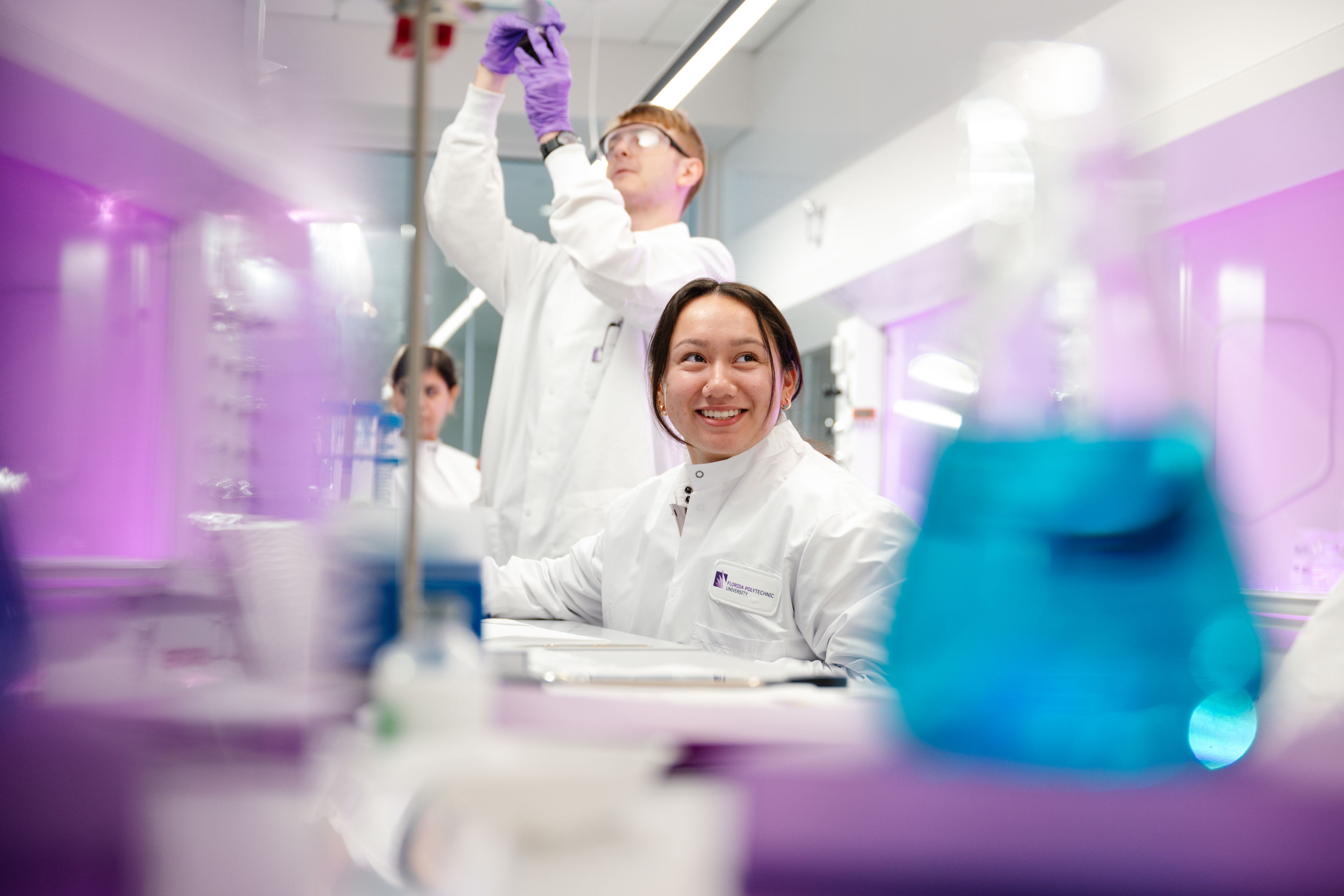
To support the BS/DO pathway and broaden options for students interested in health-related careers, Florida Poly will launch a new biomedical sciences bachelor’s degree program in fall 2026. Students in this major can choose between two tracks: biomedical devices or pre-medicine.
The biomedical devices track will prepare graduates to work at the intersection of engineering, health care and technology, positioning them for roles in fields such as medical device design, testing, manufacturing and regulatory affairs.
The pre-medicine track, meanwhile, offers a strong foundation in biology, chemistry, physics and mathematics for students pursuing the BS/DO pathway with OCOM.
Together, these routes extend Florida Poly’s STEM strength into the health arena, providing students multiple paths to careers in pharmaceuticals, biotechnology, clinical research and related fields.
Research That Powers STEM+M
Florida Poly’s growing research portfolio in health and biomedical technologies helps support this academic expansion.
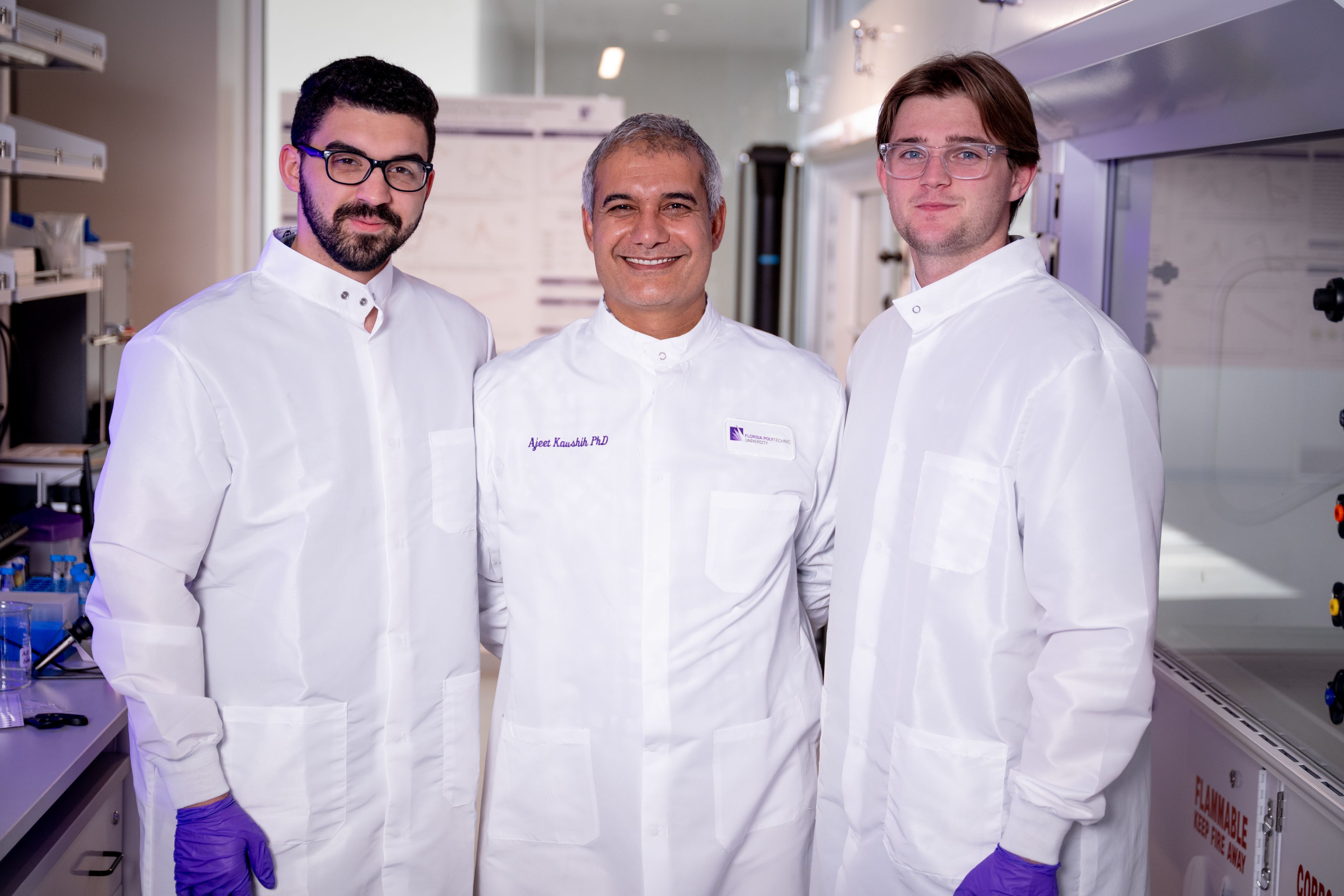
Dr. Ajeet Kaushik, who has been recognized as among the world’s top 2% of scientists since 2021, specializes in nanotechnology, sensors, biosensors and nanomedicine for health and environmental management. In mechanical engineering, Dr. Chris Kelley’s National Science Foundation-funded work uses control theory to improve the measurement and diagnosis of movement dysfunction in Parkinson’s disease.
The work of these and other expert faculty members gives students direct access to cutting-edge projects with real-world implications in modern health care.
Undergraduate and graduate students routinely contribute to these efforts through research assistantships and industry collaborations that can see them help prototype smarter wearable devices, refine diagnostic tools or analyze health data sets. That experience can translate directly to medical school preparation and high-impact roles in health technology.
Engineering Better Patient Care
Florida Poly students with aspirations in the health care industry find many supportive pathways through the University’s STEM majors.
Dr. Stephen Chisolm ’19 combined his Florida Poly mechanical engineering degree and passion for 3D printing with an interest in biological applications. Today, he is a postdoctoral researcher exploring the use of bioprinting technologies to develop and test new ways for 3D printing heart valves.
“My engineering classes taught me more than just the basic material; they gave me skills to attack real problems,” Chisolm said. “A lot of classes incorporated projects with real-world constraints, so you really had to think about the practical application of what you learned.”
Another way students explore their entrance into the world of health care is through their required senior capstone project, many of which involve health care technology and patient care. For example, industry partner Lakeland Regional Health is sponsoring several interdisciplinary projects this academic year, including predicting fall risk, gamifying health care activities and redesigning a gynecological surgery device.
Inspired by his team’s asthma inhaler capstone project, Carson Eelman ’24, ’25 went on to independently develop a new device to further improve asthma care. Eelman, who earned both his bachelor’s and master’s degrees in mechanical engineering, invented AirCue, a device designed to help patients monitor their asthma and use their medication more effectively. He won a highly competitive statewide entrepreneurial award for the innovation.
Stories like these are increasingly common as more students pursue opportunities that bridge STEM and medicine. As Florida Poly advances its STEM+M vision, its students are poised to help fill critical workforce gaps while shaping the future of health care in Florida.
Two Pathways Toward a Medical Future
To support the BS/DO pathway and broaden options for students interested in health-related careers, Florida Poly will launch a new biomedical sciences bachelor’s degree program in fall 2026. Students in this major can choose between two tracks: biomedical devices or pre-medicine.
The biomedical devices track will prepare graduates to work at the intersection of engineering, health care and technology, positioning them for roles in fields such as medical device design, testing, manufacturing and regulatory affairs.
The pre-medicine track, meanwhile, offers a strong foundation in biology, chemistry, physics and mathematics for students pursuing the BS/DO pathway with OCOM.
Together, these routes extend Florida Poly’s STEM strength into the health arena, providing students multiple paths to careers in pharmaceuticals, biotechnology, clinical research and related fields.
Research That Powers STEM+M
Florida Poly’s growing research portfolio in health and biomedical technologies helps support this academic expansion.
Dr. Ajeet Kaushik, who has been recognized as among the world’s top 2% of scientists since 2021, specializes in nanotechnology, sensors, biosensors and nanomedicine for health and environmental management. In mechanical engineering, Dr. Chris Kelley’s National Science Foundation-funded work uses control theory to improve the measurement and diagnosis of movement dysfunction in Parkinson’s disease.
The work of these and other expert faculty members gives students direct access to cutting-edge projects with real-world implications in modern health care.
Undergraduate and graduate students routinely contribute to these efforts through research assistantships and industry collaborations that can see them help prototype smarter wearable devices, refine diagnostic tools or analyze health data sets. That experience can translate directly to medical school preparation and high-impact roles in health technology.
Engineering Better Patient Care
Florida Poly students with aspirations in the health care industry find many supportive pathways through the University’s STEM majors.
Dr. Stephen Chisolm ’19 combined his Florida Poly mechanical engineering degree and passion for 3D printing with an interest in biological applications. Today, he is a postdoctoral researcher exploring the use of bioprinting technologies to develop and test new ways for 3D printing heart valves.
“My engineering classes taught me more than just the basic material; they gave me skills to attack real problems,” Chisolm said. “A lot of classes incorporated projects with real-world constraints, so you really had to think about the practical application of what you learned.”
Another way students explore their entrance into the world of health care is through their required senior capstone project, many of which involve health care technology and patient care. For example, industry partner Lakeland Regional Health is sponsoring several interdisciplinary projects this academic year, including predicting fall risk, gamifying health care activities and redesigning a gynecological surgery device.
Inspired by his team’s asthma inhaler capstone project, Carson Eelman ’24, ’25 went on to independently develop a new device to further improve asthma care. Eelman, who earned both his bachelor’s and master’s degrees in mechanical engineering, invented AirCue, a device designed to help patients monitor their asthma and use their medication more effectively. He won a highly competitive statewide entrepreneurial award for the innovation.
Stories like these are increasingly common as more students pursue opportunities that bridge STEM and medicine. As Florida Poly advances its STEM+M vision, its students are poised to help fill critical workforce gaps while shaping the future of health care in Florida.




This content was paid for and created by Florida Polytechnic University. The editorial staff of The Chronicle had no role in its preparation. Find out more about paid content.
 Built with Shorthand