



Inside a Campus Entrepreneurship Center Built for the Real World
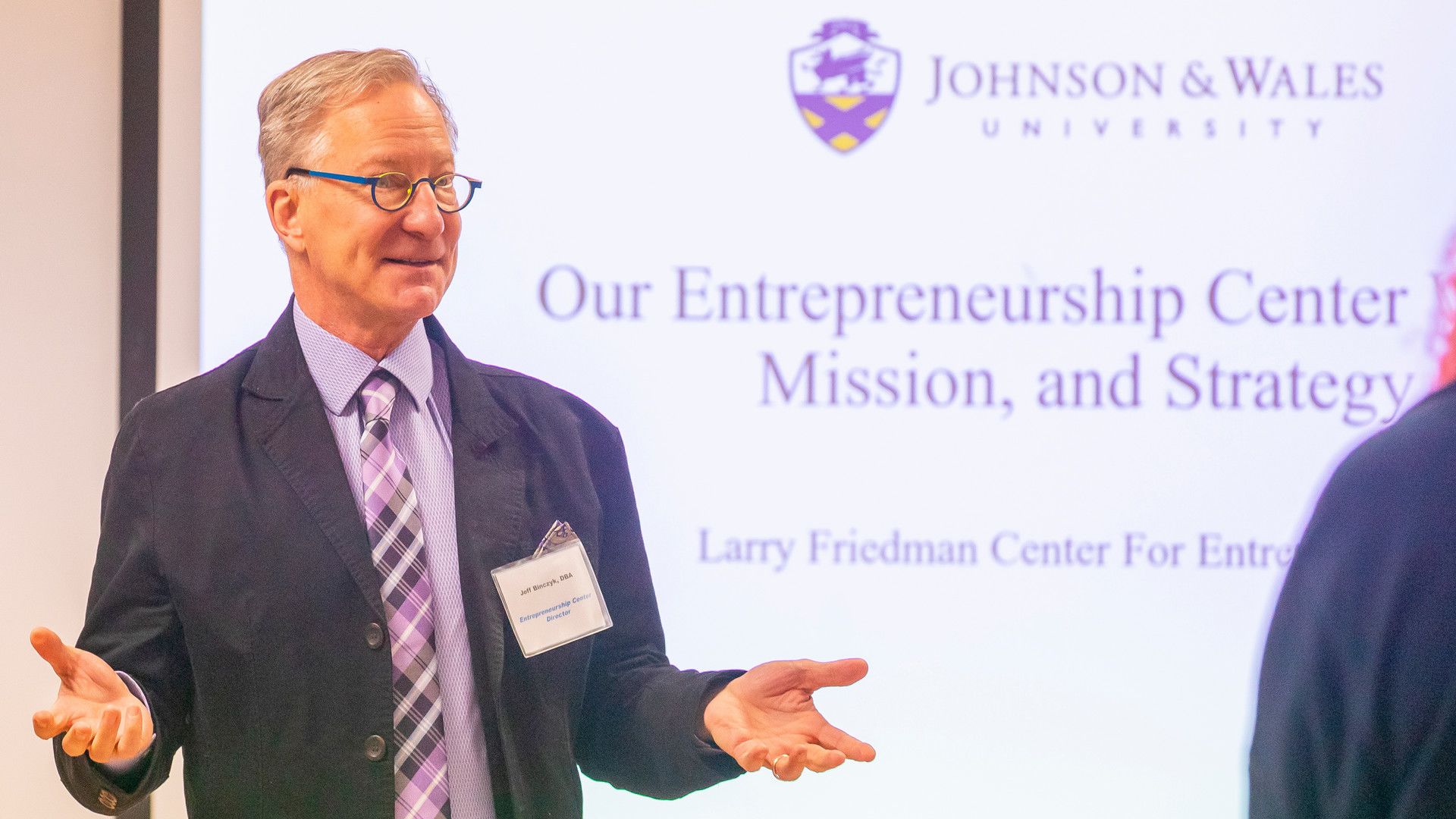

Jeff Binczyk ’23 DBA is a busy man.
On any given day, he might advise a budding student entrepreneur on turning passion into profit, coach a sophomore refining a Sharkfest pitch, or consult with a baker in Queens looking to better market her bread pudding. The throughline is consistent: translating ideas into viable, sustainable ventures.
That focus is no accident. After spending much of his career working with food entrepreneurship startups—and studying why so many fail—Binczyk now leads Johnson & Wales University’s Larry Friedman Entrepreneurship Center, known as the Launch Pad. His mission is clear: help students move beyond inspiration to execution.
“Entrepreneurship is part of JWU’s DNA,” says Binczyk. “When you look at the legacy of Gertrude Johnson and Mary Wales, who built this institution in 1914, it’s clear they were entrepreneurs from the very beginning. The Launch Pad is a modern expression of that same spirit.”
Today, students from every college at the university seek out the Launch Pad—from psychology, animal science, and product design to culinary arts, health and wellness, and food & beverage entrepreneurship. Binczyk believes the recent merger of the Colleges of Hospitality and Business will further expand that reach, encouraging more hospitality-focused students to take advantage of the center’s free one-on-one mentoring, workshops, and programming.
Some students arrive with little more than a spark of an idea. Others are further along but need critical feedback. A few have all the pieces in place and are preparing to pitch investors.
“My ultimate goal,” Binczyk says, “is for students to walk off the commencement stage with a diploma in one hand and a business plan in the other.”
That approach has resonated. Catalina Baclawski ’26 came to the Launch Pad with a general bakery concept but no clear direction. Through conversations with Binczyk, her vision sharpened into a dual-purpose concept: an elevated bakery by day, a bar with small bites and live music by night.
“His approach was, ‘I want to hear what you want—and then we’ll build from there,’” Baclawski says.


Launch Pad director Jeff Binczyk with student Chloe Hickox ’26.
Launch Pad director Jeff Binczyk with student Chloe Hickox ’26.

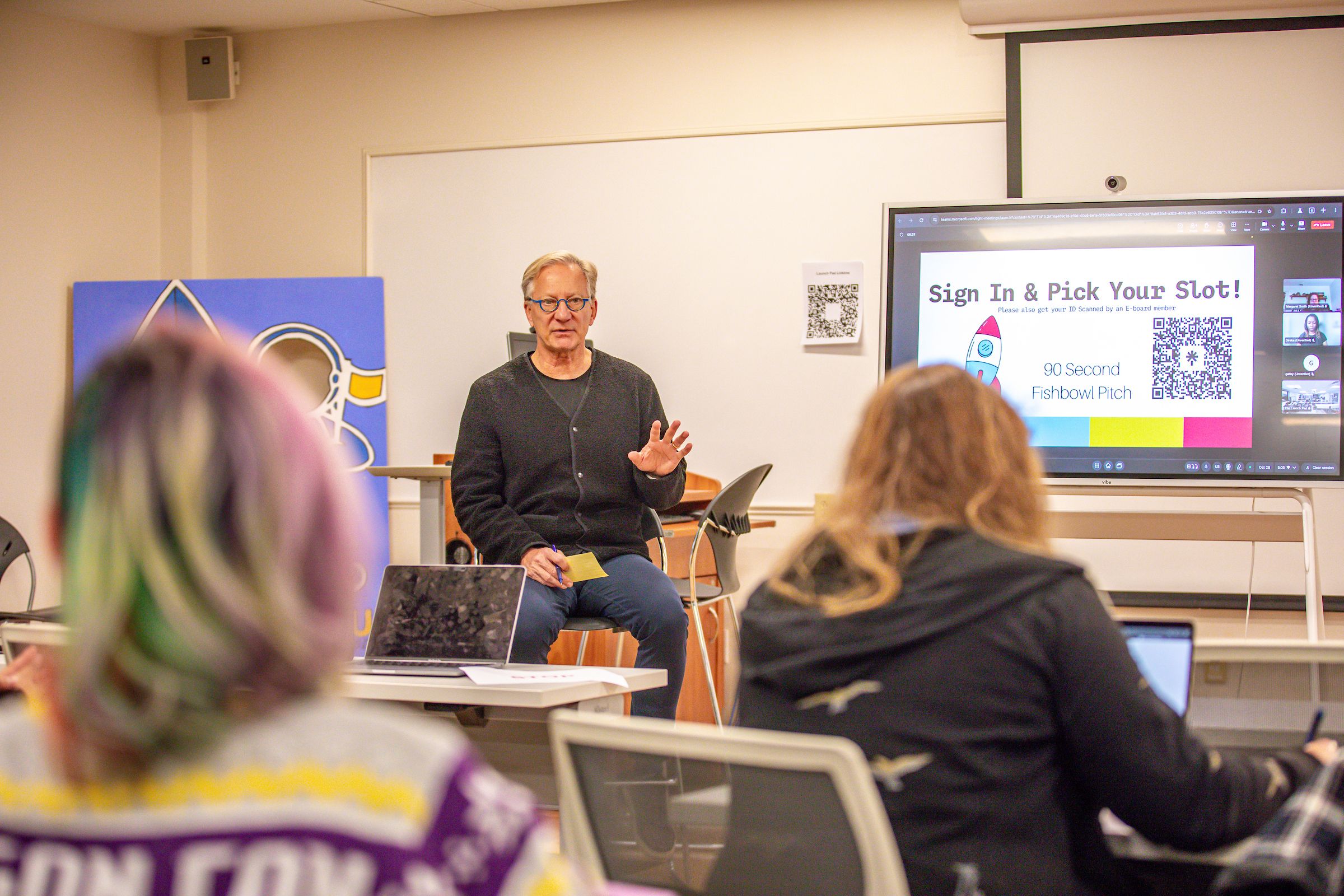
For many students, the moment conversations turn to financials can be intimidating. Baclawski admits she was nervous. “We’d touched on financials in classes before, but never really done a deep dive,” she says. “Jeff laid it out clearly—this is what it takes, this is what has to happen. It made it feel doable.”
Maddy Stange ’26, a Baking & Pastry student, had years of experience selling cupcakes at her hometown farmers market when she met Binczyk. She knew her customers—but Binczyk encouraged her to test her assumptions with data. A customer survey revealed that donuts, not cupcakes, were in highest demand. The next summer, donuts took center stage.
“We look at the data every year now,” Stange says. “I’m building a real foundation for when I go after funding for a brick-and-mortar location.”
Randy Benitez ’26, an online Finance student and third-place winner at this year’s Sharkfest competition, arrived with a functioning product already in the market: ReWriter, a music transcription app. What he needed wasn’t validation, but perspective.
“Working with Jeff gave me a mentor I can go back and forth with,” Benitez says. “He’s not a musician, but he understands what we’re building—and he’s an excellent sounding board.”
Beyond individual mentoring, the Launch Pad offers structured pathways. This fall, students can participate in one of four collaborative tracks—Food & Culinary; AI, Tech & Health & Wellness; Nonprofit; and Services—connecting with peers in facilitated online sessions centered on shared interests.
Binczyk also teaches a once-a-semester marketing course that pairs students with real small businesses seeking support. Demand is high. “There’s always a waiting list,” he says. “Students want to apply what they’re learning in a real-world context.”
The classroom reflects the university itself: students from across disciplines, bringing varied perspectives. “That diversity generates multiple ways of approaching the same challenge,” Binczyk says.
One recent client, Harlem Baking Company, which produces grab-and-go desserts in reusable glass jars, received a full marketing and social media strategy from the class. When a new logo became part of the project, Binczyk partnered with Associate Professor Deanna Marzocchi’s design students to bring the concept to life.
Alexie Gerve ’26, a Business Administration major and Sharkfest 2025 winner, says cross-disciplinary collaboration was key. “Baking & Pastry students focused on the product, others on marketing or packaging, and some on operations,” she says. “That mix generated ideas none of us would have reached alone.”
For Baclawski, the experience stood apart from traditional case studies. “Everything wasn’t just on paper,” she says. “We were meeting business owners, hearing their stories, and testing our ideas against real constraints.”
Most recently, the class partnered with a group of gastroenterologists from Massachusetts General Hospital looking to launch a premium water brand in glass bottles. Students developed the product name, logo, packaging, pricing strategy, website recommendations, and social media plan—building the brand from the ground up.
“They didn’t have a name or a marketing plan or even a fully formed concept,” says Gabrielle Tringali ’26, co-president of the Launch Pad’s student club. “It showed how you can start with an idea and actually implement a vision.”
For Binczyk, that’s the point. His goal is to create what he calls a “brave and safe collaborative space,” where students can talk openly about both ambition and uncertainty.
“There’s no silly question. No bad idea,” he says. “The only real question is: What is it going to take?”
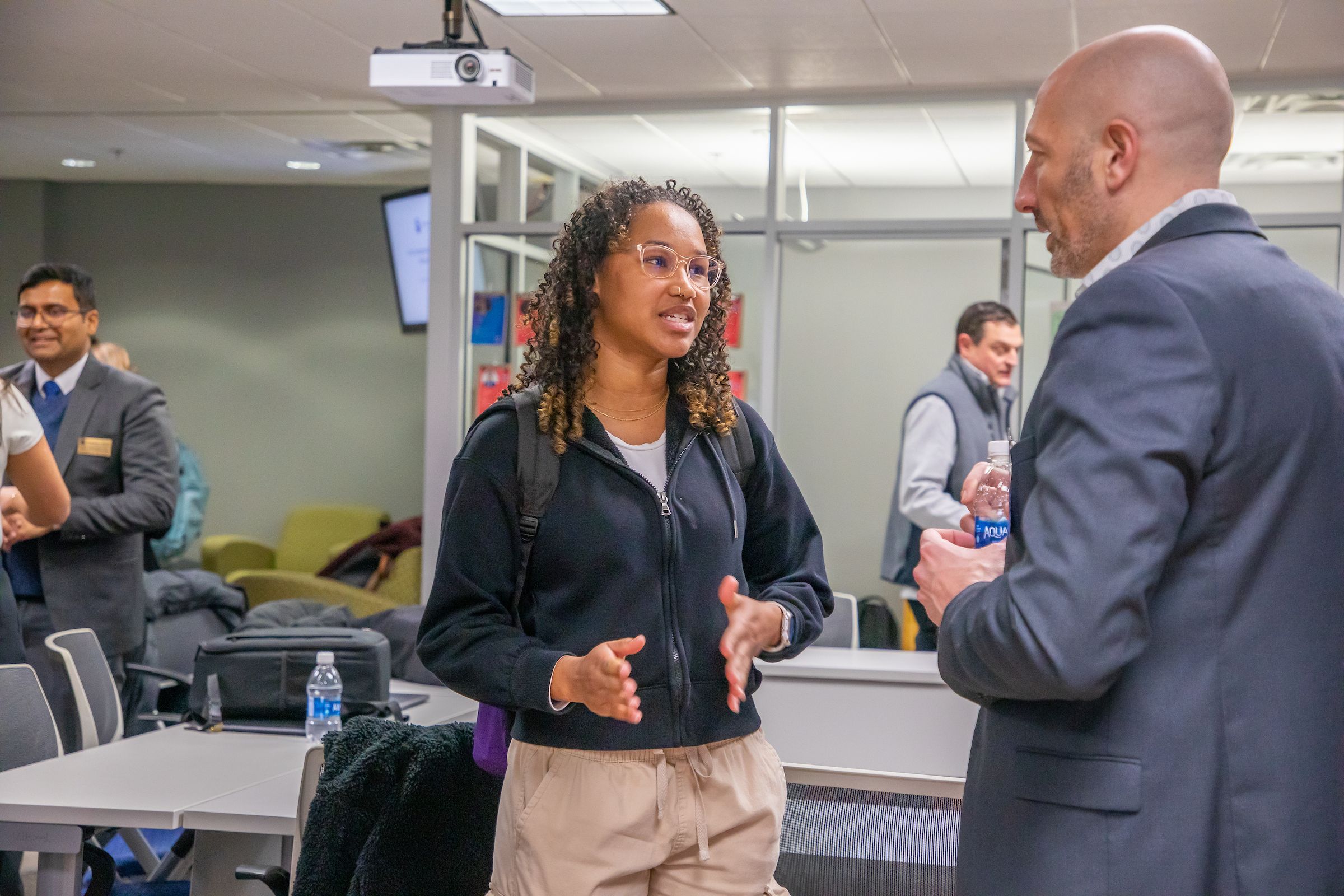
Students network with alumni at the Launch Pad opening events.
Students network with alumni at the Launch Pad opening events.

This content was paid for and created by Johnson & Wales University. The editorial staff of The Chronicle had no role in its preparation. Find out more about paid content.
 Built with Shorthand