

As the Need for Data Skills Grows, Accounting Professors Try to Keep Pace
Wanted: Accountants who are data storytellers.


Increasingly, corporations need financial analysts who can go beyond the rows and columns in spreadsheets to find patterns, irregularities, fraud, and — yes — stories hidden in the numbers. Accountants have always worked with numbers, but there’s now more data than ever, and new analytics skills are required for the role. “This is not your grandma’s accounting,” says Ann C. Dzuranin, professor of analytics in accounting, Northern Illinois University, who along with other professors is trying to teach data skills to students to prepare them for the workforce.
In the new reality where basic tasks are automated, accountants can be in the driver’s seat to uncover valuable insights, communicate their implications to business leaders, improve processes to create efficiencies, and better manage risk. As the support system for the next generation of accountants, professors need to future-proof them.
We’re at a turning point where business leaders increasingly recognize they have a competitive advantage if they find and analyze data relevant to their company’s goals and develop a data-literate workforce. Realized benefits include improved decision making, innovation, productivity, customer and employee experience, and more. As such, leaders more frequently turn to their chief financial officers, accountants, and financial analysts to reveal the truth in the numbers. And the people in those roles must learn a rapidly evolving set of technologies, data skills, and relevant concepts — data visualization, artificial intelligence, data aggregation, and more — to deliver critical insights.
Like professionals in many other fields, accountants are confronted by “big data.” This data can be overwhelming in size, complexity, and the speed at which it’s generated. This data revolution has put pressure on college classrooms and post-graduate programs to keep pace. Professional associations, the organizations that accredit accounting and business programs, and the organizations that offer CPA licensing exams encourage universities to delve more deeply into data analytics. A new, more future-leaning CPA licensing exam will be inaugurated in 2024, ensuring accountants remain as “the economy’s most trusted advisors.”
To prepare students for market demands, colleges are frequently adding new data-related courses to their business, accounting, and other academic programs, and adding new material into introductory courses. “You don't necessarily have to change your curriculum,” says Dzuranin. “You have to change the way you teach. That, I think, is a harder hurdle to get over.” Larger, well-funded public and private universities find it easier to keep up with the changes. But smaller accounting programs and those teaching under-represented minorities are sometimes struggling. Free webinars and improved online resources developed by national organizations may help less well-funded institutions chart a path forward.

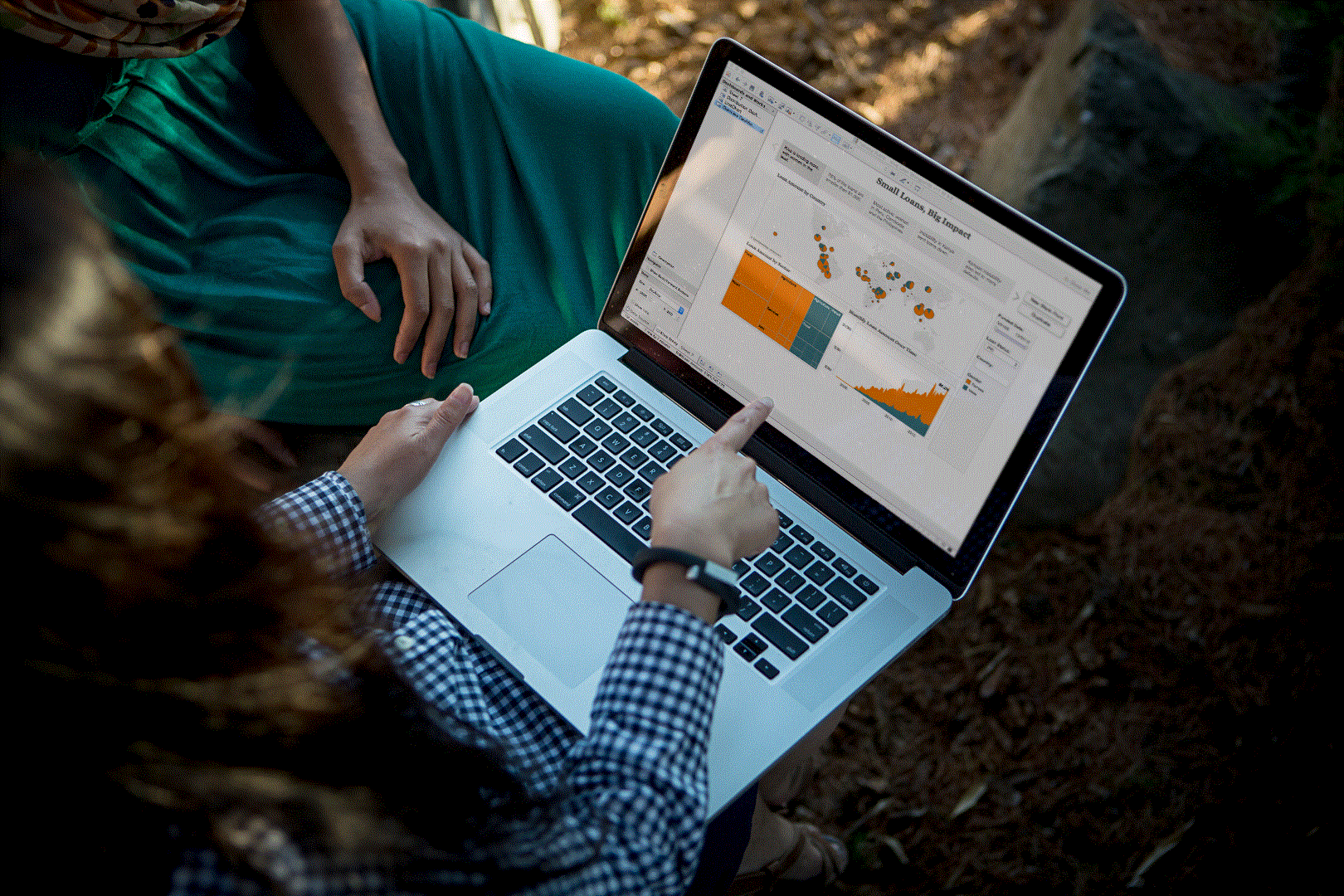


Alicja Foksinska is the lead auditor at Protective Life Corporation, a company that provides life insurance and annuities, and an instructor at the University of Alabama at Birmingham Collat School of Business. Before teaching data analytics and visualization to students, she has them brainstorm how to create data from phone calls, internet searches, and even their own vital signs. After conveying an understanding of what data is, she teaches how data becomes information when defined. For instance, a five-digit number gains new meaning when someone knows it’s a zip code. With Foksinska’s encouragement, students then learn to generate data-informed insights and become “data storytellers” that communicate takeaways to business leaders.
Like many other accounting professors, she also teaches students to integrate non-financial data in their work. In her own job, she has pulled data on Covid-19 incidence and overlaid it with a map of where her company’s customers are. She does this with Tableau, a world-leading analytics platform available free to college students and instructors. Strong customer support, collaborative user forums, and easy-to-understand “how to” videos make Tableau the application of choice for Foksinska and others. Tableau also has taken a strong stance to support gender equality, including a $5 million commitment to teach data skills to women and girls.
Foksinska has her students study data each week on a different topic, such as travel, entertainment, or agriculture, and then they publish their work on Tableau Public, a platform where potential employers can see it.
Dzuranin, at Northern Illinois, says a student group in one of her classes studied red-light camera data in Chicago using Tableau. They discovered that almost all fines generated by cameras in low-income neighborhoods were paid, while more wealthy neighborhoods had a lower payment rate. “You wouldn’t see that if you didn’t use the visualization software because there is so much data,” says Dzuranin. “Chicago is a big city.”
At Babson College, Brigitte Muehlmann teaches entrepreneurially minded students who are seeking a master of business administration, but maybe not considering accounting careers. Almost any project, even in its early stage, benefits from visualization, she says, “because it orients us all and puts us on the same page—even those people who are less numbers inclined.” She believes that data literacy and visualization can help more employees passionately support their companies’ missions.

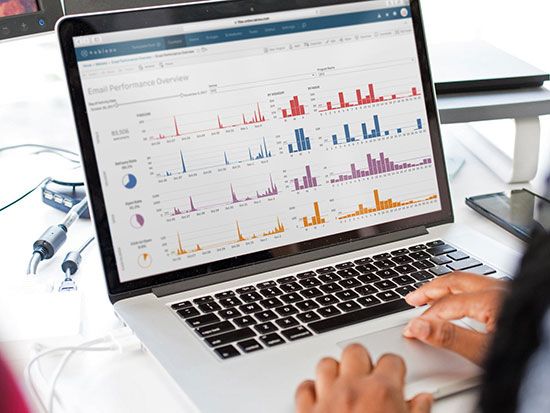
A thought leadership paper commissioned by Tableau found that a gap exists between data skills taught by universities and those sought by employers: data literacy is the most in-demand skill for candidates. Professors who talk to employers about needs stress that they want more than technical skills; soft skills, including critical thinking, curiosity, ability to communicate, and technological agility are equally important.
Despite the reports that academic accounting is lagging behind the industry, many signs indicate accounting professors are moving forward. A recent “faculty hour” webinar on the “Data Analytics Mindset,” led by Dzuranin for the American Institute of Certified Public Accountants drew more than 500 attendees. Foksinska presented a similar, well-attended “Data Storytelling” webinar.
All this bodes well for the future of accounting. “The students who know how to analyze data, who know how to visualize data, who know how to communicate with data—those are the students who are being hunted by recruiters,” concludes Foksinska.



This content was paid for and created by Tableau. The editorial staff of The Chronicle had no role in its preparation. Find out more about paid content.
 Built with Shorthand