


Enabling Science to Quickly Span the Globe
An enhanced data pipeline network represents a boon
to university researchers
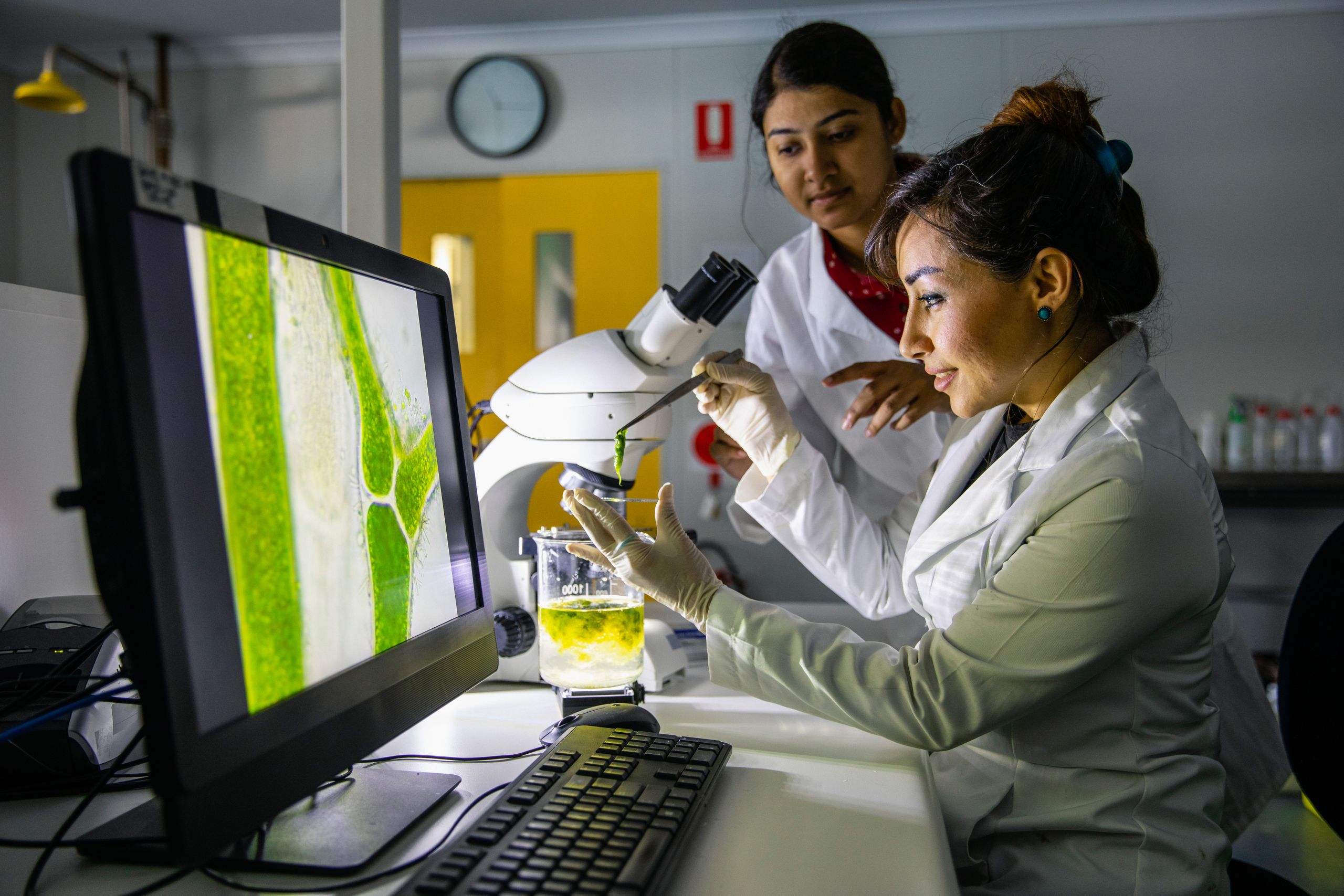

As scientists at research universities put their minds to work to address global problems, they continue to wrestle with very large and complex sets of data. Along with an ongoing rise in computing power and the burgeoning capabilities of the cloud, Big Data offers researchers more opportunities to develop and share their findings, opening the door to collaborations that answer science’s most pressing questions.
But for all that expanding innovation, there is always a bottleneck of sorts in the information funnel. The connection between data, storage, and ever more capable computers needs to be constantly improved to remove obstacles within transmission networks that slow the march of science. Without constant improvements, deep-data research and sharing can take more time than it should.
Now, a Cisco-powered upgrade of an existing information-sharing system promises to accelerate support for science. Called Internet2’s Next Generation Infrastructure program (NGI), the multi-million dollar project will increase the system’s capacity and capability to move data quickly, across the U.S. and around the world.
NGI will deliver the most comprehensive set of improvements in over 10 years to an info-sharing backbone originally developed roughly two decades ago by Internet2, a nonprofit collective of more than 300 U.S. research universities, government agencies, and others. The project’s development has been ongoing for several years and the deployment critical new network routers, which started in January, begins a final phase before researchers can take advantage of the improvements. The initial backbone upgrade includes multiples of 400-gigabits-per-second between over 48 cities in the US by mid-summer, 2021. Over the next five years, Internet2 will continue adding capacity and also plans to introduce end to end automation reducing the “time to science” for researchers all over the world.
“This is the foundation of research to come,” says Michael Shepherd, a business development manager at Cisco, a world leader in technology systems and software company that does $1 billion in business with higher-ed institutions annually. “We want to reduce the number of steps a researcher needs to take as they work with Big Data. We believe that NGI will have a democratizing effect on university research by seamlessly linking scientist to scientist and removing the barriers to research and collaboration.”
Cisco’s involvement is key in making the transition to “frictionless” data transmission. Its expertise in developing hardware, software, and application programming interfaces (APIs) will allow Internet2 to offer a much more useful infrastructure for large areas of research--everything from climate change to a cure for cancer to the origin of the universe. By reducing the space and power needs of the platform (e.g., routers) that have been used previously to run the network, this upgrade offers the added bonus of reducing the network’s carbon footprint by roughly 662 metric tons each year.
“Cisco offered a strong vision for how technology can support researchers as they navigate this end-to-end environment,” Rob Vietzke, vice president of network services at Internet2, says of the group’s choice of a tech collaborator. “Plus, Cisco had a complete offering of software and hardware with the best and most up-to-date technology.”
The Internet2/Cisco partnership aims to unleash massive new capacity and simplify operations that support scientific inquiry. As the research environment accelerates and becomes more and more intricate and multi-layered, collaborative investigations involving large datasets require more seamless pipelines that can link researchers faster. Collaborations are increasingly interdisciplinary—melding disparate methods, types of data, and even languages—adding another challenge to clear and fast communication.


Recently, when Alex Feltus, a computational biologist, sought out a series of freely available genomes sequenced by researchers at Washington State University, it took several days for the data to reach his computer.
“Scientists need those genomes to do DNA-sequence analysis of human tumor genes, among other things,” says Feltus, a professor of genetics and biochemistry at Clemson University, and a member of the Internet2 board. With NGI, “What it took me a week to do will likely be done in a day or less.”
In a pandemic era suffused by global environmental threats and other issues of immediate concerns to researchers, speed is of the essence, he adds: “If we don’t have advanced networks like Internet2 to move today’s data between campuses, repositories, and computing sites, then science and commerce will be greatly affected in this age of Big Data.”
Scientists like Feltus have witnessed the emergence of an era of exploding computing power and sprawling datasets. Just 20 years ago, Feltus and other biological researchers did their work in a kilobyte era—meaning they dealt with data in 1,000-byte chunks. Now, they investigate and share data in terabytes, each representing a trillion bytes.
Such exponential growth in computing capability will continue in the next 20 years, when most biology labs will likely reach the petascale--1,000 terabytes—and perhaps more. “If the advanced networks that help us share data don’t exist, science can’t happen at these scales,” Feltus says.
Internet2’s Next Generation Initiative will help researchers achieve science that avails itself of those burgeoning technological capabilities. When fully operational, the network will expand a world-class network that already carries up to 10 petabytes a day of academic data to one with the capacity to move 40-120 petabytes a day. “These new capabilities of NGI, together with the dramatically lower carbon footprint, will provide enormous new capability for Internet2-connected researchers”, Vietzke said.
“Today, the data that supports scientists lives on the campus, in the cloud and at large scientific instruments distributed around the world. Together with other R&E partners, our role is to move those big data sets between research facilities in increasingly faster, simpler and more seamless ways. ” says Vietzke. “Our success is measured by delivering technology that positively impacts the workflow of the researcher and allows their research to thrive in this era of highly distributed and massive research data.”
For more information on Cisco, visit cisco.com.
 Built with Shorthand